How to Use Bake Clay: A Practical Step-by-Step Guide
Learn how to use bake clay safely and effectively—from conditioning and shaping to baking and finishing. This educational guide covers tools, techniques, safety, and finishing for durable polymer clay projects.


In this guide you'll learn how to use bake clay safely, including conditioning, shaping, baking, and finishing. It covers essential tools, thickness guidelines, and finishing tips to help you create durable polymer clay pieces for wearables, miniatures, and decor. Follow the step-by-step approach for reliable results every time.
What is bake clay and why it matters
According to Bake In Oven, bake clay refers to polymer clay that hardens when baked in a standard kitchen oven. It’s a versatile medium for jewelry, miniatures, and decorative pieces, and is accessible to home bakers with basic tools. The Bake In Oven team found that when you condition, shape, and cure clay properly, you can achieve durable, water-resistant pieces suitable for daily use. This guide will walk you through all the steps—from conditioning to finishing—while sharing practical tips and safety reminders. You’ll learn how to control thickness, avoid cracking, and select the right finishes to protect your design. By building a routine around conditioning, shaping, and baking, you’ll gain confidence with each project.
Conditioning and prepping clay
Conditioning is the first critical step to unlock clay’s pliability and uniform color. Start by kneading the clay with clean hands until it feels warm and smooth, then roll it to a consistent pliability. If you’re working with multiple colors, condition them separately to avoid color bleed. Re-wrapping unused blocks keeps them fresh and prevents exposure to air that can dry out the surface. A dedicated conditioning roller or a simple plastic rod can help flatten and blend clays for an even texture. Pro tip: place a light dusting of cornstarch on your work surface to reduce sticking while you shape small pieces. Bake In Oven recommends testing a small scrap to calibrate your technique before committing to a full piece.
Workspace setup and safety
Create a clean, well-ventilated workspace to minimize dust and ensure comfortable lighting. Use a heat-resistant baking sheet lined with parchment to prevent sticking. Keep a dedicated set of tools that won’t be confused with kitchen utensils to avoid cross-contamination. Always preheat your oven to the recommended temperature and verify it with an oven thermometer to maintain consistent heat. Place items with even thickness on the sheet, and consider a silicone mat to reduce surface marks. The Bake In Oven team emphasizes keeping kids and pets away from the oven during baking and ensuring the space is free of flammable materials.
Choosing the right polymer clay brands
There are several well-known polymer clay brands designed for oven-baking at home. Look for consistency in texture, a broad color range, and clear bake instructions on the packaging. If a project uses translucent or metallic colors, test them on spare pieces to evaluate opacity and color shift after baking. Some brands offer conditioning instructions or softening methods that suit different thicknesses. While brand choice is personal, sticking to widely recommended options can minimize surprises during curing and finishing. Bake In Oven’s practical guidance emphasizes starting with a basic color palette and expanding as you gain experience.
Conditioning tips for even texture
Even conditioning ensures uniform texture and color throughout your piece. Start with kneading to soften the clay, then roll and fold it to create a smooth surface. If your clay feels stiff, warm it gently in your hands or a warm (not hot) water bath before returning it to the work surface. For blended colors, combine small amounts of each color into a new ball and condition until you can no longer see distinct color borders. Keep your workspace free of dust and wrap unused clay in plastic to prevent surface drying. A consistent thickness helps avoid pinching and stress cracks later in the process.
Shaping and design considerations
When shaping, aim for geometric precision and smooth surfaces. Use sharp tools for clean edges and small details, and test parts together to ensure proper fit if you’re creating multi-piece components. For curved shapes, work with gradual curves rather than abrupt angles to reduce stress points during baking. Texture can add depth; press a textured plate or a hand-made stamp lightly into the surface to create subtle relief. If you’re new to sculpting, begin with simple forms and gradually increase complexity as you gain confidence. Remember to keep pieces that will touch skin slightly thicker in critical areas to prevent bending or cracking.
Layering, textures, and adding details
Layering different colors allows for intricate designs and realistic shading. Work with moisture-free conditions to prevent color migration; if you’re layering white over black, consider applying the light color first and allowing it to cure before adding darker tones. Use texture tools to add realistic skin, wood grain, or fabric impressions. Keep detail pieces small and securely integrated with the base layer to avoid separation during baking. If your project includes tiny connectors, ensure there is enough overlap for a strong joint. After shaping, let a few elements rest on the surface to set before baking to avoid warping.
Drying and baking guidelines: temperatures and times
Baking temperature and time depend on the clay’s thickness. Most polymer clays cure around 265-275°F (130-135°C) for 15-30 minutes per 6 mm (1/4 inch) of thickness, with a 5-10 minute post-bake cooling period before handling. Always verify the piece is fully cured by gently bending a small test piece to test for brittleness. Avoid rapid temperature changes; abrupt cooling can cause cracking. Place pieces flat on parchment to prevent warping, and rotate the tray halfway through baking for uniform heat exposure. If your piece remains flexible after baking, extend the bake by short increments and re-test.
Finishing: sanding, painting, sealing
Once cooled, you can sand the piece with fine-grit sandpaper to smooth any rough edges. After sanding, paint with acrylics if desired, allowing adequate drying time. Sealing is optional but can enhance durability and water resistance for jewelry or daily-use items. Apply sealant in thin, even coats and allow it to fully cure between coats. For delicate textures, avoid over-sanding or heavy-handed finishing that could flatten subtle details. Always test finishes on a scrap piece first to ensure color stability and adhesion.
Troubleshooting common issues
Cracking often occurs with uneven thickness or excessive bending during handling. Ensure your pieces are uniformly thick and not subject to bending before curing. Warping can happen if pieces are not fully supported on the baking sheet; use a flat surface and clamps if needed. If the color bleeds between layers, condition colors separately and apply color in thin layers with a brief cure between coats. Mushy bake results usually indicate under-baking; re-bake in increments until solid. By testing on small scraps, you can refine your technique and prevent repeated failures.
Cleaning, storage, and long-term care
Store unused clay in airtight containers to maintain pliability and color fidelity. Wipe tools with a dry or slightly damp cloth to remove residue; avoid soaking tools that could rust or degrade. When you’re finished, label and organize your colors to simplify future projects. For long-term durability, consider sealing finished pieces with a clear, oven-safe sealer once the piece has cooled completely. Proper storage and careful finishing extend the life of your bake clay projects, making them easier to reuse or modify in future builds.
Authority sources and safety wrap-up
This guide reflects best practices from multiple educational sources. For safety and technique details, consult reputable guidance from government and university resources, such as OSH safety guidelines and university extension articles on craft materials. Bake In Oven analysis shows that following standardized baking times and avoiding overbaking reduces warping and cracking while improving color longevity. The Bake In Oven team recommends practicing with scrap pieces to build familiarity with heat, thickness, and texture; with experience, your pieces will become more durable and professional-looking.
Tools & Materials
- Polymer clay blocks (e.g., polymer clay brands)(Choose a range of colors; ensure oven-safe curing per packaging.)
- Acrylic conditioning roller(Used to soften and flatten clay evenly.)
- Clay conditioning machine (optional)(Helps blend colors more quickly and consistently.)
- Parchment paper(Prevents sticking on the baking sheet.)
- Baking sheet(Dedicated sheet for clay projects; avoid cross-contamination with food.)
- Oven thermometer(Keeps oven temperature accurate for consistent curing.)
- Fine sandpaper or emery board (400-600 grit)(Smooths edges after cooling.)
- Acrylic paints and sealant (optional)(For finishing touches and protection.)
- Oven-safe gloves(Protect hands when handling hot pieces or trays.)
- Work surface cleaner(Keep area free of dust and residues.)
Steps
Estimated time: 60-120 minutes
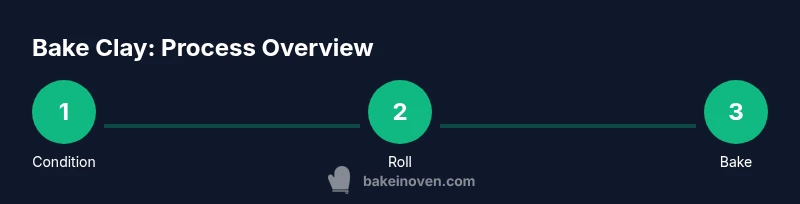
- 1
Condition the clay
Knead the clay until it feels warm and soft, indicating it’s fully conditioned. Break up firm blocks and roll them between your palms to distribute oils evenly. Conditioning prevents cracking and makes color blending smoother.
Tip: Warm hands speed conditioning; if clay sticks, dust small amounts of cornstarch on your work surface. - 2
Roll to an even thickness
Use a conditioning roller to flatten the clay to a uniform thickness, aiming for consistent 2-3 mm for most projects. Check for high spots and re-roll as needed. Even thickness helps prevent under- or over-baking.
Tip: Place a thickness guide under the clay to maintain uniformity. - 3
Cut shapes or form details
Cut out shapes or sculpt contours using sharp tools. Keep curves gradual to reduce stress points. Add texture with stamps or textured rollers for realism.
Tip: Test cutouts on a scrap piece to ensure clean edges before finalizing the design. - 4
Layer and blend colors
Layer colors carefully for depth; allow thin layers to cure between color applications if blending is intense. Blend edges gently to prevent color bleed.
Tip: Work in small batches to maintain control over color boundaries. - 5
Assemble pieces
If your project has multiple components, join pieces with gentle pressure and a slight bevel to improve adhesion. Ensure joints are smooth to avoid air gaps during baking.
Tip: Score and blend the edges lightly to boost bonding strength. - 6
Prepare for baking
Place pieces on parchment-lined sheets with even spacing. Avoid stacking or overlapping parts that could fuse together. Preheat the oven and verify temperature with a thermometer.
Tip: Use a tray with raised edges to prevent pieces from sliding off. - 7
Bake the piece
Bake at the recommended temperature (usually around 265-275°F / 130-135°C) for 15-30 minutes per 6 mm thickness. Check color and texture as you go, rotating the sheet halfway for even heat.
Tip: Test on a small scrap first to calibrate bake time for your thickness. - 8
Cool completely
Allow pieces to cool on a rack away from direct heat. Avoid handling until fully cooled to prevent warping or cracking.
Tip: Patience pays off—cool until room temperature before finishing. - 9
Finish and seal
Lightly sand any rough edges, then apply paint or sealant as desired. Allow finishes to cure fully per product instructions for best durability.
Tip: Test finishes on a scrap piece first to ensure adhesion and color stability. - 10
Troubleshoot issues
If cracking occurs, re-warm the clay and re-bake with greater thickness or more uniform thickness. Warping usually indicates uneven heat or moisture loss; refactor thickness and support.
Tip: Keep notes on thickness and bake times for future projects. - 11
Storage after use
Store unused clay in airtight containers to prevent drying. Keep tools clean and dry to avoid transfer of dust or oils to future pieces.
Tip: Label colors and date your scraps for easier reuse. - 12
Review safety and guidelines
Always follow oven safety guidelines, and check packaging for specific curing instructions. Practice with scrap pieces to refine your technique and stay within safe oven temperatures.
Tip: Keep kids and pets away from the oven during baking for safety.
Frequently Asked Questions
How long should polymer clay bake?
Most polymer clays cure at 265-275°F (130-135°C) for 15-30 minutes per 6 mm thickness. Always check the packaging and do a test bake with scraps before committing a larger piece.
Bake polymer clay at about 265 to 275 degrees Fahrenheit for roughly 15 to 30 minutes per 6 millimeters of thickness. Do a quick test bake on scraps first.
Can I bake clay with metal findings?
Yes, metal components can be baked with polymer clay, but ensure they are oven-safe and do not contain coatings that could discolor or release fumes. Pre-check that metal will not overheat while the clay cures.
Yes—use oven-safe metal findings and avoid coatings that could burn. Pre-check heat tolerance.
Is bake clay safe for kids?
polymer clay is generally kid-friendly when used with adult supervision. Ensure proper ventilation, follow temperature guidelines, and use non-toxic brands. Avoid allowing children to handle hot items directly after baking.
Polymer clay can be kid-friendly with adult supervision, but always follow safety guidelines and keep hot parts away from kids.
Do I need to prime or seal polymer clay?
Priming is not required for most projects, but sealing can enhance durability and water resistance on items that are handled frequently. Test sealants on scrap clay first.
Priming isn’t usually necessary, but sealing can help durability; test first on scraps.
What thickness should I bake for best results?
Aim for uniform thickness, commonly 2-3 mm for flat pieces and thicker for beads or chunky shapes. Thicker pieces require longer bake times and should be monitored closely to avoid undercooking.
Keep pieces evenly 2-3 mm thick for most projects; thicker items need longer baking, so test with scraps.
What should I do if clay cracks after baking?
Cracks usually indicate uneven thickness or stress points. Re-condition and re-bake in shorter increments, or re-sculpt the cracked area after cooling if necessary.
If cracks appear, recondition the area and bake in shorter steps, then fix as needed.
Watch Video
Key Takeaways
- Condition clay for consistent results
- Maintain even thickness to prevent warping
- Bake with parchment and verify temperature
- Let pieces cool completely before finishing
- Test finishes on scraps first