Fix Chewy Baked Chicken: A Troubleshooting Guide
Urgent, practical troubleshooting for chewy baked chicken. Identify causes, apply quick fixes, and prevent texture issues with step-by-step guidance tailored for home bakers.


Chewy baked chicken is typically caused by uneven cooking, excess heat, or moisture loss. The fastest fix is to calibrate your oven, use a reliable meat thermometer, and remove the chicken at 160-165°F for breasts (carryover brings it to 165-175°F). A brief brine or resting period locks in juiciness, then slice thinly for tenderness. This guide expands on causes and fixes.
Why Chewy Baked Chicken Happens
When you bite into chicken that should be juicy but instead feels chewy, the problem is usually about moisture, temperature, and cooking consistency. If baked chicken is chewy, the texture often points to a mismatch between heat application and the meat’s ability to retain moisture. In practical terms, the goal is to cook evenly, minimize moisture loss, and allow the proteins to relax after heat. By understanding the science—proteins tightening as heat rises and collagen converting to gelatin with adequate moisture—you can transform a chewy outcome into a tender, fork-tork texture. This section explains the core reasons behind chewiness, plus quick checks you can do before your next bake.
Common Causes of Chewiness in Baked Chicken
Chewy texture isn’t a single culprit; it’s usually several factors combined. Common causes include:
- Overcooking thin parts or uneven pieces leading to dry, tough meat
- Oven temperatures that run hotter or cooler than the dial indicates
- Rapid browning or sugar-rich glazes that scorch and create a brittle crust while the inside remains underdone
- Insufficient resting time after baking, which prevents moisture redistribution inside the meat
- Large or uneven chicken breasts that require more heat and time to reach a safe, tender internal temperature
- Inadequate moisture retention due to trimming or improper brining methods
To prevent chewiness, address heat accuracy, piece uniformity, moisture management, and resting practices. Small adjustments can yield noticeable texture improvements.
How to Diagnose Your Current Bake
Diagnosing the exact cause of a chewy baked chicken starts with a quick, systematic check. Begin by inspecting piece size and thickness; bindy, uneven pieces cook unevenly, leaving some sections overdone and others undercooked. Next, verify oven temperature with an independent thermometer to confirm it matches the dial. If you’re using a sweet or acidic glaze, ensure it’s not scorching, which can create a dry, chewy crust. Finally, measure the internal temperature in multiple thickest parts; breasts can finish differently than thighs. Document these findings to tailor your next bake.
Step-by-Step Practical Fixes You Can Try Right Now
If your current cook yielded chewy results, apply these fixes in order:
- Step 1: Calibrate your oven with an oven thermometer and adjust temperature if needed. A 25°F difference can change texture dramatically. Tip: Run a test bake with a neutral piece to confirm accuracy.
- Step 2: Use a reliable instant-read thermometer. Remove breasts at 160-165°F and allow carryover cooking to bring them to ~165-175°F. Check multiple spots to avoid undercooked areas.
- Step 3: Apply a brief brine (15-30 minutes for breasts; longer for thicker cuts) to improve moisture retention. Rinse, pat dry, and proceed to cooking.
- Step 4: Flatten or pound thick parts to uniform thickness for even cooking. This reduces hotspots and prevents chewy pockets.
- Step 5: Finish with a quick high-heat sear or broil in the last 2-3 minutes to create a browned crust while preserving moisture inside.
- Step 6: Rest the chicken for 5-10 minutes before slicing to redistribute juices. Slice against the grain for maximum tenderness. Tip: Use a clean towel to pat moisture off before cooking for better browning.
- Step 7: Consider a glaze or marinade that doesn’t compete with moisture; avoid heavy sugar components that burn at high heat. If you use sugar, watch closely during the last minutes of bake.
These fixes work in tandem. If one approach doesn’t yield the desired texture, move to the next step rather than forcing a single solution.
Prevention Strategies for Future Bakes
Prevention is about consistency and planning. Let’s translate fixes into habits:
- Plan for even pieces: trim uneven areas and use uniform thickness; consider slicing thicker breasts in half lengthwise for even cooking.
- Invest in thermometer reliability: a probe thermometer with a pre-calibrated reference is your best ally for exact temps.
- Brine or marinate to boost moisture: even a light brine improves juiciness and reduces chewiness risk.
- Manage heat: start at moderate heat to bring the center up evenly, then finish with higher heat for browning if desired.
- Rest and slice properly: allow carryover cooking and moisture redistribution; slice against the grain to maximize tenderness.
- Keep glazes in check: use non-sugary finishes or apply sugary glazes later in the cook to prevent scorching.
By building these habits, you’ll reduce chewy textures in future batches and keep baked chicken consistently delicious.
Quick Checks with Tools and Techniques
To quickly assess texture during prep and before serving, keep these practical checks:
- Use an instant-read thermometer; sample multiple thickest parts to ensure even doneness.
- Check piece thickness and adjust cooking time accordingly; don’t assume breast size fits all.
- Inspect the crust: if it’s overly dry or brittle, reduce oven time or temperature slightly next bake.
- Rest before slicing to allow moisture to redistribute. A 5-10 minute rest makes a measurable difference.
- Keep a cooking log: note oven temps, piece sizes, brining duration, and resting times for repeatable results.
When to Seek Professional Help
If you consistently encounter chewy chicken despite following best practices, it may be worth consulting a cooking professional or a trusted home-baking coach. Persistent chewiness can indicate equipment calibration issues, flawed workflows, or dietary restrictions affecting texture. A kitchen performance review or hands-on workshop can identify subtle problems in technique, equipment setup, or ingredient handling. For most home cooks, stepwise adjustments and careful measurement will resolve texture issues without external help.
Steps
Estimated time: 45-60 minutes
- 1
Check internal temperature with thermometer
Insert the thermometer into the thickest part of the chicken, avoiding bone. Aim for 160-165°F for breasts, with carryover finishing to ~165-175°F. This ensures safe doneness without overcooking.
Tip: Keep thermometer handy and test 2-3 spots on thick pieces. - 2
Calibrate oven and verify heat accuracy
Place an oven thermometer in the center rack and run a 20-minute bake at your target temp. Compare the thermometer reading to the dial. If off by 10-20°F, adjust your actual cooking temperature or recalibrate the oven.
Tip: A small calibration can dramatically improve results. - 3
Apply a brief brine or moisture boost
If you’re cooking thicker breasts, brine 15-30 minutes in a light salt solution, then pat dry before baking to lock in moisture. For thighs, a 10-minute brine can still help with tenderness.
Tip: Pat dry thoroughly after brining to promote browning. - 4
Uniform thickness for even cooking
Trim, butterfly, or gently pound thick portions to a uniform thickness so every piece cooks at the same rate. This reduces chewy pockets that form when edges overcook while centers remain underdone.
Tip: Use a meat mallet or rolling pin between two sheets of parchment. - 5
Finish with high heat or searing
If the interior is done but the exterior isn’t browned, finish under high heat or a brief broil for 1-2 minutes on each side to achieve a crisp, flavorful crust without drying the inside.
Tip: Watch closely to avoid scorching sugar-based glazes. - 6
Rest and slice correctly
Let the chicken rest 5-10 minutes before slicing. Slice against the grain to maximize tenderness and juiciness across portions.
Tip: Resting allows moisture to redistribute and improves texture.
Diagnosis: Baked chicken is chewy after following a basic bake
Possible Causes
- highOven temperature drift or inaccuracy
- mediumUneven piece thickness leading to uneven cooking
- mediumInsufficient moisture retention due to improper brining or trimming
- lowOver-reliance on high heat or scorching glaze
Fixes
- easyCalibrate oven with an independent thermometer and adjust temperature accordingly
- easyTrim and/or pound thick portions to uniform thickness for even cooking
- easyBrine briefly and pat dry before baking to enhance moisture retention
- easyRemove from oven at 160-165°F and let carryover cooking finish
- easyRest 5-10 minutes after baking and slice against the grain
Frequently Asked Questions
Why is my baked chicken chewy even when I cook to a typical safe temperature?
Chewiness often stems from uneven thickness, oven temperature drift, or insufficient resting. Even with a safe internal temp, thick pieces can stay chewy if the center lacks moisture. Check thickness, calibrate heat, and rest before serving.
Chewiness usually comes from uneven thickness or temperature drift. Check thickness, calibrate heat, and rest before serving.
Is brining necessary for juicy chicken?
Brining is not strictly mandatory, but it significantly improves moisture retention, especially for thicker cuts. Even a short brine can reduce dryness and chewiness.
Brining isn’t mandatory, but it helps keep thicker cuts juicy and less chewy.
What internal temperature should baked chicken reach?
Aim for 160-165°F in the center of breasts, with carryover cooking bringing the final temp to about 165-175°F. Always verify multiple spots.
Target 160-165°F in the center; carryover finishes to around 165-175°F. Check a few spots.
Does resting meat after baking affect texture?
Yes. Resting for 5-10 minutes allows juices to redistribute, making slices juicier and less chewy. Slice across the grain for tenderness.
Resting helps the juices redistribute, making slices more tender.
Can I fix chewy chicken after baking?
Post-bake fixes are limited; focus on even thickness, proper tempering, and resting next time. For leftovers, slicing thinly and reheating gently helps.
Not much can fix texture after baking; focus on fixes for next time and slice thin for leftovers.
Should I use a glaze if my chicken is chewy?
Glazes with sugar can burn easily if applied too early. If you want glaze, add toward the last few minutes to avoid scorching while preserving moisture.
If you use glaze, apply it near the end to prevent scorching and dryness.
Watch Video
Key Takeaways
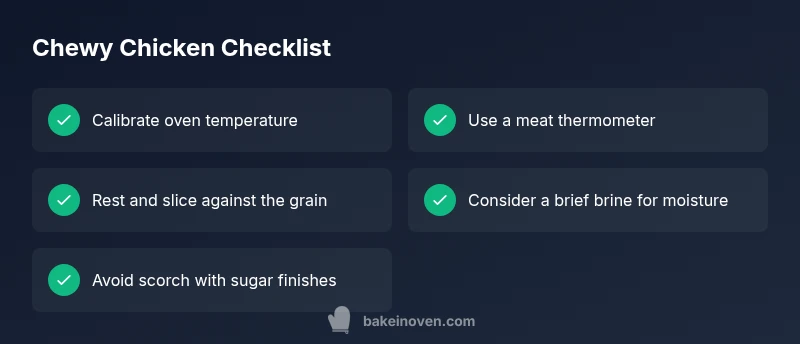
- Calibrate oven temperature for accurate heat delivery
- Use a thermometer and rest meat before slicing
- Uniform pieces cook more evenly and stay tender
- Brining or marinating enhances moisture retention
- Finish with browning techniques without overcooking