What Causes Baked Chicken to Be Tough: Troubleshooting and Tender Fixes
Learn why baked chicken turns tough and how to fix it fast. Practical troubleshooting, step-by-step methods, and chef-tested tips from Bake In Oven to keep chicken juicy, tender, and perfectly baked.


Overcooking and high, dry heat are the top culprits behind tough baked chicken. Check the internal temperature with a reliable thermometer and pull the meat at 165°F (74°C). If needed, reduce the oven to 350–375°F, tent with foil for the last minutes, and rest 5–10 minutes before slicing. For deeper troubleshooting, see the full Bake In Oven guide.
What causes baked chicken to be tough
The quick answer is that a lot of toughness comes from moisture loss and tight muscle fibers. Chicken becomes chewy when cells firm up as water leaves, and when collagen in connective tissue remains tough because the meat isn't allowed to unwind and gelatinize. The age of the bird matters; older birds have more connective tissue. Weather, brining, and marination can influence tenderness. According to Bake In Oven, the best way to approach tenderness is to control heat, moisture, and resting time, so you get juicy, easy-to-cut chicken every time.
The most common mistakes that lead to toughness
Tough baked chicken is usually the result of a few predictable missteps. Overcooking is the chief culprit: when chicken stays in heat too long, muscle proteins tighten and moisture evaporates, leaving a dry, chewy texture. Cooking at too high a temperature accelerates moisture loss and creates a dry exterior before the center finishes. Skipping a brine or marinade deprives the meat of salt and acid that help proteins unwind and retain moisture. Resting is critical; cutting into the meat too soon prevents juices from redistributing, making the slice feel firmer. Lastly, bone-in versus boneless matters—bone-in pieces tend to stay juicier because the bone helps insulate and distribute heat.
Temperature, time, and resting: the tenderness equation
Tender baked chicken hinges on three intertwined variables: internal temperature, total time in the oven, and a proper rest. The safe internal temperature is 165°F (74°C); however, carryover heat will push the temperature a few degrees after you remove it from the oven. A longer bake at too-high heat dries out surface moisture; conversely, cooking slowly at a lower temperature helps the proteins relax and the moisture stay inside. Resting for 5–10 minutes after baking allows juices to redistribute, making slices more tender. If you’re cooking bone-in pieces, you’ll often need slightly longer; boneless cuts reach 165°F faster and can dry out sooner if overcooked.
Quick fixes you can try today
If you’ve already baked the chicken tough, there are practical salvage options. Use a meat thermometer and pull at 165°F (74°C); tent loosely with foil and rest 5–10 minutes if you’re still hot. Slice against the grain to reduce the perception of toughness. Serve with a moisture-rich pan sauce or gravy to rehydrate fibers. For leftovers, reheat gently with a splash of broth or sauce to help the texture become more forgiving. If you have time, shredding and mixing into a quick pan sauce can transform a tough piece into tender, juicy bites.
Prevention: how to bake chicken that stays tender
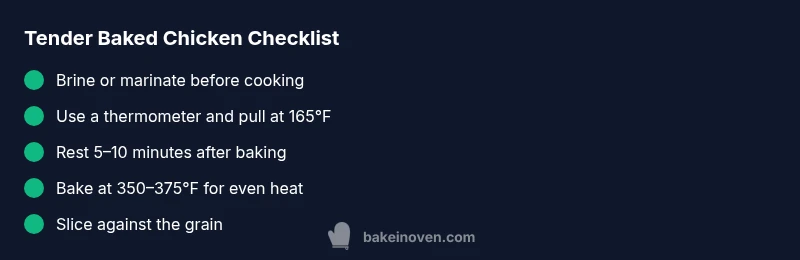
Prevention starts with moisture management and heat control. Brine or marinate before cooking to slow moisture loss and begin protein denaturation in your favor. Pat the meat dry and bring it to room temperature before baking to ensure even cooking. Wherever possible, use bone-in and skin-on cuts for better moisture retention; if you use boneless, monitor time carefully. Preheat to a moderate temperature, typically 350–375°F, to minimize rapid surface drying. Always rely on a thermometer and remove as soon as 165°F is reached, then rest. Finally, a parchment-paper or foil tent during the last minutes can prevent surface drying while browning.
Practical workflows: a simple baked chicken routine
- Prep: thaw completely, pat dry, and decide whether to brine or marinate. 2) Bake: arrange in a single layer on a rack, preheat to 350–375°F, and begin checking internal temperature around the 20–25 minute mark for breasts or 35–40 minutes for thighs. 3) Rest: remove from heat and rest 5–10 minutes, loosely tented. 4) Slice and serve: cut against the grain and drizzle with pan juices. 5) Clean-up and reuse: store leftovers promptly in a sealed container. This routine works across bone-in thighs, breasts, or whole chicken, with time adjusted by cut size.
Tools, ingredients, and pantry notes
Keep a reliable thermometer, a suitable pan, and a rack for air circulation. Brine ingredients (salt, sugar, aromatics) and a simple marinade with acid (lemon juice, vinegar) can dramatically improve tenderness. Parchment paper or foil prevents surface drying, while a light coating of olive oil or butter helps with browning and moisture retention. For flavor, stock your pantry with garlic, herbs, and a pinch of salt to season evenly. The goal is consistent heat exposure and moisture retention, not a one-off hot blast.
Steps
Estimated time: 60-75 minutes
- 1
Assess the cut and plan cooking
Identify whether you have bone-in or boneless pieces and decide if you’ll brine or marinate. This step sets moisture retention up front and guides cooking time.
Tip: Bone-in pieces stay juicier; plan slightly longer for thighs vs breasts. - 2
Prepare for moisture retention
Pat dry, optionally brine or marinate, and bring meat to room temperature for even cooking.
Tip: Even moisture distribution starts with dry surfaces. - 3
Bake with controlled heat
Preheat oven to 350–375°F. Arrange chicken in a single layer on a rack or sheet and monitor with a thermometer.
Tip: Avoid placing meat directly on a surface that traps moisture. - 4
Check doneness early and often
Begin checking at the 20–25 minute mark for breasts or 35–40 minutes for thighs, depending on size. Remove at 165°F (74°C).
Tip: Remove a few degrees early to account for carryover cooking. - 5
Rest before slicing
Let the chicken rest, tented loosely with foil, for 5–10 minutes to distribute juices.
Tip: Juices redistribute during resting; piercing immediately invites loss. - 6
Serve or salvage leftovers
Slice against the grain and serve with pan juices or a quick sauce. Reheat leftovers gently with broth to rehydrate fibers.
Tip: Reheating slowly preserves moisture better than microwaving.
Diagnosis: Chicken is baked but turns out tough and dry after resting.
Possible Causes
- highOvercooking at high heat
- mediumNot using a thermometer to guide doneness
- lowSkipping brine or marinade
Fixes
- easyCheck internal temperature with a reliable thermometer and pull at 165°F (74°C).
- easyLower oven to 350–375°F and tent the chicken during the last 5–10 minutes.
- easyRest the meat for 5–10 minutes before slicing to redistribute juices.
- mediumBrine or marinate next time to improve moisture retention.
Frequently Asked Questions
Why is baked chicken sometimes tough even when I followed a recipe?
Toughness often comes from overcooking, high heat, and insufficient moisture retention. Using a thermometer, brining, and resting can dramatically improve tenderness. Bird age and cut type also play a role, but technique makes the biggest difference.
Often it's overcooking and heat level. A thermometer and resting can dramatically improve tenderness.
How can I make baked chicken more tender?
Brine or marinate before cooking, monitor internal temperature with a thermometer, cook at a moderate temperature, and rest the meat after baking. Choosing bone-in cuts and allowing carryover cooking to finish also helps keep moisture in.
Brine or marinate, use a thermometer, and rest before slicing.
Is resting the chicken after baking essential?
Yes. Resting lets juices redistribute, which prevents a dry, tough bite. Aim for 5–10 minutes loosely tented with foil after removing from heat.
Resting is essential for juicy, tender chicken.
What internal temperature should baked chicken reach?
The safe internal temperature is 165°F (74°C). Pull the meat from the oven at or just before this temperature to account for carryover cooking.
165°F is the target; remove just before it reaches final temp to avoid drying out.
Can I salvage overcooked chicken?
Yes. Shred and mix with a flavorful sauce or broth, or slice thin and serve with pan juices to rehydrate the fibers. Reheating slowly with moisture helps too.
If it's tough, shred and sauce it or rehydrate with broth.
Does bone-in chicken stay tender better than boneless?
Bone-in pieces tend to stay moister because the bone helps insulate and distribute heat. If you use boneless, watch time closely and avoid overcooking.
Bone-in cuts usually stay juicier; boneless need careful timing.
What role does parchment or foil play in tenderness?
Parchment or foil tents help trap moisture at the surface, preventing rapid drying while browning. They’re especially useful for lean cuts.
Using parchment or foil helps keep moisture in during the bake.
Watch Video
Key Takeaways
- Aim for 165°F (74°C) internal temp and rest 5–10 minutes.
- Lower heat and use a rack to prevent moisture loss.
- Brine or marinate to boost tenderness consistently.
- Slice against the grain for easier chewing.