Optimal Temperature for Baking an Apple Pie: A Practical Guide
Discover the ideal oven temperature range for baking apple pie, including crust doneness, filling setting, and timing tips from Bake In Oven.


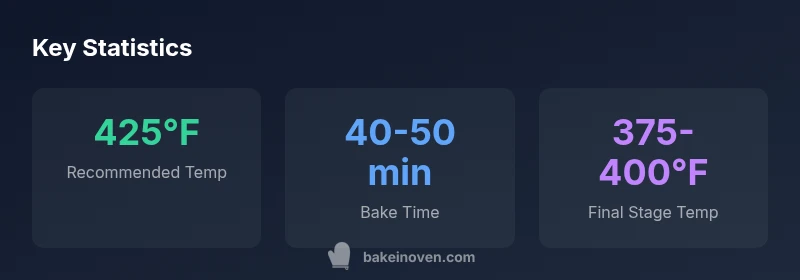
Knowing the temp to bake an apple pie is essential for even crust and bubbling filling. For a classic 9-inch pie, bake at 425°F (220°C) for 40–50 minutes until the crust is deep golden and the juices bubble. If the crust browns too fast, reduce the temperature to 375–400°F for the last 10–15 minutes. Smaller pies may bake slightly faster, so monitor closely.
Understanding Temperature, Crust, and Filling
According to Bake In Oven, the temp to bake an apple pie isn't just a single number—it’s the balance between crust development and filling setting. The crust needs heat to rise and brown evenly, while the filling requires sustained heat to thicken and bubble without scorching. Factors like crust thickness, pan material, oven calibration, and whether you use a top crust or lattice influence the optimal window. A high initial blast helps the bottom crust set, followed by steady heat to finish cooking and browning. This section lays the groundwork for choosing a temperature that yields a flaky crust and juicy filling. Remember: every oven has hot spots, so corroborate with a visual cue rather than the clock alone. A well-executed bake produces a crust that’s richly browned, a filling that’s fragrant with apple aromatics, and juices that shimmer without dripping over the edge.
Key concepts to track include crust color, bubble activity in the filling, and the edge-sheened sheen of the top crust. If you’re new to this, start with the classic 425°F (220°C) for 40–50 minutes and adjust based on your oven’s behavior and the size of your pie. This approach sets a reliable baseline that home bakers can customize over time.
In practice, development of the crust is accelerated by sugar in the dough and by butter temperature. A cooler dough performs differently than a warmer one, so chilling the dough before rolling and using cold butter can influence how quickly the crust browns. Throughout this guide, you’ll see how the temperature interacts with dough hydration and filling viscosity to produce a consistent, delicious result.
Common Temperature Ranges and When to Use Them
There isn’t a single magic number for every apple pie, but several standard ranges work well for most home bakers. Start with 425°F (220°C) to set the bottom crust and begin browning the top. This high-heat approach is particularly effective for a traditional double-crust pie and for pies packed with juicy apples. If the crust is browning too quickly or the edges threaten to burn, reduce the heat to 375–400°F (190–205°C) for the final 10–15 minutes. Bottom-crust concerns can be addressed by using a dark, heavy bakeware or a parchment barrier, which helps distribute heat more evenly. For smaller pies or individual portions, you’ll typically shave off 5–10 minutes from the total bake time.
Convection ovens can speed up browning and cooking, but they also run hotter on the surface. If you’re using convection, reduce the temperature by about 25°F (14°C) and monitor the crust color closely. In all cases, the goal is a crust that is deeply golden with a shredded texture and a filling that’s set but not dry. In subsequent sections, you’ll find practical steps to implement these ranges with confidence, including how to test for doneness without relying solely on the clock.
Step-by-Step: From Dough to Golden Crust
- Preheat and prepare: Preheat to 425°F (220°C) and assemble the crusts. Chill the bottom crust for 15–20 minutes before rolling to prevent shrinkage. Roll the dough to a thickness that allows for a sturdy edge while maintaining a tender crumb.
- Fill with purpose: Toss sliced apples with sugar, cinnamon, lemon juice, and a touch of cornstarch. The starch helps thicken the juices as the pie bakes. A coulis or butter dot can add richness but should be used sparingly to avoid a greasy finish.
- Assemble with care: Place the bottom crust into the pan, add the filling, and finish with the top crust or lattice. Trim, crimp, and vent the dough to let steam escape—the vents are essential for a crisp crust and even cooking.
- Bake and monitor: Slide the pie into the preheated oven and bake at 425°F (220°C) for 40–50 minutes. Use a shield on the crust if the edges brown too quickly. If the top browns early, loosely cover with foil to prevent scorching.
- Rest and set: Allow the pie to rest for at least 2 hours before slicing. This rest time lets the filling thicken and the crust to firm up, producing clean slices and a better texture. After resting, you’ll notice a symmetrical, glossy filling.
This step-by-step approach keeps you aligned with the recommended temperatures and timing, ensuring reliable results across equipment and pie sizes.
Troubleshooting: Underbaked Crust, Soggy Bottom, and Burnt Edges
Even with a solid plan, issues can arise. A soggy bottom is often the result of insufficient heat or too much moisture in the filling. To combat this, bake at 425°F (220°C) initially, then finish at 375–400°F for 10–15 minutes to set the crust and evaporate excess moisture. If the crust isn’t browning fast enough, remove the pie for a few minutes, increase the heat back to 425°F (220°C) for a short interval, and then return to the lower temp to finish. Burnt edges are typically caused by an oven hotspot or an overly tall pie crust; shield the edges with aluminum foil or use a pie shield.
Crust texture matters just as much as color. A pale, underdone crust lacks the structure to hold the slice, while a overcooked crust can become tough. For a reliable finish, ensure the crust is evenly rolled, edges are crimped evenly, and vents are properly placed. If you notice steam burst from a vent and the filling is bubbling vigorously, you’re on track for a properly baked pie.
Oven Type and Pie Size: How to Adjust Temperature and Time
Oven type and pie size directly influence bake time and temperature needs. Convection ovens generally brown faster; reduce the standard 425°F to about 400°F and check crust color around the 30-minute mark. Larger pies (9-inch or bigger) require longer exposure to heat for the center to set; you may extend the bake time by 5–10 minutes, ensuring the filling is bubbling without drying the crust. Conversely, smaller pies or individual mini pies often finish sooner, so start checking at the 25–30 minute range. If you’re unsure, use a visual cue: the crust should be deeply golden, the edges crisp, and the filling should be steaming with a gentle bubble.
Always preheat to the desired temperature before placing the pie in the oven, and consider a baking stone or heavy-duty sheet to promote even heating. With practice, you’ll tune your own timings to your oven’s personality and your preferred crust texture.
Flavor and Variety: Using Tart Apples and Sugar Levels
The choice of apples affects cooking time and sweetness, which in turn can influence the temperature strategy. Tart varieties like Granny Smith or Braeburn hold their structure well and require less sugar to balance acidity, often resulting in a more controlled liquid release during baking. Sweeter varieties can soften faster, so you might want to compensate with a bit more lemon juice or a touch of cornstarch to prevent a watery filling. Sugar levels also impact browning; excessive sugar can promote earlier crust browning, so adjust the top crust color with a foil shield when needed. For best results, mix apples with a small amount of lemon juice to preserve color and brightness, and consider a light dusting of flour to help thicken the filling during the bake.
Quick Reference: Doneness Cues and Safe Handling
A well-baked apple pie shows a richly browned crust, even color across the top, and a bubbling, fragrant filling. The crust should be firm enough to hold its shape when sliced. Let the pie rest after removing from the oven to allow the filling to set properly. For safety, use a heatproof handle on the pie plate, avoid touching hot crust, and let the pie cool to room temperature before serving. A thorough resting period not only stabilizes the structure but also enhances the flavor as the filling thickens and the steam subsides.
Temperature guidelines for common apple pie scenarios
| Aspect | Recommended Temp | Notes |
|---|---|---|
| Crust Type (two-crust) | 425°F (220°C) | Golden crust and bubbling filling |
| Pie Size (9-inch) | 425°F (220°C) | Monitor for slight time variation |
| Convection Oven | 400-410°F (205-210°C) | Lower temp due to circulating heat |
Frequently Asked Questions
What is the best temperature to bake apple pie?
A classic apple pie typically bakes well at 425°F (220°C). This helps set the bottom crust and start browning the top, while keeping the filling from becoming too liquid.
Most bakers start at 425°F to get a crisp crust and juicy filling.
Can I bake apple pie at a lower temperature?
Yes, but you’ll need a longer bake time and careful monitoring to ensure the filling thickens and the crust cooks through evenly.
You can lower the temp, but plan for a longer bake and watch for doneness cues.
Should I use convection for apple pie?
Convection can help with browning, but it tends to cook faster, so reduce the temp by about 25°F and keep an eye on crust color.
Convection helps brown faster, so lower the temp and watch closely.
How do I know when the pie is done?
Look for a deep golden crust with bubbling juices. The filling should be visibly bubbling and fragrant, and the bottom crust should be fully set.
The pie is done when the crust is golden and the filling is bubbling steadily.
Does pie size affect bake time?
Yes. Larger pies may require a few extra minutes, while smaller pies finish sooner. Always check through visual cues rather than relying solely on a timer.
Size changes time; use visual cues to decide when it’s done.
“"Temperature is the most controllable variable in achieving a flaky crust and a properly cooked filling. Follow a high-heat start, then finish with controlled lower heat to set the filling without over-browning."”
Key Takeaways
- Start at 425°F for reliable crust setting.
- Adjust final minutes to 375–400°F if crust browns too fast.
- Monitor bubbling filling as a doneness cue.
- Convection ovens require lower temps and closer monitoring.
- Rest the pie after baking for a clean slice and optimal texture.