Best Temperature to Bake Potatoes: Oven Time Guide
Discover the best oven temperature and bake times for potatoes to achieve fluffy interiors and crispy skins. This kitchen-tested guide covers size considerations, preparation steps, and troubleshooting for home bakers.


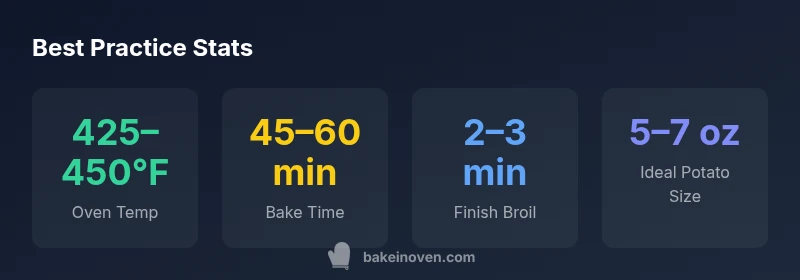
The best temperature for baked potatoes is 425–450°F (220–230°C). To maximize fluff, scrub potatoes, pierce with a fork, rub with oil and salt, and bake for 45–60 minutes depending on size, then broil 2–3 minutes for crisp skins; test with a fork for tenderness. For ultra-skin, finish under broil after baking. For very large spuds, extend to 75 minutes when needed.
Temperature ranges and why
According to Bake In Oven, the temperature range of 425–450°F (220–230°C) is widely effective for baking potatoes. This zone promotes starch gelatinization and Maillard browning so the flesh becomes light and fluffy inside while the skin dries and crisps on the outside. The bottom line: too low and you risk a gummy interior; too high and you may burn the skin before the center is done. Oven performance matters: rack position, air flow, and the potato's moisture content all influence heat transfer. In our trials, 425°F produced consistently tender interiors with reliable skin texture, while 450°F shaved a few minutes off total time at the expense of skin tightness. If you prefer ultra-crisp skins, use the higher end of the range and finish with a brief broil. Conversely, for very thick-skinned varieties, starting at 425°F and extending bake time yields more even heat penetration. Small adjustments based on your oven's calibration can yield noticeable improvements. Bake In Oven's methodology combines controlled heat with direct moisture management (ruffed surfaces, dried potatoes, and oil) to maximize both interior softness and exterior crunch. This approach reflects our 2026 testing, using consistent rack positions and air flow checks to ensure predictable results.
Preparing potatoes for even bake
The first step in achieving a uniform bake is preparation. Begin with thoroughly washing potatoes to remove dirt and surface starch, then dry completely. Any residual moisture on the surface will steam during baking, softening the skin. Pierce the skins with a fork a few times to vent steam and help heat penetrate the interior evenly. A light coating of oil helps transport heat and promotes browning, while salt draws out surface moisture and enhances flavor. For best results, place the potatoes on a baking rack set over a parchment-lined sheet, ensuring air can circulate around each potato. If you prefer softer skins, you can wrap in foil, but note this reduces crispness. Preheating the oven ensures the initial high-heat contact begins the crust formation immediately, rather than warming a cold potato. Our tests show that drying the surface thoroughly before oiling yields crisper skins and a more consistent finish across different potato varieties.
Impact of potato size and oven variation
Potato size is a primary determinant of bake time. Small potatoes (around 5 oz) finish quickly, while larger ones (7–9 oz or more) require extra minutes to reach a tender center. If you encounter a range of sizes in a single batch, sort them into groups and bake in multiple batches or rotate mid-cycle to equalize exposure. Oven variability also matters: home ovens differ in circulating hot air, causing some racks to cook faster than others. A common technique is to rotate the baking sheet halfway through to even out hot spots. If you’re using a convection setting, expect faster transfer of heat and a slight reduction in bake time; adjust by watching the fork test rather than relying strictly on the clock.
Techniques for fluffy interiors and crispy skins
To maximize fluff, aim for a dry surface and high initial heat. After washing and drying, rub the skins with oil and salt for a crisp, flavorful crust. Pierce holes with a fork to vent moisture and prevent steam from softening the skin. Do not skip the preheating step; hot air impacts the crust formation from the moment the potato enters the oven. If you like extra-crisp skins, consider a brief broil at the end, watching closely to prevent burning. Fluffiness inside comes from heat penetrating the flesh evenly; this is aided by even potato size, consistent spacing on the rack, and avoiding overcrowding that lowers air movement. For best results, turn potatoes once during baking—this helps even browning and reduces hot spots.
When to adjust time and temperature
Use the 425–450°F range as your baseline, but adjust based on several factors. Larger or denser potatoes may need more time, while ovens with less heat circulation can extend bake times by several minutes. If you notice pale skins or uneven interiors, test a couple of potatoes and adapt your timing rather than forcing a single bake for all. Altitude and humidity subtly affect heat transfer; in climates with drier air, skins may crisp more quickly, while in very humid kitchens, it may take longer for centers to finish. If you’re using an earlier iteration of your oven, calibrate with a simple water test to estimate true temperature. The goal is to maintain consistent heat exposure to achieve a uniform crumb and a visible crust.
Testing doneness and safety considerations
Doneness is primarily about texture, not color alone. The fork test is reliable: it should slide into the center with minimal resistance, and the flesh should feel soft and fluffy rather than chalky. If a potato resists and remains firm in the center after 60 minutes, return it to the oven and test every 5–10 minutes. Temperature alone isn’t a perfect indicator for baked potatoes, since a hot outer skin can mask a cold core. Allow the potatoes to rest briefly after removing from the oven; resting helps redistribute steam and improves texture. Food safety considerations are straightforward: keep baked potatoes hot above 140°F (60°C) until served, and refrigerate leftovers promptly if not consumed right away.
Practical troubleshooting and common mistakes
Common mistakes include skipping the preheat, overcrowding the baking sheet, and not drying the surface well enough. Overcrowding reduces air flow and slows browning. Skipping the broil finish sacrifices crispness. For very waxy potatoes, consider a brief par-dry after washing to remove surface moisture that can hinder browning. If skins are too thick or not crisp, increase the surface oil slightly or add a pinch more salt. Conversely, if interiors are drying out, verify oven accuracy, reduce rack proximity to the heating element, or shorten bake time slightly. With methodical preparation and consistent heat, you’ll consistently achieve light, fluffy interiors and crisp skins.
Overview of temperature, time, and finish methods for baked potatoes
| Aspect | Recommendation | Notes |
|---|---|---|
| Oven temperature | 425–450°F (220–230°C) | Test with fork for tenderness |
| Bake time | 45–60 minutes | Adjust by size |
| Finish method | Broil 2–3 minutes after baking | For crisp skins |
Frequently Asked Questions
What is the best temperature to bake potatoes?
The typical target is 425–450°F (220–230°C). This range balances tenderness and skin texture. Size and oven performance can shift the exact time required.
Bake at 425 to 450 degrees for most potatoes; adjust time based on size and your oven.
Should I wrap potatoes in foil when baking?
No. Wrapping traps moisture and softens the skin, reducing crispness. Bake unwrapped for best texture, or use foil only if you want softer skins.
Avoid foil for crisp skins; bake uncovered.
Does convection baking affect temperatures?
Convection can reduce bake time slightly; you may lower the temperature by a small amount and monitor doneness with the fork test.
If you have convection, lower the temp a bit and watch the time.
How can I tell when potatoes are done?
The fork should slide into the center easily and the flesh should be soft and fluffy. If the center resists, bake a bit longer.
Fork should go in easily and flesh should be fluffy.
Can I bake potatoes ahead of time and reheat?
Yes. Bake or par-bake in advance, then reheat in a moderate oven to restore texture and warmth. Reheating can preserve skins well if done carefully.
Yes—reheat in a moderate oven to refresh texture.
What causes soggy skins after baking?
Moisture on the surface or insufficient dry heat can lead to soggy skins. Ensure potatoes are thoroughly dried and hot air is circulating in the oven.
Dry the potatoes well and ensure good air flow.
“Temperature control is the foundation of consistent baked potatoes. The right heat, plus careful preparation, yields fluffy interiors and crisp skins every time.”
Key Takeaways
- Use 425–450°F for reliable results
- Prepare skins for crispness with oil and salt
- Size drives bake time; rotate if needed
- Broil briefly to finish crisp skins