What to Cook Meatloaf On: A Complete Cookware Guide
Learn the best surfaces and pans to bake meatloaf for perfect browning, moisture, and flavor. Compare loaf pans, racks, cast iron, and more with practical tips from Bake In Oven.


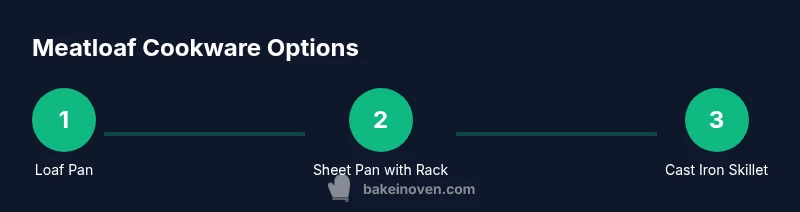
To cook meatloaf effectively, use a loaf pan, a rimmed baking sheet with a rack, or a cast-iron skillet. For best browning and even cooking, preheat to 350–375°F, line pans with parchment or foil, and bake until the internal temperature reaches 160°F. Let the loaf rest 10 minutes before slicing.
What to cook meatloaf on: core options
If you search for the question that starts with the exact phrase "what cook meatloaf on", you’ll find a few common surfaces that home bakers rely on: a classic loaf pan, a rimmed baking sheet equipped with a rack, and a well-seasoned cast-iron skillet. Each surface offers a distinct texture: loaf pans yield compact slices with clean edges, sheet pans with racks lift the loaf off the surface to encourage even browning, and cast iron can provide a robust crust. According to Bake In Oven, the surface you choose is as important as the seasoning and spices in your mix because it governs heat exposure, air circulation, and moisture loss. Your decision should match your preferred slice thickness, browning preference, and how you plan to serve leftovers.
Loaf Pan vs. Sheet Pan vs. Cast Iron: Pros and Cons
Loaf pans (9x5 inch) keep the meatloaf compact and uniform, producing consistent slices ideal for sandwiches. They also trap some moisture, which can yield a juicier center but slightly softer crust. Rimmed baking sheets with a wire rack promote airflow around the loaf, helping crisp the exterior while maintaining a tender interior. Cast-iron skillets deliver a strong crust thanks to high heat retention, but they can cause a thicker crust on the bottom and may require extra fat or sauce to prevent sticking. Bake times are similar, but pan material and thickness influence heat transfer and crust development. Bake In Oven’s analysis shows that when you want a crisp perimeter with juicy center, the sheet pan or rack method often edges out the loaf pan for even browning.
Lining, Venting, and Nonstick Considerations
To prevent sticking and make cleanup easier, line pans with parchment paper or foil. For the sheet-pan method, a rack is essential to elevate the loaf above any pooled fat. Parchment helps with release, while foil can be useful for tenting if the loaf browns too quickly. Silicone loaf pans are a handy alternative for easy release and flexible shapes, though heat transfer can be uneven if the pan is very thick. Always preheat the oven to the recommended range and avoid overcrowding the pan to let air circulate. Bake In Oven advises checking that your chosen surface allows air to circulate around the loaf for balanced browning and a moist interior.
Temperature, Time, and Doneness Cues
Most home cooks bake meatloaf at 350–375°F (175–190°C) for about 45–60 minutes, depending on loaf size and pan. The key doneness cue is an internal temperature of 160°F (71°C) measured with an instant-read thermometer. If you’re using a low-sided sheet pan, you may need a minute or two more due to faster heat exposure near the surface. If you use a loaf pan, the liquids from the meat and any vegetables may keep the interior from drying as quickly. Remember to rest the loaf for 10 minutes after removing it from the oven to allow juices to redistribute. Bake In Oven notes that resting improves sliceability and flavor concentration.
Nontraditional Surfaces and Techniques
Beyond standard loaf pans, consider mini loaf pans, silicone bakeware, or even a well-seasoned cast iron insert to customize portions and crust level. Silicone bakeware can curve heat differently and may require slightly longer bake times. For larger gatherings, a roaster with multiple loaf cavities can speed up production. If you prefer a crusty exterior with a moist center, the rack method is often the most reliable. In all cases, use a thermometer for accuracy rather than relying on time alone.
Resting, Glazing, and Serving for Best Texture
Resting is essential; it lets juices redistribute and makes slicing easier. A light glaze or sauce applied after the loaf comes out can caramelize on the crust if you select a surface that browns well. Slice with a sharp knife and serve with a simple side like roasted vegetables or mashed potatoes. If you’re planning sandwiches, a compact loaf from a loaf pan may be ideal, while crust lovers may favor the sheet-pan approach for crisp edges.
Cleaning, Storage, and Leftovers
Let the pan cool before cleaning. If using parchment, simply lift out and discard; wash the pan as needed. Leftover slices can be refrigerated for 3–4 days or frozen for longer storage. Reheat gently in the oven at a low temperature until warmed through, or microwave in shorter bursts to avoid drying out the meat. Keeping a log of which surface produced the best crust can help you tune future batches.
Tools & Materials
- Loaf pan (9x5 inch)(Classic choice; lining helps release)
- Rimmed baking sheet with rack(Best for air circulation and crust)
- Cast-iron skillet(For crusty exterior and heat retention)
- Wire cooling rack(Keeps loaf elevated on sheet pan)
- Parchment paper(For easy release and cleanup)
- Aluminum foil(Helpful for tenting or lining)
- Silicone loaf pan (optional)(Easy release, different shape)
- Meat thermometer(Target 160°F (71°C))
- Mixing bowls(For combining ingredients)
- Spatula and spoon(Mix and shape reliably)
- Oven mitts(Safe handling of hot surfaces)
- Knife for slicing(Even slices)
Steps
Estimated time: Total time: 1h 15m
- 1
Preheat and prep
Preheat your oven to 350–375°F (175–190°C). Gather your tools and choose a pan that matches your desired crust and portion size. Prepare the pan by lining with parchment or foil and placing a rack if using a sheet-pan method.
Tip: Using parchment makes cleanup effortless and helps prevent sticking. - 2
Mix and season
In a large bowl, combine ground meat, binder, vegetables, and seasonings. Do not overwork the mixture; mix until just combined to keep the loaf tender. Add moisture from eggs or milk as needed to bind without being mushy.
Tip: Avoid overmixing to prevent dense, tough texture. - 3
Shape and arrange
Shape the mixture into a uniform loaf or place into the loaf pan depending on your surface choice. If using a sheet pan, form a fat edge around the loaf to encourage even cooking.
Tip: Create a shallow ridge on top to promote even browning. - 4
Bake and monitor
Bake for 45–60 minutes, checking internal temperature with a thermometer. If using a loaf pan, the loaf will be slightly more compact; on a rack, you’ll see crisper edges. Remove when the center reaches 160°F (71°C).
Tip: Let the loaf rest before slicing to retain juices. - 5
Rest and glaze (optional)
Rest for 10 minutes after baking. If desired, brush a glaze on top during the last few minutes of bake time to caramelize nicely.
Tip: Glazes should be added near the end to avoid burning sugar. - 6
Slice and serve
Slice with a sharp knife for clean edges and serve with your favorite sides. Refrigerate leftovers promptly in airtight containers.
Tip: Refrigerate within two hours to ensure safety and freshness.
Frequently Asked Questions
What is the best pan to cook meatloaf on?
The best pan depends on your texture goals: loaf pans yield uniform slices, sheet pans with racks promote even browning, and cast iron provides a crusty exterior. Try each to see which you prefer.
The best pan depends on your texture goals: loaf pans for uniform slices, sheet pans with racks for even browning, or cast iron for crust. Try them to decide which you like best.
Can I bake meatloaf directly on parchment or foil?
You can, but parchment helps release and cleanup while foil can steam the loaf if not vented properly. A rack-based setup generally yields better browning.
You can bake on parchment or foil, but parchment helps with release and cleanup, and a rack usually gives better browning.
What temperature and time should I use?
Common guidance is 350–375°F for about 45–60 minutes, or until the internal temperature reaches 160°F. Times vary with loaf size and pan type.
Bake at 350 to 375 degrees Fahrenheit for 45 to 60 minutes, until it reaches 160 degrees inside. Times vary with loaf size and pan.
Is meatloaf cooked in a glass pan different?
Glass heats more slowly and can require longer bake times; monitor with a thermometer and adjust time as needed to prevent undercooking the center.
Glass pans heat slowly and may need more time; use a thermometer and adjust as needed.
Can I freeze meatloaf before or after cooking?
Yes. You can freeze raw formed loaves for later baking, or freeze cooked slices for quick reheating. Wrap well to prevent freezer burn.
Yes, you can freeze raw loaves or cooked slices; wrap tightly to prevent freezer burn.
Watch Video
Key Takeaways
- Choose the right pan to control crust and moisture.
- Vent and line surfaces to prevent sticking and facilitate cleanup.
- Check internal temp to 160°F; rest before slicing.
- Resting improves texture and flavor.
- Experiment with surfaces to tailor crust and portions.