What Temperature to Bake Enchiladas: A Practical Guide
Learn the best temperature to bake enchiladas, bake times, and tips for juicy fillings and melted cheese. Includes convection guidance, doneness tests, and practical steps for home bakers.


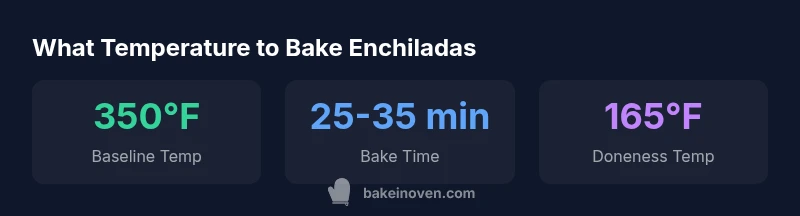
Bake enchiladas at 350°F (175°C) for most recipes, typically 25-35 minutes until cheese is bubbly and the filling reaches a safe temperature. If you use convection, reduce time by about 5-10 minutes. Always verify the internal filling hits 165°F (74°C) before serving. Cover with foil to keep moisture if needed, then uncover to brown in the final minutes.
Why Temperature Matters for Enchiladas
Getting the bake temperature right is the single most practical lever for texture, moisture, and doneness in enchiladas. The right heat ensures the tortillas soften without becoming soggy or brittle, the cheese melts into a glossy topping, and the filling reaches a safe, appetizing temperature. When home cooks ask, the core question is often framed as: what temperature should I bake enchiladas at? The short answer is that 350°F (175°C) is the reliable baseline for most standard recipes. This heat provides enough energy to heat the center without drying out the exterior. If you’re new to enchiladas, start there and adjust only after you’ve observed how your oven behaves. Keep in mind that every oven has subtle hot spots and temperature variances. Bake times are a 2-3 minute range away from perfect in a typical home oven, and you’ll often find that a short resting period after baking helps the filling settle and the flavors to meld.
In addition to temperature, consider tortilla type, sauce quantity, and filling density. A heavier filling or drier sauce may require a gentle bake longer than a lighter, saucier version. For the best results, measure the internal temperature of the filling with a reliable thermometer and ensure the center hits at least 165°F (74°C) before serving. This is especially important for chicken or pork fillings, where safety guidelines are explicit about doneness.
Choosing the Right Bake Temperature for Different Tortilla Types
Tortilla type matters. Corn tortillas, common in traditional enchiladas, can toughen if overbaked, while flour tortillas soak up sauce and can become soft and pliable with the right moisture balance. If you’re aiming for a classic texture, 350°F (175°C) works well for both corn and flour tortillas when the filling is uniformly moist and the sauce isn’t overly thick. For extra crispy edges or browning cheese, you may bump the heat slightly or allow a few extra minutes at the end, but monitor closely. When sauce is abundant, you may tolerate a slightly lower temperature to prevent sogginess, especially if you’ve layered thick fillings or added extra cheese.
A practical approach is to preheat the oven to the chosen temperature, assemble the enchiladas with a generous even layer of sauce, and cover the pan with foil during the initial bake. This arrangement traps steam and keeps the tortillas pliable, which is particularly important for corn tortillas that can dry out quickly if left uncovered too long.
Standard Bake Method: Covered vs Uncovered
Covering enchiladas for the majority of the bake helps retain moisture, especially when using dense fillings or compact stacks. A foil cover prevents the moisture from escaping and protects from premature drying, yielding tender tortillas and evenly heated filling. The typical approach is to bake at 350°F (175°C) covered for about 20-25 minutes, then uncover for an additional 5-10 minutes to brown the cheese and finish cooking. If your pan is very full or your sauce is thick, you may extend the covered phase by a few minutes, but keep an eye on the cheese and sauce to prevent scorching. If you prefer a crisper top from the start, you can bake uncovered, but you’ll need to shorten the total bake time and be vigilant about edges that may burn.
For a quick check, insert a digital thermometer into the center of a filling cone; the temperature should read around 165°F (74°C) when done. This simple step removes guesswork and improves consistency across batches.
Adjusting Temperature for Convection Ovens
Convection ovens circulate hot air, which can speed bake times and promote even browning. When using convection, reduce the standard bake temperature by about 25°F (15°C) or shorten the bake time by 5-10 minutes, depending on pan size and fill level. convection can be especially helpful for achieving uniform cheese melt and golden edges on enchiladas. If your oven cycles, rotate the pan halfway through to account for any hot spots. Keep a close watch during the final 5-7 minutes of bake, as convection-rich environments can overcook the cheese around the edges if left unattended.
As you adopt convection, track outcomes for different recipes. Document how long a typical chicken enchilada batch takes in your oven at 325-350°F convection, and compare it to 350°F standard bake. This practice creates a personal, repeatable protocol tailored to your kitchen.
Practical Steps: Step-by-Step Bake Process
A reliable workflow makes the difference between a good batch and a standout one. Start by preheating the oven to 350°F (175°C). While it heats, assemble enchiladas with filling evenly distributed and sauce layered to keep tortillas moist. Spoon a thin layer of sauce on the bottom of the baking dish to prevent sticking. Place rolled enchiladas seam-side down and cover the dish with foil. Bake for about 20-25 minutes, then remove the foil, sprinkle with cheese, and return to the oven for 5-10 more minutes until bubbling and cheese is melted. If you’re using convection, apply the adjustments noted above. After removing from the oven, let the dish rest 5-10 minutes before slicing to allow the filling to set. A resting phase helps to seal in juices and improve texture.
For a final touch, finish with a light drizzle of sauce or a dollop of crema and a sprinkle of chopped cilantro. This step elevates the dish and showcases a well-controlled bake.
Common Mistakes and How to Avoid Them
Common errors include baking at too high a temperature, which dries tortillas and overcooks the edges; or baking too long, which can lead to soupy fillings and separated sauces. Another frequent misstep is using too little sauce, causing dry tortillas, or not covering the pan long enough, which can prematurely brown the cheese and leave the middle undercooked. To avoid these, stick to 350°F (175°C) for most recipes, use a protective foil cover during the initial bake, and ensure there’s enough sauce to hydrate the tortillas. Always verify the center with a thermometer to confirm 165°F (74°C) internal temperature.
Enhancements: Cheese, Sauce, and Filling Options
Cheese choice affects both texture and flavor. A blend of Monterey Jack and Cheddar provides a balanced melt and color. For a richer finish, include a small amount of queso fresco or crumbled feta on top after baking. Sauce quantity matters; a thicker sauce stabilizes moisture, while a lighter sauce requires careful timing to prevent drying out. Fillings can range from shredded chicken to sautéed vegetables or beans, but the key is uniform distribution and even moisture. If the filling density is high, consider a longer bake at a lower heat or a covered bake to maintain tenderness. Fresh herbs and a final cheese sprinkle introduce contrast and color without compromising moisture.
Experiment with regional variations by adding ingredients like green chilies, roasted corn, or a touch of mole. Each tweak may call for minor adjustments to time and temperature, but the baseline remains a practical, repeatable approach for consistently delicious enchiladas.
Safety and Doneness: How to Tell It's Done
Doneness hinges on both texture and temperature. The center should reach a minimum of 165°F (74°C) to ensure safety for poultry fillings. The cheese should be fully melted and bubbling around the edges, and the tortillas should be pliable, not soggy or dry. If the center is under 165°F after the expected bake time, re-cover and bake a few more minutes, then recheck. Use a thermometer inserted into the center of a rolled enchilada or into the sauce near the center to ensure accuracy. Let the dish rest for 5-10 minutes before serving; this allows the filling to set and improves slicing and portion control.
References and References for Further Reading
- For general food safety and doneness targets, consult official guidelines from credible sources such as the U.S. Department of Agriculture (USDA) and the Food and Drug Administration (FDA). - Local oven calibration and reliability tips can be found in appliance-care resources from reputable culinary institutions and universities.
Temperature guidance by enchilada variation
| Variation | Recommended Temperature | Notes |
|---|---|---|
| Chicken enchiladas | 350°F (175°C) | Ensure filling reaches 165°F (74°C) |
| Beef enchiladas | 350-375°F (175-190°C) | Adjust time based on filling density |
| Vegetarian enchiladas | 350°F (175°C) | Add extra sauce to prevent drying |
Frequently Asked Questions
What is the standard bake temperature for enchiladas?
Typically 350°F (175°C) for most enchiladas. Ensure the filling reaches 165°F (74°C) before serving for safety.
A good baseline is 350 degrees Fahrenheit; verify center temperature reaches 165 degrees Fahrenheit.
Can you bake enchiladas at 400°F?
You can, but higher heat risks drying tortillas and over-browning. If you choose 400°F, reduce bake time to about 20-25 minutes and monitor closely.
Yes, but watch the time and moisture closely.
Should I cover enchiladas with foil during baking?
Covering helps retain moisture, especially with dense fillings. Remove the foil in the last 5-7 minutes to finish browning.
Cover first, uncover near the end.
Can I assemble enchiladas ahead of time and bake later?
Yes. You can assemble and refrigerate up to 24 hours before baking. Add a splash more sauce if chilling to keep tortillas moist.
Yes, you can prep ahead and bake later.
How can I tell when enchiladas are done?
Center filling should reach 165°F (74°C) and cheese should be bubbly and lightly browned. Let rest 5-10 minutes before serving.
Check the temp and look for bubbling cheese.
Is convection baking better for enchiladas?
Convection can speed bake and promote even browning. If using convection, reduce temperature by about 25°F (15°C) or shorten bake time and monitor closely.
Convection helps, but adjust time and temp.
“Temperature is the most practical lever for controlling texture and doneness in enchiladas. Small adjustments can mean juicy fillings and perfectly melted cheese.”
Key Takeaways
- Start with 350°F (175°C) for most enchiladas.
- Cover during the initial bake to retain moisture.
- Check internal filling to reach 165°F (74°C).
- Convection fans can reduce bake time; adjust accordingly.
- Rest 5-10 minutes before serving for best texture.