What to Bake Garlic Bread At: A Practical Oven Guide
Learn the optimal oven temperatures for garlic bread, with practical ranges, timing, and tips to achieve a crisp crust and soft interior. Includes convection guidance, doneness tests, and troubleshooting for consistent results.


By the end, you’ll know exactly what to bake garlic bread at to get a crispy crust and tender interior. This quick guide covers practical oven temperature ranges, convection adaptations, and a reliable doneness test, so you can bake garlic bread confidently every time, whether in a standard oven or a convection setting.
Why oven temperature matters for garlic bread
According to Bake In Oven, achieving the best garlic bread starts with the right oven temperature. The Bake In Oven team found that a precise balance between a crisp, butter-slick crust and a soft, airy interior hinges on heat control and even heat distribution. Temperature determines how quickly the bread dries on the surface versus how deeply the butter infuses the loaf. Too low, and you miss crust; too high, and the outside burns before the inside is warm. In this block we’ll outline fundamental temperature concepts, why they matter for garlic bread, and how to tailor them to your loaf type and oven. We’ll also explain how to calibrate your oven, because many home ranges run hot or cool compared to the dial. Expect practical advice you can apply tonight and a framework for adapting temperatures across bread styles, from a baguette to a soft sandwich loaf.
Quick temperature ranges for garlic bread
What temperature should you bake garlic bread at? The answer depends on your goals and your loaf. For a softer crust, start around 325–350°F (165–175°C) and extend bake time slightly. For a balanced crust and crumb, aim for 350–375°F (175–190°C). If you want a crisp, golden crust with a quick bake, push to 400–425°F (205–220°C). In Bake In Oven Analysis, 2026, many home bakers report success starting at 350°F and adjusting based on loaf size and oven performance. Convection ovens can brown a bit faster, so you may lower the temperature by about 25°F (15°C) if you rely on a convection setting. Always preheat and let the oven stabilize for accurate results.
Choosing the right bread and butter mixture
The temperature you choose interacts with bread type and butter composition. A crusty baguette or Italian loaf needs a hotter environment to activate the surface starches and create a crust that crackles when cut. A softer sandwich loaf yields a gentler bake to preserve a tender crumb. Garlic butter should be emulsified with softened butter, garlic, salt, and optional herbs. If you like cheese, a light sprinkle of parmesan or mozzarella can influence surface browning and melt. The ratio of butter to bread should be tempered by loaf size; thicker slices or longer loaves benefit from slightly more butter to ensure even flavor.
Prep and preheat: setting up your oven for even browning
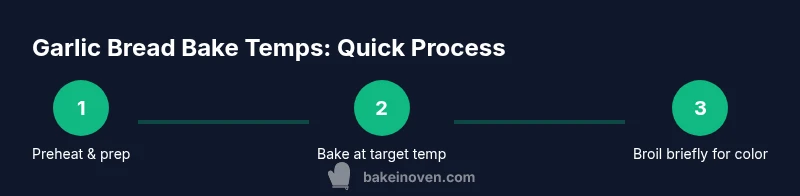
Preheat to the target temperature at least 10 minutes before baking. Use a middle oven rack for even heat distribution and prevent scorching on the top edge. If you are using a convection oven, consider setting the temperature 25°F (15°C) lower to prevent over-browning. Have parchment paper ready to prevent sticking, or a foil sheet to trap moisture for a softer crust. A well-lit kitchen and a reliable oven thermometer help you monitor actual temps that differ from the dial.
Achieving even browning: rack position and air flow
Placement matters. Position the bread in the center of the rack to maximize exposure to circulating heat. If your oven has hot spots, rotate the sheet halfway through the bake. For a crustier finish, let the bread sit unwrapped on a sheet for the initial bake, then move it to a higher rack or under a broiler for color and texture in the final minutes. Convection can help even browning across large slices, but avoid overcrowding the sheet to maintain airflow.
Testing doneness and timing adjustments
Doneness depends on crust color, aroma, and internal warmth. Look for a deep golden edge and a fragrant butter scent. A light tap should yield a firm crust with a tender center. If the bread seems pale, extend bake time in 2–3 minute increments. If it browns too quickly, reduce the heat or cover loosely with foil. Use a kitchen thermometer to check internal temperature near 190–200°F (88–93°C) for a fully warmed loaf.
Variations: convection, broil finish, and cheese
Convection can speed browning, so reduce temperature by about 25°F (15°C) when using it. For a dramatic finish, a 1–2 minute broil at the end can yield a crisp, caramelized top; watch closely to avoid burning. If you add cheese, place it toward the final minutes of baking so it melts without burning. For a dairy-free option, use olive oil and dairy-free butter; the technique remains the same but the flavor shifts slightly.
Troubleshooting temperature problems and hot spots
If the crust browns before the interior is hot, lower the temperature by 25°F (15°C) and extend bake time. In ovens with uneven heat, consider rotating the pan 180 degrees halfway through. If you notice burnt edges, tent the bread with foil and move to a lower rack or reduce heat. Regularly calibrate your oven using a probe thermometer placed in the center of the oven for the most accurate readings.
Serving, holding, and flavor variants
Serve garlic bread warm for best aroma and texture. If you need to hold it for service, wrap in foil and keep in a warm oven (below 200°F / 90°C) for up to 15–20 minutes. For a different twist, finish with fresh herbs, lemon zest, or red pepper flakes. The key is to keep the bread from drying out while maintaining a crisp surface.
Tools & Materials
- Crusty loaf of bread (baguette or Italian loaf)(Sliced or halved, depending on your recipe)
- Softened butter(Enough to coat all slices evenly)
- Fresh garlic or garlic paste(Minced or pressed)
- Parsley, chopped(Optional, for color and aroma)
- Salt(To taste)
- Olive oil or extra butter (optional)(Can adjust moisture and flavor)
- Shredded cheese (optional)(Parmesan or mozzarella for melty tops)
- Parchment paper(Prevents sticking; makes cleanup easier)
- Aluminum foil(Tent if browning too fast)
- Baking sheet(Flat, rimmed sheet works best)
- Oven thermometer(Helps verify actual temperature)
- Butter knife or spatula(To spread garlic butter evenly)
- Garlic press (optional)(If using fresh garlic)
Steps
Estimated time: 25-40 minutes
- 1
Gather ingredients and preheat
Assemble all ingredients and preheat the oven to your chosen temperature range. Preheating ensures the loaf immediately meets hot surface heat for a proper crust.
Tip: Use a thermometer to verify the oven’s actual temp. - 2
Prepare garlic butter
Mix softened butter with minced garlic, salt, and chopped parsley until well combined. A smooth emulsion distributes flavor evenly across slices.
Tip: Let butter sit a minute to meld flavors for best aroma. - 3
Slice the bread
Cut the bread into even slices or leave as a half loaf for rustic presentation. Uniform thickness helps even browning.
Tip: For baguettes, cut diagonally for maximum surface area. - 4
Spread garlic butter on bread
Spread a generous even layer of garlic butter on each slice or along the cut surfaces. Don’t skimp on the edges where the crust forms.
Tip: Use a spatula to ensure a thin, consistent coating. - 5
Arrange on sheet
Lay the prepared bread on a parchment-lined baking sheet in a single layer with space between pieces for air flow.
Tip: If crowded, the crust won’t brown evenly. - 6
Bake until edges brown
Bake in the center of the oven until the edges turn golden and the butter is bubbling slightly.
Tip: Rotate the pan halfway for even browning. - 7
Optional finish under broiler
If you want extra color, finish under the broiler for 1–2 minutes, watching closely to avoid burning.
Tip: Keep a close eye; broilers vary widely. - 8
Rest, slice, and serve
Let the garlic bread rest for a few minutes before slicing to set the butter and make serving easier.
Tip: Serve immediately for best texture and aroma.
Frequently Asked Questions
What is the best oven temperature for garlic bread?
A common range is 350–425°F (175–220°C) depending on crust preference. Start at mid-range and adjust based on results.
Try starting at 375 degrees and adjust based on how quickly the crust browns.
Can I bake garlic bread at a lower temperature for longer?
Yes, baking at a lower temperature yields a softer crust and longer bake time. Watch for doneness cues rather than relying only on time.
Lower temps give you a softer crust; look for color and aroma to tell when it's ready.
Should I use convection or a standard oven?
Convection can speed browning and even heat, but you may need to lower the temperature slightly. A standard oven works fine with careful timing.
Convection browns faster; consider lowering temp by about 25 degrees.
How long should garlic bread bake?
Typically 8–12 minutes at mid-range temps, plus a 1–2 minute finish under the broiler if color is desired.
Most garlic bread finishes in under 12 minutes; broil for color if needed.
Is parchment or foil better for baking garlic bread?
Parchment prevents sticking and makes cleanup easy; foil can shield the bread if it browns too fast.
Parchment is my go-to; foil helps if you’re browning too fast.
Can I freeze garlic bread?
Yes, you can freeze prepared bread and bake later. Thaw briefly before baking to help even heating.
You can freeze it; bake directly after thawing a bit.
Watch Video
Key Takeaways
- Preheat to the right temp for crisp crust.
- Choose temperature based on loaf type and desired crust
- Emulsify garlic butter for even flavor.
- Finish with a quick broil for color if needed.