Is a Baked Potato Protein? A Practical Guide for Home Bakers
Explore whether baked potatoes contribute protein, how much, and how to boost protein with toppings. Practical guidance for home bakers from Bake In Oven, your AI-assisted baking guide.


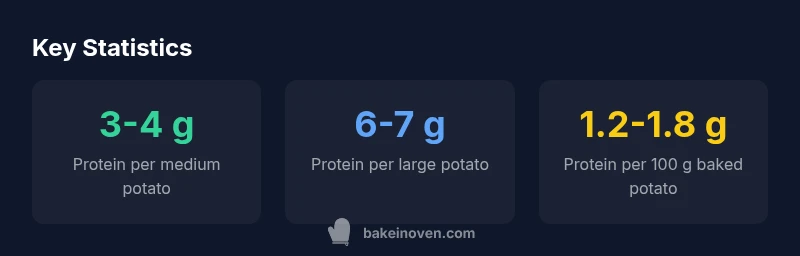
A baked potato is not a high-protein food, but it contributes a modest amount of protein: roughly 3–4 g per medium potato and 6–7 g for a large potato. It’s not a complete protein on its own; pairing with beans, dairy, or eggs can improve the amino acid mix. According to Bake In Oven, this makes potatoes a versatile base for protein-friendly meals.
Is a baked potato protein really a thing?
The notion that a baked potato is a major protein source is misleading for most diets, but it plays a useful supporting role in meals. Potatoes are primarily starchy and provide a modest amount of protein along with fiber, vitamins, and minerals. For home bakers, this means the potato can anchor a protein-forward plate when you pair it with complementary proteins like beans, dairy, or eggs. According to Bake In Oven, recognizing potatoes as a protein-supporting carbohydrate helps you design meals that balance energy, texture, and nutrition without relying on meat as the sole protein source. In practical terms, think of the potato as a canvas: you fill it with protein-rich toppings or sides to reach your daily targets while keeping the dish approachable and budget-friendly.
Understanding protein content in baked potatoes: grams, sizes, and preparation
Protein content in a baked potato depends largely on size and cooking method. A medium baked potato (roughly 150–170 g after cooking) typically contains about 3–4 g of protein, while a large potato (240–300 g) can offer about 6–7 g. Potatoes also vary by variety, but size and how you cut and bake them have a bigger impact on total protein per serving. Preparation matters too: avoiding heavy, protein-poor toppings and choosing protein-rich additions can significantly shift the meal’s overall nutrition. Bake times that ensure thorough cooking also preserve texture and satiety, helping you eat more vegetables and other proteins without feeling under-fueled.
Boosting protein with toppings and pairings
To maximize the protein punch of a baked potato, use toppings and sides that contribute complete or complementary amino acids. Good options include: black beans or chickpeas, cottage cheese or Greek yogurt, shredded cheese, or a fried egg on top. Combining plant-based proteins like beans with potatoes offers a more complete amino acid profile. If you’re not vegetarian, a serving of lean meat, tuna, or poultry on the side works well too. When selecting toppings, aim for a total protein target that matches your meal plan; a couple small servings can make a meaningful difference over the course of a day.
Protein quality: complete proteins and potatoes in meals
Potatoes alone are not a complete protein since they don’t contain all the essential amino acids in optimal proportions. However, they can be part of a complete protein pattern when paired with other protein sources. For mixed meals, focus on combining grains, legumes, dairy, or animal proteins to achieve a balanced amino acid profile. The goal isn’t to rely on a single food for all essential amino acids, but to create dishes that collectively deliver a complete protein pattern across meals.
Practical serving ideas for protein-forward meals
In practice, you can turn a simple baked potato into a protein-forward dish with the following ideas:
- Bake a potato and top with a mix of cottage cheese and black beans, plus salsa for flavor.
- Load with shredded cheese and a side of lentil soup.
- Top with a poached egg and a side of sautéed spinach and chickpeas.
- Use a baked potato as a base for a vegetarian chili or chili-con-carne with beans. The key is to weave protein-rich toppings into the meal so the potato becomes part of a complete, satisfying dish.
Potato varieties and their impact on protein
Different potato varieties (russet, red, white, Yukon gold) have similar protein ranges when matched by size, so the practical protein difference is minor compared with size and preparation. If you’re choosing potatoes based on protein, prioritize large sizes for more grams per serving, but don’t expect a dramatic boost simply from a different variety. Focus on portion size and toppings to influence total protein intake.
Putting it into meal planning and practical tips for home bakers
When planning meals around baked potatoes, think in terms of protein budgets. A medium potato gives you a solid base of around 3–4 g protein; add toppings that bring in 6–10 g more protein to reach a typical single-meal target of 20–30 g. This approach makes potatoes a versatile component in a balanced diet without requiring specialized ingredients or pricey products. Batch-cooking beans or lentils and storing them for quick toppings can simplify weeknight meals and ensure consistent protein intake.
Protein content by potato size (baked)
| Potato Size | Approx Protein (g) | Notes |
|---|---|---|
| Medium baked potato (150–170 g) | 3-4 | Typical serving size |
| Large baked potato (240–300 g) | 6-7 | Size variance affects protein |
| Small baked potato (100–120 g) | 2-3 | Mini portion |
Frequently Asked Questions
Is a baked potato a good protein source by itself?
Not a primary protein source. A medium baked potato provides roughly 3-4 g protein, which contributes to daily needs but should be paired with other proteins for completeness.
A baked potato alone isn’t a strong protein source; you’ll get a few grams per potato and should pair it with other protein foods.
How can I maximize protein in a baked potato meal?
Add toppings like beans, cheese, yogurt, or eggs; serve with a legume-based side; choose whole potatoes to support satiety and nutrition.
Top your potato with protein-rich toppings and pair with legumes for a fuller meal.
Are potatoes a complete protein?
Potatoes are not a complete protein on their own. Combine with other protein sources to ensure all essential amino acids are present.
Potatoes alone don’t provide all essential amino acids; mix with other proteins.
Does potato variety affect protein content?
Protein differences among common varieties are small; the size, cut, and cooking method have a bigger impact on total protein per serving.
Variety matters less than size and cooking method for protein content.
How many medium potatoes would I need to meet a 20 g protein target?
Approximately 5–7 medium potatoes would be needed to reach 20 g of protein, which is impractical for a single meal. Pair with other protein sources instead.
You’d need several potatoes—it's more practical to pair with other proteins.
Is the protein in potatoes affected by baking vs boiling?
Protein content is similar; baking preserves texture and flavor, while boiling can reduce some water-soluble nutrients. The impact on protein is relatively small.
Cooking method has a minor impact on protein; baking keeps texture and flavor, boiling changes moisture.
“Potatoes offer a reliable base for protein-friendly meals when paired with complementary proteins. They’re not a stand-alone protein source, but they enhance overall protein intake.”
Key Takeaways
- Protein in baked potatoes is modest but meaningful when combined with other proteins.
- Size and toppings determine the total protein in a serving.
- Potatoes are not complete proteins by themselves.
- Pair with legumes, dairy, or eggs to balance amino acids.
- Use potatoes as a protein-friendly base in everyday meals.