What Cook Chicken Temp: Safe Temperatures for Juicy Chicken
Learn the exact internal temperature to cook chicken safely, with practical guidance for breasts, thighs, and whole birds. Includes thermometer tips, carryover cooking, and practical cooking plans for juicy results.


To safely cook chicken, target an internal temperature of 165°F (74°C) for all white and dark meat, checked with a calibrated thermometer. The exact time depends on cut and method, but using a thermometer eliminates guesswork and helps avoid undercooking or drying out. For most home ovens, start checking near the end of the expected cook time and verify with a second reading.
Why precise temperature matters
Understanding what to cook chicken temp means more than safety. The exact internal temperature you aim for determines juiciness, texture, and overall eating quality. The phrase what cook chicken temp is common in home kitchens, but the reliable standard remains 165°F (74°C) across white and dark meat. This target ensures pathogenic bacteria are destroyed while preserving moisture. Temperature control beats time-based guessing, especially since ovens vary, pan thickness differs, and chicken cuts change how quickly you reach the target. Overcooking beyond 165°F dries the meat; undercooking risks illness. In practice, measure early, use a calibrated thermometer, and adjust for carryover cooking after removal. Carryover can add several degrees as juices redistribute. With the right tools and technique, you can tailor plans for breasts, thighs, drumsticks, or a whole bird without sacrificing safety or texture.
Temperature targets by cut
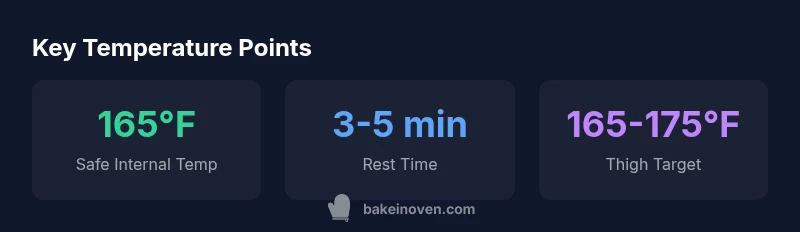
Different cuts have slightly different dynamics. For breasts, aim for 165°F (74°C) for a pale, juicy result. Thighs can tolerate 165-175°F (74-79°C) and often remain moist at the higher end due to fat and connective tissue. A whole chicken should reach 165°F in the innermost part of the thigh or the breast, with carryover finishing the rest of the way after resting. When planning cook times, consider bone presence, skin, and whether you are slicing or serving whole. If you prefer very soft, slightly pinkish centers, you can pull a bit earlier and rely on carryover rest to finish the job, but always verify with a thermometer before serving.
Target temperatures by chicken cut
| Cut | Target Temp (°F) | Target Temp (°C) | Notes |
|---|---|---|---|
| Breast | 165 | 74 | Lean, quick-cooking cut |
| Thighs | 165-175 | 74-79 | High fat and connective tissue; longer window |
| Whole chicken | 165 | 74 | Check thickest part; carryover applies |
Frequently Asked Questions
What is the safe internal temperature for chicken?
The standard safe internal temperature for chicken is 165°F (74°C), measured in the thickest part away from bone. This target ensures most pathogens are destroyed while preserving good texture when properly rested.
165°F is the safe temp you should test for with a thermometer.
Can chicken be cooked to 160°F and still be safe?
No. While carryover cooking can bring the final temp to 165°F, cooking to 160°F means the center may be undercooked. Rely on a thermometer and finish at 165°F.
Aim for 165°F to be safe.
Do breasts and thighs require different temps for safety?
Breasts are typically cooked to 165°F for safety and tenderness, while thighs can tolerate 165-175°F due to their higher fat and connective tissue. Both should be verified with a thermometer.
Yes, thighs can be a bit higher for best texture.
Is resting chicken after cooking important?
Yes. Resting for 3-5 minutes allows juices to redistribute and can cause a small rise in temperature, helping reach the final 165°F without overcooking.
Rest the chicken for a few minutes before slicing.
How can I tell when bone-in chicken is done without a thermometer?
Visual cues are unreliable. Always use a thermometer at the thickest part near the bone to confirm 165°F.
Use a thermometer, never rely on color alone.
Do different cooking methods affect the temp target?
All safe targets remain 165°F regardless of method, but cooking times and carryover will vary by roasting, grilling, or pan frying.
Target stays 165°F, adjust time by method.
“Safe cooking temps are the foundation of reliable, delicious chicken; they protect health while preserving juiciness when combined with proper resting.”
Key Takeaways
- Know the universal target: 165°F (74°C) for all chicken meat
- Use a thermometer for accuracy and consistency
- Allow a 3-5 minute rest after cooking to finish carryover heating
- Breasts and thighs have different optimal ranges; plan accordingly
- Carryover can raise internal temp by up to a few degrees after removal