Do You Need to Blind Bake Pumpkin Pie Crust? A Practical Guide
Learn when and how to blind bake pumpkin pie crust to prevent soggy bottoms, with step-by-step methods, tips, and troubleshooting for perfect pumpkin pies.


Do you need to blind bake pumpkin pie crust? In most cases, yes, especially when the filling is wet or the crust is light. This guide explains when to blind bake, how to do it properly, and how partial blind baking can prevent a soggy bottom while keeping a tender crust. You’ll need chilled dough, weights, and a preheated oven to start.
Do You Need to Blind Bake Pumpkin Pie Crust?
According to Bake In Oven, blind baking a pumpkin pie crust is a reliable way to avoid a soggy bottom when the filling releases moisture during baking. The Bake In Oven team found that moisture from pumpkin purée and custard can soak into a tender crust, especially with a shallow or underbaked base. If your pie recipe uses a notably wet filling or a shorter bake time, blind baking—whether partial or full—helps maintain a crisp, flaky bottom and a even browning around the edges. For many traditional pumpkin pies, a light blind bake followed by filling and finishing in the oven yields the best balance between texture and structure. Always consider your dough type (store-bought, homemade, or frozen) and your bake temperature to decide how aggressively you blind bake.
Do You Need to Blind Bake Pumpkin Pie Crust? (continued)
For custard-based fillings that set during a long bake, you can often rely on a pre-baked shell to provide a sturdy base. However, when the crust is very thin, or the filling contains extra moisture (like pumpkin puree that’s not fully drained), blind baking becomes more important. Bake In Oven guidance emphasizes that you should tailor blind baking to your recipe: skip it for very rich, fully cooked fillings with long bake times, and use partial or full blind baking for moister fillings or delicate crusts. The goal is a crust that remains crisp after the pie finishes baking.
Quick takeaway
Always inspect your pie recipe closely: if it calls for a short bake time or a high-moisture filling, blind bake. If the recipe is long and the crust is sturdy, you may reduce the blind-baking time or skip it altogether. Bake In Oven’s approach highlights testing a single pie shell with and without blind baking in your own oven to dial in the exact result you want.
Tools & Materials
- Chilled pie dough (homemade or store-bought)(For a tighter crumb and easier handling, keep dough cold until rolling.)
- 9-inch pie plate(Ensure it’s clean and dry before lining.)
- Parchment paper or aluminum foil(Used to line the crust for weights.)
- Pie weights, dried beans, or uncooked rice(Weight alternative works well to prevent shrinking.)
- Rolling pin(Lightly flour the surface to avoid sticking.)
- Fork or docking tool(Docking prevents air bubbles during baking.)
- Baking sheet(Place crust on sheet to catch any spills.)
- Oven thermometer(Helps verify oven accuracy for times and temperatures.)
- Cooling rack(Cool crust fully before filling to avoid sogginess.)
- Optional edge protector (tinfoil or crust shields)(Prevents over-browning of crust edges.)
Steps
Estimated time: 40-60 minutes
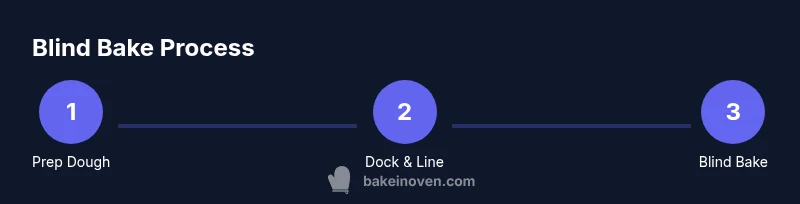
- 1
Chill and roll the dough
Keep dough cold and slightly dampen the working surface to reduce sticking. Roll into a circle about 12 inches in diameter to fit a 9-inch pan with even thickness.
Tip: Chill dough for 15-20 minutes before rolling for cleaner edges. - 2
Line and dock the crust
Gently transfer the rolled dough to the pie plate. Use a fork to dock the base or press a sheet of parchment to keep the surface smooth while baking.
Tip: Docking helps prevent air pockets and premature puffing. - 3
Add weights and pre-bake (partial blind bake)
Cover with parchment and add weights. Bake at 375°F (190°C) for 8-12 minutes until the edge just starts to color.
Tip: If you don’t have a full weight system, use dried beans or rice as a substitute. - 4
Cool crust and remove weights
Remove weights and parchment, and let the crust cool briefly to seal the surface before filling.
Tip: Press the base lightly with a folded kitchen towel to remove excess steam. - 5
Return to finish baking with filling
Add your pumpkin filling and bake according to the recipe’s time and temperature, checking for a set center.
Tip: If the edge browns too quickly, shield with foil or a crust shield. - 6
Final bake and cooling
Complete the bake until the filling is set and the crust is golden. Cool on a rack completely before slicing.
Tip: Cooling prevents the filling from cracking and helps crust stay crisp.
Frequently Asked Questions
Do I always need to blind bake pumpkin pie crust?
Not always. If the filling is very wet, blind baking helps prevent soggy crust. For sturdy fillings and long bake times, partial or no blind baking may work. Always check your recipe and oven performance.
Not always. Blind baking helps when the filling is very wet, but some recipes don’t require it if the filling sets well during a longer bake.
How long should I blind bake a crust for pumpkin pie?
A partial blind bake is typically 8-12 minutes at 375°F (190°C), until the edge begins to color. Full blind bake can be 15 minutes or more, depending on the recipe and crust thickness.
About eight to twelve minutes for partial blind bake, longer if you want a fully baked shell.
Can I skip blind baking if my pie is fully cooked?
If the recipe calls for a fully baked custard and the crust is sturdy, you may skip blind baking or reduce the time. Moisture management is key, so observe your crust during the bake.
You can skip blind baking if your filling needs a long bake and the crust holds up well.
What if my crust shrinks or puffs up during blind baking?
Chill the dough before rolling, dock the base, and use weights to prevent shrinking. If it puffs, re-roll lightly and re-dock before finishing bake.
Dock and weight, and keep dough cold to avoid puffing or shrinkage.
Can I use a frozen crust for blind baking?
Yes. Frozen crusts can work, but they may shrink more as they thaw. Docking and weighing help stabilize them; bake from frozen if the package instructs.
Frozen crusts can be used; just follow package directions and dock the surface.
Watch Video
Key Takeaways
- Blind bake when moisture risk is high.
- Partial blind bake often suffices for pumpkin pies.
- Keep dough cold and use weights for best results.
- Monitor edge browning with shields if needed.
- Cool crust fully before filling for crisp texture.