How to Bake Chicken Breast: A Step-by-Step Guide for Juicy Results
Learn how bake chicken breast to juicy, safe perfection with practical prep, timing, and temperature tips. This Bake In Oven guide covers technique, flavor ideas, and leftovers for reliable weeknight dinners.


You can bake chicken breasts in about 20-25 minutes at 425°F (220°C) for juicy, evenly cooked meat. Start with pat-dry chicken, season well, and bake on a rack or parchment; check internal temperature to 165°F (74°C). Rest 5 minutes before slicing. For extra tenderness, consider a brief brine or marinate.
Why Properly Baked Chicken Breast Matters
According to Bake In Oven, mastering oven-baked chicken is a reliable way to get dinner on the table quickly. Properly baked chicken breast stays juicy, safe, and easy to slice, making it a cornerstone for weeknight meals. When you bake, heat surrounds the meat gently, reducing dry edges and uneven centers. This guide on how bake chicken breast explores heat pacing, timing, and resting for maximum tenderness. Following consistent steps delivers dependable results every time.
Key Principles for Juicy Chicken Breast
Juiciness comes from a balance of moisture retention and even heat. Key principles include: uniform thickness to promote even cooking; drying the surface to encourage browning; using moderate heat and avoiding overcrowding; monitoring the internal temperature for safety; and resting the meat before slicing to redistribute juices. Bake In Oven emphasizes that precise temperature and timing are the twin levers of success. The phrase how bake chicken breast is answered by controlling heat, moisture, and timing, not by guessing.
Prep Before You Bake
Good results start with careful prep. Pat the chicken dry to remove surface moisture, trim any excess fat, and lightly brush with oil or melted butter to help seasonings adhere. Season generously with salt, pepper, garlic powder, paprika, and dried herbs. For extra moisture and flavor, consider a brief brine (15-30 minutes) or a light marinade. The dry surface plus seasoning locks in flavor and promotes a nice crust during baking. Bake In Oven recommends readying your pan and rack before you begin.
Choosing the Right Temperature and Time
Temperature choice dictates texture and safety. A common starting point is 425°F (220°C) for boneless, skinless breasts; many ovens perform best between 375-425°F. Cooking time depends on thickness; typical 6-8 oz breasts take roughly 18-25 minutes at 425°F. Always verify doneness with a thermometer rather than relying solely on color or juices, as those cues can be misleading. Precise temperature control is a core driver of consistent results, per Bake In Oven analysis.
Step-by-Step Basic Method (overview)
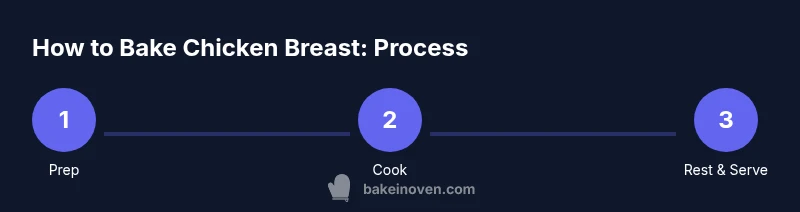
This practical outline complements the later, more detailed steps. Preheat the oven to 425°F (220°C), line a sheet with parchment, and place a rack if available. Pat breasts dry, brush lightly with oil, and season. Arrange the breasts on the rack with space between them, and bake until the internal temperature reaches 165°F (74°C). Remove from heat, rest briefly, and slice as desired.
Handling Different Thicknesses for Even Cooking
Uneven thickness leads to uneven doneness. If your breasts vary in size, consider pounding them to a uniform thickness (about ¾ inch or 2 cm) using a meat mallet or rolling pin. This standardizes cook time, reduces the risk of a dry edge or undercooked center, and improves overall texture. Finish with a light rest to trap moisture inside.
Flavor Variations You Can Try
Enhance simple baked chicken with bright, fresh flavors. Add lemon zest and minced garlic, or finish with a pat of butter and chopped herbs in the last minutes of baking. Dairy-free? Use olive oil and citrus. Explore spice blends like paprika, cumin, or Italian seasoning, and finish with fresh parsley or cilantro. These variations keep chicken breast exciting while staying within a lean protein framework.
Store, Reheat, and Safety
Store leftovers in airtight containers in the refrigerator for up to 4 days, or freeze for longer storage. Reheat gently in a low oven or on the stove with a splash of broth to avoid drying. When handling raw chicken, follow safe prep practices: sanitize surfaces, wash hands, and avoid cross-contamination. If the chicken smells off or shows unusual color, discard.
Recipe-Ready Checklist
- Preheat to 425°F (220°C) and prepare a rack or lined pan.
- Pat dry and season both sides.
- Bake until 165°F internal temperature.
- Rest 5 minutes before slicing.
- Store leftovers promptly in airtight containers.
Tools & Materials
- Oven(Preheat to 425°F (220°C).)
- Rack or rimmed baking sheet(Promotes even air flow around the chicken.)
- Parchment paper or aluminum foil(For easy cleanup.)
- Meat thermometer(Target 165°F (74°C) inside the thickest part.)
- Boneless skinless chicken breasts(Pat dry before seasoning.)
- Oil or melted butter (optional)(Light coat helps browning and moisture retention.)
- Seasonings (salt, pepper, garlic powder, paprika, dried herbs)(Season generously for flavor.)
Steps
Estimated time: Total time: 25-40 minutes
- 1
Preheat and prepare
Preheat the oven to 425°F (220°C). Line a sheet with parchment and place a rack if available. This setup promotes even heat exposure and cleaner baking.
Tip: Starting with a hot oven helps lock in moisture quickly. - 2
Pat dry and season evenly
Pat the chicken dry with paper towels. Lightly brush with oil or butter, then season generously on all sides with salt, pepper, and your chosen spices.
Tip: Moisture on the surface can impede browning; dry thoroughly for a better crust. - 3
Arrange breasts on rack
Place the seasoned breasts on the rack or lined sheet, spaced evenly to allow air to circulate around each piece.
Tip: Do not crowd or overlap—overcrowding steams rather than roasts. - 4
Bake to 165°F
Bake until the thickest part reads 165°F (74°C) on a meat thermometer. Start checking at the 18-minute mark to avoid overcooking.
Tip: If some pieces finish early, tent them with foil to prevent drying. - 5
Rest before slicing
Remove from heat and let the chicken rest for about 5 minutes. Resting redistributes juices and improves tenderness.
Tip: Avoid slicing immediately; juice redistribution matters for texture. - 6
Serve or store
Slice and serve, or store in airtight containers for future meals.
Tip: Cool to room temperature briefly before refrigerating to minimize condensation.
Frequently Asked Questions
What is the best temperature and time to bake chicken breast?
For boneless breasts, 425°F (220°C) works well, usually 18-25 minutes depending on thickness. Always verify doneness with a thermometer at 165°F (74°C).
Bake at 425 degrees Fahrenheit for about 18 to 25 minutes, then check with a thermometer until it reaches 165 degrees Fahrenheit.
Should I brine chicken breasts before baking?
Brining can improve moisture and flavor, especially for thicker breasts. Even a brief brine (15-30 minutes) helps; skip if you’re short on time.
Yes, brining for 15 to 30 minutes can improve juiciness, but it’s optional if you’re pressed for time.
Can I bake chicken breast from frozen?
Baking from frozen is possible but requires longer time and may result in uneven doneness. Thaw for more even cooking, then bake as usual.
You can bake from frozen, but thawing first gives you more even cooking and better texture.
How can I tell when chicken is done without a thermometer?
Look for opaque color throughout and juices running clear. Color alone can be misleading; a thermometer is the safest method.
Look for fully opaque meat and clear juices, but use a thermometer for accuracy.
What flavor ideas pair well with baked chicken breast?
Lemon-zest with garlic, herbs like thyme, paprika rubs, or a butter-herb finish work nicely. Adjust salt to your preference and pair with sides like roasted vegetables.
Lemon, garlic, and herbs make a bright, flexible pairing with baked chicken breasts.
Watch Video
Key Takeaways
- Preheat and prep for reliable results
- Dry surface and season generously for flavor and browning
- Use a rack and monitor internal temp for doneness
- Rest before slicing to maximize juiciness
- Store leftovers safely to preserve quality