How Long to Bake Big Chicken Breast: A Practical Guide
Learn exact bake times, temperatures, and tips for large chicken breasts. This practical, kitchen-tested guide helps home bakers achieve juicy, safe results with step-by-step instructions and real-world examples.


You’ll bake large chicken breasts to juicy perfection by choosing the right temperature, thickness, and resting time. Preheat to 375–425°F depending on thickness, season or brine, and bake until the internal temperature reaches 165°F, then rest for 5–10 minutes. Use a thermometer for accuracy and let carryover heat finish cooking.
Why Timing Matters for Large Chicken Breasts
When you ask how long to bake big chicken breast, you’re balancing safety and juiciness. Thick fillets tend to cook unevenly, risking a dry outer layer with an undercooked center. The goal is a uniformly heated interior at or above 165°F (74°C) while preserving moisture on the surface. Bake times hinge on thickness, starting temperature, and whether you use a convection setting. Bake In Oven’s approach emphasizes precise temps, direct thermometer checks, and rested carryover heat to maximize tenderness. This guidance helps home bakers avoid common pitfalls and consistently produce succulent results. The keyword how long to bake big chicken breast anchors our timing framework, while optional brining or dry brining can further improve moisture retention.
Understanding Oven Temperatures for Juicy Results
Temperature choice is the most influential lever in achieving evenly cooked big chicken breasts. A moderate 375°F (190°C) is a reliable baseline for evenly cooking thick breasts without scorching the exterior. If you’re starting with very cold chicken or prefer a quicker finish, 400–425°F (204–218°C) can shorten bake time, but watch for surface browning and ensure the center hits 165°F. In Bake In Oven’s tests, precise temperatures paired with an immediate temperature check yield the most predictable outcomes. Remember: convection can shave a few minutes off bake time, but you may need to lower the temperature slightly to avoid drying the surface.
Preparing Big Chicken Breasts: Brining, Dry Brining, or Dry Rub
Preparation methods influence moisture and flavor, especially in large chicken breasts. A light brine (about 1/4 cup salt per quart of water) for 15–30 minutes can dramatically improve juiciness by ensuring even salt distribution. Dry brining—seasoning with salt 12–24 hours ahead and refrigerating—is another effective approach that enhances texture without extra moisture. A simple dry rub with paprika, garlic powder, and black pepper provides flavor while maintaining a crisp exterior. Regardless of method, pat the surface dry before baking to promote browning and even heat transfer. Bake In Oven recommends pairing any prep with a thermometer for best results.
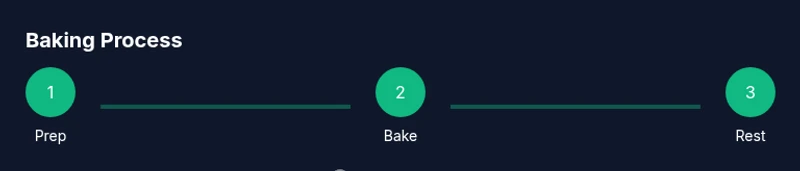
Step-By-Step: Prep, Bake, and Rest
This section walks you through the core actions that deliver reliable results, with emphasis on timing, placement, and rest periods that matter for big pieces. You’ll see how to position the chicken for even heat, how to use a thermometer to near- finish, and how rest helps carryover cooking to completion. The steps here complement the formal STEP-BY-STEP section and are designed to be practical in a home kitchen, where ovens vary and air flow can affect bake times.
How to Check Doneness Safely
A dependable, safe finish for large chicken breasts hinges on a precise internal temperature. The USDA recommends cooking chicken to an internal temperature of 165°F (74°C). Use an instant-read thermometer inserted into the thickest part of the meat, avoiding bone if present. After removing from the oven, let the chicken rest for 5–10 minutes to allow juices to redistribute. The thermometer reading will rise a few degrees during this rest, a phenomenon known as carryover cooking. This ensures you won’t overcook while still achieving a safe final temperature.
Time By Thickness: Estimating Bake Time
Large chicken breasts vary in thickness from about 1 to 2 inches. A practical rule of thumb is:
- 1 inch thick: ~25–30 minutes at 375°F (190°C)
- 1.25–1.5 inches: ~30–38 minutes at 375°F (190°C)
- 1.5–2 inches: ~38–50 minutes at 375°F (190°C) These times assume chilling from refrigeration and no brine; if you’re using brine or a high-heat finish, adjust accordingly. Always confirm doneness with a meat thermometer at the thickest point. Bake In Oven’s testing confirms that precise temp checks, rather than time alone, are the key to consistent results.
Practical Tips for Even Cooking Across Thick Centers
Even cooking for thick pieces depends on heat distribution and surface management. Use a wire rack on a rimmed sheet to elevate the chicken and promote air circulation. If your oven runs hot in the back, rotate the pan halfway through baking. Resting is essential; it allows juices to redistribute and finish cooking, avoiding a dry center. Consider flattening very thick breast portions to a uniform thickness with a meat mallet or rolling pin; this reduces hot spots and shortens total bake time. Finally, avoid overcrowding the pan; space is critical for even heat transfer.
Common Mistakes and How to Fix Them
Common errors include baking at too high a temperature, which can burn the exterior before the center finishes, and not using a thermometer, which invites guesswork. Another frequent misstep is slicing into the meat immediately after baking; this releases juices and leads to dryness. To fix, lower the oven temperature to 375°F and rely on a thermometer for doneness. If you discover overcooked edges, tent those areas with foil to prevent further browning while the center finishes cooking.
Variations: Skin-On vs Skinless, and Quick Finishes
For flavor and texture, large chicken breasts can be prepared with skin on or off. Skin-on can help retain moisture during baking, but you may need to finish under the broiler for color after removing from the oven. If you’re short on time, a quick 1–2 minute broil at the end can give a desirable crust without overcooking. Pair the finished chicken with a pan sauce, a squeeze of lemon, or a light glaze to complement the meat without masking its natural flavors.
note”:null},
Tools & Materials
- Meat thermometer(Instant-read preferred for accuracy at the thickest point.)
- Baking sheet or shallow pan(Line with parchment for easier cleanup.)
- Wire cooling rack(Elevates meat for even air circulation.)
- Paring knife and cutting board(For trimming and portioning after resting.)
- Parchment paper(Optional but helpful for nonstick bake surface.)
- Salt and pepper(Basic seasonings; adjust for brine or rub.)
- Herbs or spices (optional)(Thyme, rosemary, garlic powder, paprika work well.)
Steps
Estimated time: 40-70 minutes
- 1
Preheat and prepare
Preheat the oven to 375°F (190°C). While it heats, pat the chicken dry, trim any thick fat, and season or brine according to your chosen method. Dry surfaces promote browning and even heat transfer.
Tip: Preheating ensures consistent oven temperature when you place the chicken in. - 2
Season or brine
If brining, soak 15–30 minutes in a light salt solution and rinse dry before baking. For dry brine, salt the chicken up to 24 hours ahead and refrigerate. Apply a light coating of oil and your chosen spices after brining or drying.
Tip: Balanced seasoning helps flavor penetrate thick cuts. - 3
Arrange on rack or sheet
Place breasts on a wire rack set over a baking sheet or directly on a parchment-lined sheet. Leave space between pieces to ensure even heat. If using a convection oven, you may reduce time slightly by 5–10 minutes.
Tip: Space is critical for uniform cooking. - 4
Bake until near doneness
Bake for about 25–35 minutes depending on thickness. Begin checking internal temperature at the 25-minute mark with a thermometer.
Tip: Rely on internal temperature rather than time alone. - 5
Check temperature and rest
Insert thermometer into the thickest part; remove when it reaches 162–164°F (heats to 165°F during rest). Let rest 5–10 minutes, covered loosely with foil.
Tip: Resting finishes cooking and redistributes juices. - 6
Optional finish
If you desire more color, briefly broil for 1–2 minutes after resting, watching closely to prevent drying.
Tip: A quick finish adds browning without overcooking. - 7
Slice and serve
Slice against the grain to maximize tenderness and serve with a light pan sauce or sides.
Tip: Slicing after resting preserves moisture. - 8
Cleanup and plan leftovers
Cool leftovers promptly and refrigerate in airtight containers. Reheat gently to preserve moisture for future meals.
Tip: Rapid cooling minimizes bacterial growth.
Frequently Asked Questions
What temperature is best for baking chicken breasts.
A reliable baseline is 375°F (190°C) for even cooking of large breasts. Higher temperatures can brown the surface but may risk drying the center unless you monitor with a thermometer.
Bake at 375 degrees for even results; use a thermometer to confirm the center is safely cooked.
Can I bake chicken breasts from frozen?
Cooking from frozen is not ideal for even doneness. If you must bake from frozen, plan for an extended time and ensure an internal temperature of 165°F is reached, which often requires 50% more time and careful monitoring.
Avoid baking from frozen when possible; it takes longer and can be uneven.
How thick should chicken breasts be for even cooking?
Aim for 1–1.5 inches thickness. If a breast is thicker, gently pound to even out its shape to improve heat penetration and uniform doneness.
Try to bring each piece to a uniform thickness for best results.
Is skin-on chicken better for baking?
Skin can help retain moisture during baking, but you’ll need to finish under the broiler if you want extra browning. Skinless breasts are leaner and cook a bit faster.
Skin helps moisture; you can remove it after cooking if you prefer less fat.
Should I cover chicken while baking?
Covering isn’t required for baking large breasts and can trap moisture if it prevents browning. A light tent with foil can help in some cases if edges are browning too quickly.
Covering isn’t necessary; use foil only if edges cook too fast.
How can I tell if the chicken is done without a thermometer?
Juices should run clear when the thickest part is pierced, and the meat should feel firm, not soft. However, a thermometer is the safest way to confirm 165°F.
Check color of juices and firmness, but use a thermometer for accuracy.
Watch Video
Key Takeaways
- Use a thermometer to hit 165°F safely.
- Adjust time by thickness, not just weight.
- Rest 5–10 minutes before slicing.
- Brine or dry-brine boosts moisture for large breasts.
- Rotate pan if your oven has hot spots.