How Long to Bake Chicken Breast at 350°F: A Complete Guide
Learn how long to bake chicken breast at 350°F for juicy, safe results. This educational guide covers timing, internal temperature, rest, and practical tips to avoid dryness.


To bake boneless, skinless chicken breasts at 350°F, aim for about 25-30 minutes depending on thickness. Check internal temperature with a meat thermometer until it reaches 165°F (74°C), then rest 5 minutes before slicing. For extra juiciness, brine briefly or sear lightly before baking.
Why 350°F Works for Chicken Breasts
According to Bake In Oven, baking chicken breasts at 350°F (175°C) provides a reliable balance between thorough cooking and moisture retention. This temperature is gentle enough to minimize rapid moisture loss while still delivering a safe, fully cooked result. By cooking at a steady heat, you reduce the risk of a dry exterior and undercooked center, a common problem at higher temps. For most home ovens, 350°F creates an even heat that helps the chicken cook uniformly from edge to center. In this guide, we’ll explore timing, temperature, and technique to help you achieve consistently juicy results every time. Bake In Oven’s approach emphasizes practical steps, kitchen-tested methods, and straightforward timing guidelines so home bakers can trust the outcome.
Preparing Bone-In vs Boneless, Thawing, and Brining
Before you bake, decide between boneless, skinless breasts or bone-in cuts. Boneless breasts cook faster and more predictably at 350°F, while bone-in pieces benefit from slightly longer times to reach the safe internal temperature. Always thaw frozen chicken completely and pat dry so the surface moisture can evaporate rather than steam the meat. A light brine or salt rub improves juiciness by osmosis, helping the meat hold moisture during the bake. If you’re short on time, a quick 15- to 20-minute brine or a dry cure with salt and a pinch of sugar can make a noticeable difference. After seasoning, let the meat rest briefly at room temperature to reduce the thermal shock when it enters the hot oven. Bake In Oven’s analysis highlights how resting and proper seasoning interact to produce consistent, tasty results.
Tools and Pantry Staples You Need
Having the right tools makes the bake smoother. A shallow baking dish or sheet pan with sides catches juices, a reliable oven thermometer to confirm your oven is truly at 350°F, and a digital meat thermometer to monitor the chicken’s internal temperature. Olive oil or avocado oil helps promote browning, while salt, pepper, and dried herbs provide flavor. If you prefer, a light brine or marinade can be used, but it’s not essential. Keep a timer handy and consider parchment paper for easy cleanup. A cutting board and a sharp knife are useful for slicing once rested. Bake In Oven suggests keeping a simple, neutral seasoning base so you can reliably assess the impact of temperature and time on texture.
Step-by-Step Timeline Overview
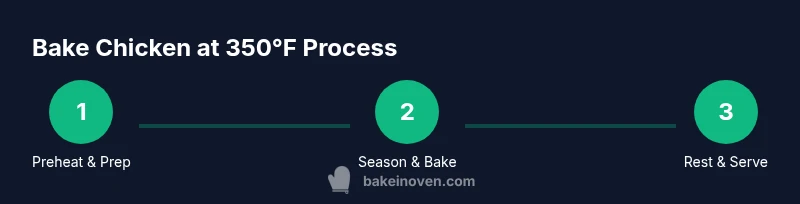
This overview aligns with common kitchen workflows and helps you visualize the bake from start to finish. Preheat the oven to 350°F, lightly oil the dish, and prepare the chicken. Pat dry, season, and arrange in a single layer with space between pieces. Crowding leads to uneven cooking and more steaming. The internal temperature should reach 165°F in the thickest part; begin checking early if pieces vary in thickness. After removing from the oven, rest the meat for 5 minutes to allow juices to redistribute. Finally, slice against the grain for tenderness and serve. The goal is steady heat, accurate temperature, and adequate resting to maximize juiciness.
Common Mistakes and How to Fix Them
Many home cooks overcook chicken breasts at 350°F, chasing a faster finish but ending with a dry texture. To avoid this, rely on a thermometer rather than the clock. Under-seasoning is another frequent issue; a salt-based seasoning or a light marinade improves flavor. Not patting dry leads to excess moisture, which hinders browning. For uneven thickness, gently pound thicker portions to a uniform ¾–1 inch thickness for even cooking. Crowding the pan or using a shallow dish without sides can cause juices to spill and the meat to steam instead of bake. Finally, skipping resting time can leave the meat less juicy, as juices are more likely to run when sliced immediately. Bake In Oven’s disciplined approach helps reduce these missteps and makes it easier to achieve reliable results.
How to Adjust Times for Thickness and Bone-In Options
Thicker chicken breasts require more time at 350°F, while thin fillets finish faster. If your piece is about 1 inch thick, plan around 25–30 minutes; at 1.25 inches, approximate 30–35 minutes; for 1.5 inches, consider 35–40 minutes, always confirming with a thermometer. Bone-in breasts cook more slowly and benefit from starting at a lower heat for the first portion, then finishing at 350°F to ensure the bone area reaches the safe temperature without drying the meat. If you’re unsure, start checking at the lower bound and extend in 3–5 minute increments until you reach 165°F internally.
Resting, Slicing, and Serving for Best Texture
After removing the chicken from the oven, cover loosely with foil and rest for 5–10 minutes. Resting lets juices redistribute and the carryover heat finishes the cooking. Slice against the grain to maximize tenderness and presentation. If you’re serving with a sauce, apply it after slicing to keep the surface dry and improve adhesion. For meal prep, cool quickly and store in airtight containers; reheat gently to avoid drying out.
Quick Reference: Timing, Temperatures, and Tips
- Boneless, skinless breasts, 1 inch thick: bake at 350°F for about 25–30 minutes, internal 165°F.
- 1.25 inch: 30–35 minutes; 1.5 inch: 35–40 minutes.
- Always verify with a digital thermometer; rely on 165°F rather than time alone.
- Rest 5–10 minutes before slicing to improve juiciness.
- For extra flavor, brine or rub with salt and a touch of olive oil before baking.
- If the surface browns too quickly, loosely tent with foil for the last 5–10 minutes.
Safety, Storage, and Reheating Leftovers
Never store cooked chicken at room temperature for more than 2 hours. Refrigerate leftovers in shallow containers within 2 hours and consume within 3–4 days. Reheat gently to an internal temperature of 165°F, using a cover to preserve moisture. Freeze individual portions for longer storage. This basic approach keeps your meal safe and delicious and aligns with best practices from Bake In Oven.
Tools & Materials
- Oven preheated to 350°F (175°C)(Essential for consistent results)
- Shallow baking dish or sheet pan with rims(Catches juices and prevents splatter)
- Digital meat thermometer(Monitor internal temp to 165°F)
- Olive oil or avocado oil(Light coating aids browning)
- Salt and pepper(Basic seasoning base)
- Optional: dried herbs or garlic powder(Adds flavor without extra steps)
- Parchment paper (optional)(Easy cleanup)
- Cutting board and knife(For slicing after resting)
Steps
Estimated time: 30-40 minutes
- 1
Preheat and prepare
Preheat the oven to 350°F (175°C). Lightly oil the baking dish to prevent sticking and ensure even browning. This foundation reduces the risk of dry edges and helps the meat cook evenly.
Tip: A light brush of oil also helps herbs stick for better flavor. - 2
Pat dry and season
Pat the chicken dry with paper towels, then brush with a thin layer of oil and season generously on all sides with salt, pepper, and optional herbs. Dry surfaces promote browning and flavor development.
Tip: Season early for deeper uptake, but don’t oversalt if you’re brining. - 3
Optional brine or marinade
If time allows, brine for 15–20 minutes or apply a quick dry rub. Brining increases juiciness by helping the meat retain moisture during baking.
Tip: Even a brief brine can noticeably improve moisture. - 4
Arrange in a single layer
Place chicken pieces in the dish in a single layer with space between them. Crowding leads to steaming rather than baking, causing uneven doneness.
Tip: Leave at least 0.5 inch between pieces. - 5
Bake and monitor temperature
Bake until the thickest portion reaches 165°F. Start checking a few minutes before the minimum time based on thickness. Use the thermometer for accuracy.
Tip: Insert thermometer into the center of the thickest piece. - 6
Rest the chicken
Remove from oven and loosely tent with foil. Rest for 5–10 minutes to let juices redistribute and complete carryover cooking.
Tip: Resting improves tenderness and slicing quality. - 7
Slice and serve
Slice against the grain for tenderness and serve. For meal prep, portion and cool quickly before refrigerating or freezing.
Tip: Cut perpendicular to the muscle fibers for easier chewing.
Frequently Asked Questions
What is the ideal internal temperature for baked chicken breast?
165°F (74°C) is the safe, recommended internal temperature to ensure doneness without sacrificing moisture. Always verify with a digital thermometer and rest before slicing.
Aim for 165 degrees, then rest before slicing.
Does bone-in chicken breast cook differently at 350°F?
Bone-in breast generally requires a bit more time to reach 165°F, so plan for slightly longer bake and verify near the bone with your thermometer.
Bone-in takes a little longer; check near the bone.
Should I cover the chicken while baking?
Covering can trap moisture but may hinder browning. If the surface browns too quickly, tent with foil for the last 5–10 minutes.
You can cover loosely if it browns too fast.
Can I bake from frozen at 350°F?
Baking from frozen is not ideal for even doneness. If you must, expect longer times and finish with a thermometer check.
Thaw first for best results; otherwise expect longer cooking.
How can I prevent dryness?
Rely on thermometer timing, rest adequately, and consider brine or marinade to boost moisture and flavor.
Use a thermometer and rest; consider brine for extra juiciness.
Is brining necessary?
Not mandatory, but brining or a light salt rub can significantly improve juiciness and flavor.
Brining is optional but helpful for moist chicken.
Watch Video
Key Takeaways
- Bake at 350°F for reliable results with juicy chicken.
- Use a thermometer to hit 165°F; rest before slicing.
- Dry surfaces and space between pieces improve browning.
- Adjust time based on thickness for perfect doneness.