How to Get Baked: Master Oven-Baked Treats at Home
Learn how to get baked like a pro with kitchen-tested steps for mastering oven-baked goods—from dough prep and shaping to timing, temperature control, and achieving perfect crusts. A practical guide by Bake In Oven for home bakers.


In this guide, you’ll learn how to get baked at home by mastering simple, reliable techniques for oven-baked desserts, breads, and snacks. You'll confirm ingredients, preheat correctly, mix with the right hydration, and bake with practical timing tips. Follow Bake In Oven’s kitchen-tested approach for consistent results. This quick answer previews the step-by-step process and the tools you’ll need, so you can dive into the full article right away.
Why getting baked matters for home bakers
For home bakers, the joy of creating warm, fragrant breads, cookies, and pastries starts with reliable technique. Learning how to get baked means understanding how flour quality, hydration, and oven behavior interact to produce a desirable crumb and crust. With clear, repeatable methods you can trust, you’ll bake with confidence instead of guesswork. The phrase how to get baked isn’t about shortcuts—it’s about building a dependable routine that yields consistent results batch after batch. By focusing on precise temperatures, measured ingredients, and mindful timing, you’ll reduce wasted dough, under-baked centers, and over-browned exteriors. Bake In Oven’s approach combines science with hands-on practice so you can enjoy every bake day.
Key takeaway: consistency comes from disciplined prep, accurate measurements, and a well-tuned oven.
Core principles: temperature, hydration, steam
Mastery of oven-baking rests on three core principles. First, temperature accuracy matters as much as recipe composition—the difference between 350°F and 375°F can alter crust color, interior crumb, and rise. Second, hydration controls dough feel and crumb structure; slight changes in water content shift gluten development and moisture retention. Third, steam during the initial bake phase helps crust formation and oven spring, especially for bread. If your oven struggles with even heating, consider an oven thermometer and a proper bake stone or steel to stabilize heat. By balancing these factors, you begin to see reliable crusts, tender interiors, and predictable bake times. As you practice, document how slight adjustments affect results to build your personal bake profile.
Tips: always preheat fully, measure ingredients precisely, and use a thermometer to confirm internal temperatures when possible.
Ingredient prep and equipment setup
Successful oven-bakes start with organized mise en place. Gather measured dry and wet ingredients, room-temperature fats, and any leavening agents your recipe requires. Pre-measure spices, salt, and sugar for consistent flavor. Prepare your equipment: bowls, a reliable mixer or whisk, a dough scraper, a scale, and baking sheets lined with parchment. If you’re aiming for professional polish, invest in an instant-read thermometer, a digital scale, and a reliable timer. For best results, keep ingredients within easy reach so you can maintain flow during a bake. A clean, uncluttered workspace reduces mistakes and speeds up the process. When you know where everything is, you’re more focused on technique.
Pro tip: pre-sift dry ingredients to ensure even distribution and reduce lumps that can affect texture.
Preheating and temperature strategies for different baked goods
Preheating ensures the oven starts hot and ready for rapid expansion of dough or batter. Preheat to the recipe’s specified temperature before mixing the final components. For bread, a hot initial phase creates a strong rise and a crusty exterior; for cookies, a moderate start helps set edges evenly without spreading too quickly. If using a stone or steel, place it in the oven during preheat to maximize heat transfer. Adjustments may be needed for convection vs. conventional ovens; many bakers reduce stated temperatures by about 25°F when using a convection setting to avoid over-browning. Keep an oven-safe thermometer in the oven to verify that the interior temperature matches the dial.
Note: late-stage temperature tweaks can rescue a bake that’s browning too quickly or remaining pale inside.
Hydration, mixing, and fermentation for different products
Hydration levels and mixing methods profoundly affect texture. Breads rely on higher hydration to produce open crumb and better aroma, while cakes use lower hydration for tight, tender crumb. For yeasted doughs, proper fermentation develops flavor and strength; under-proofing yields dense loaves, while over-proofing causes collapse. When working with enriched doughs (butter, eggs, milk), adjust hydration downward slightly to maintain structure. For cookies and pastries, fat distribution and chilling time impact tenderness and flakiness. Always follow recipe cues for mixing times, resting periods, and temperature control to avoid overworking gluten, which can make bread tough or cookies tough and chewy.
This is where precise timing and observation matter most; small changes in texture can signal the right moment to proceed.
Troubleshooting common issues and quality checks during bake
Common problems include a pale crust, underbaked centers, and uneven browning. If crust color is weak, raise oven temperature slightly or extend bake time in small increments; if the center remains raw, the loaf may need longer, slower bake or a hotter oven with steam to improve oven spring. Uneven browning can be addressed by rotating pans mid-bake and ensuring even heat distribution with a baking stone or steel. Always use an internal thermometer to check doneness for bread (target range varies by bread type) and a toothpick or clean skewer for cakes and quick breads. Cooling completely on a rack prevents soggy bottoms and helps crust set fully. Document what works so future bakes improve.
Batch planning and daily practice routines
Create a simple bake calendar that alternates between dough-driven days and batched pastries. Plan one bread-focused bake and one dessert-focused bake per week to build diverse skills. Maintain a log of oven temperatures, hydration, bake times, and outcomes to refine your personal recipe profiles. Batch planning also helps you optimize equipment use: preheat once, bake multiple items that share temperature ranges, and recycle parchment or silicone mats to reduce waste. Consistency grows from regular practice and careful note-taking, so commit to a routine that fits your schedule and kitchen setup.
Tools & Materials
- All-purpose flour(Base for most breads, pastries, and cookies)
- Active dry yeast(For yeasted doughs; activate in warm water with a pinch of sugar)
- Sugar(Flavor and yeast activation; varies by recipe)
- Salt(Flavor and dough structure)
- Warm water (110°F/43°C)(Activates yeast; avoid hotter temperatures to prevent killing yeast)
- Butter or oil(Texture and tenderness; vary by recipe)
- Parchment paper(Prevent sticking and ease cleanup)
- Mixing bowls, whisk, measuring cups/spoons(Essential for accurate measurements and uniform mixing)
- Oven thermometer(Ensure accurate oven temperature beyond dial reading)
- Digital kitchen scale(Precise ingredient measurement, especially for baking)
Steps
Estimated time: 1 hour 30 minutes
- 1
Choose recipe and gather ingredients
Select a recipe that fits your skill level and equipment. Gather all ingredients and tools before you start to avoid mid-bake disruptions. This keeps the workflow smooth and reduces chances of missing critical items.
Tip: Double-check ingredient weights on the scale to ensure accuracy. - 2
Prepare ingredients and workspace
Measure dry and wet ingredients separately. Bring ingredients to room temperature when required by the recipe. Clean and organize your workspace so you can move efficiently through each step.
Tip: Pre-sift flour and whisk dry ingredients for even distribution. - 3
Preheat oven and arrange bake gear
Preheat to the recipe’s specified temperature before starting final prep. If using parchment, lay sheets on pans now. Place any steam-generating elements or water trays as directed by the recipe.
Tip: Use an oven thermometer to verify actual temperature. - 4
Mix or knead dough until target texture
Combine ingredients according to the method (stir, mix, knead) until the dough reaches the intended texture. Do not overmix the last minute, as excess gluten can toughen the crumb.
Tip: Check dough windowpane if kneading bread to assess gluten development. - 5
Shape dough and proof properly
Shape dough to desired form and let it proof in a warm place until it reaches the expected volume. Avoid over-proofing, which weakens structure and can cause collapse in the oven.
Tip: Score dough just before bake to control expansion and aesthetics. - 6
Bake, monitor, and cool
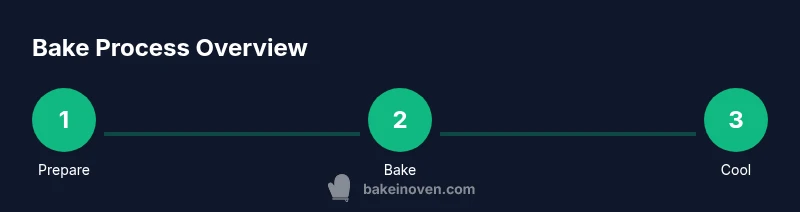
Bake until the exterior is golden and the interior reaches the target temperature. Remove from oven and cool on a rack to set crumb and crust. Slice only after fully cooled for clean cuts.
Tip: Tent with foil if browning too quickly toward the end of bake.
Frequently Asked Questions
How long should I preheat the oven?
Preheat until the oven reaches the recipe’s target temperature. In practice, many home ovens take about 10-15 minutes, but always rely on an oven thermometer and the recipe guidelines.
Preheat until you hit the recipe temperature; use a thermometer to confirm the temperature for accuracy.
Is steam necessary for all baked goods?
Steam is particularly helpful for breads to promote oven spring and crust development. For most cookies and cakes, it’s not required.
Steam helps bread rise crisply; for other pastries, it’s usually unnecessary.
Can I bake on a cold sheet pan?
For best results, use a preheated sheet or pan with parchment. A cold pan can slow browning and lead to uneven texture.
Preheat the pan or use parchment to ensure even browning.
How do I know when bread is done?
Check the internal temperature appropriate for the bread type and listen for a hollow crust sound when tapped. Use an instant-read thermometer for accuracy.
Internal temp and sound-off test help confirm doneness.
How should I store baked goods after cooling?
Cool completely, then wrap airtight or freeze for longer storage. Crisp crusts may soften with moisture, so store in a cool, dry place.
Cool fully, wrap well, and refrigerate or freeze as needed.
What if my crust browns too fast?
Lower oven temperature a bit, extend bake time slightly, or shield with foil during the last portion of baking.
If browning too quickly, lower heat or shield with foil.
Watch Video
Key Takeaways
- Follow a consistent preheat and measurement routine.
- Control hydration and temperature for predictable results.
- Use steam for crust development when baking bread.
- Keep a detailed bake log to refine your profiles.