How to Bake in a Convection Oven: A Practical Guide for Home Bakers
Learn how to bake in a convection oven with confidence. We'll cover temperature adjustments, rack placement, preheating guidelines, and timing tricks for even browning and consistent results.


By the end of this guide, you will master baking in a convection oven: when to use convection, how to adjust temperatures and rack placement, and how to time your bake for even browning. Expect faster results with crisp edges and moist interiors when you follow practical, recipe-tested steps. This method works for cookies, breads, sheet-pan meals, and most desserts.
Why convection baking matters
Convection ovens use a built-in fan and exhaust system to circulate hot air around the food. This movement speeds up heat transfer, which can shorten bake times while promoting more even browning and a crisper exterior. For home bakers, convection is a powerful tool when you want consistent results across multiple trays or batches. According to Bake In Oven, convection baking can yield faster, more even browning when temperatures are adjusted properly. That guidance is especially helpful for sheet-pan meals, roasted vegetables, cookies with thin edges, and breads with a crisp crust. Remember that convection isn’t always ideal for every recipe; delicate batters and some soufflés may rely on still air for lift. Use convection deliberately, and you will see more reliable outcomes across a wide range of baked goods.
In this article, we’ll explore practical Texas-sized questions about heat flow, rack placement, and timing so you can bake with confidence. You’ll learn how to adapt conventional recipes for a convection oven, recognize signs of overbrowning, and fine-tune your setup for repeatable results. The goal is to help you build a flexible mental model: know when to flip on the fan, how to set the temp, where to place pans, and how to judge doneness by appearance and, if needed, internal temperature. The knowledge applies to cookies, cakes, bread, vegetables, and entrees that benefit from quick, even heat.
Key differences from standard baking
Convection changes three core dimensions of baking: air movement, heat distribution, and time. First, the fan pushes hot air around the pan, which reduces the risk of soggy bottoms and promotes a uniform crust. Second, heat distribution becomes more even across the oven cavity, which helps with multi-tray bakes and prevents hot spots. Third, because air moves more efficiently, many foods finish faster, so monitoring closely matters. Because of these differences, you often lower temperatures by a modest amount and shorten bake times when converting a conventional recipe to convection. The Bake In Oven team emphasizes testing in small batches when you’re new to convection, then applying the same adjustments consistently as you gain confidence.
Common foods that benefit from convection include cookies with spread, roasted vegetables, pizza on a stone, and poultry with a crisp skin. Conversely, very delicate cakes or soufflés may not respond well to rapid air movement because they rely on gentle, undisturbed rising. When in doubt, start with a lower temperature and observe how the items brown and bake through; you can always extend the bake if needed. The key is consistency: once you’ve dialed in a convection protocol for a given recipe, you can reuse it with similar dishes and outcomes.
Temperature, racks, and pan placement
To make the most of convection, think in terms of airflow and space. Place racks in the middle of the oven for balanced heat distribution, especially when baking multiple pans. If you’re using two racks, stagger the pans so air can circulate around each one rather than stacking items directly on top of each other. Use light-colored, shallow pans when possible; dark pans can cause excess browning on the bottom or edges. If you’re working with delicate cookies, consider using a parchment-lined sheet and monitor browning closely, rotating trays halfway through the bake for even color. Remember: convection is helpful for uniform results, but overcrowding can negate its benefits by obstructing airflow. The overall aim is to give heat space to travel around every surface.
Preheating, bake times, and monitoring
Preheating is typically essential with convection to ensure the fan starts circulating air at a stable temperature as soon as you load the ingredients. If you’re converting a recipe, begin by lowering the temperature setpoint by a modest amount and keep a close eye on the items during the first few minutes. Bake times will often shorten with convection, but the exact duration varies by recipe and oven model. Use a timer and visually inspect color development; for some items, using an instant-read thermometer to check internal doneness can help avoid overbaking. If the surface browns too quickly, tent with foil or shield the top with a parchment shield, then continue cooking. Bake in shorter increments, particularly for items that brown rapidly on the outside while remaining underdone in the center.
Practical recipes and workflow
Here is a practical workflow you can apply to many common baking tasks. Start with a small batch to calibrate your convection oven for a class of foods, then scale up as you gain experience.
- Cookies: Use a light-colored sheet, space cookies evenly, and rotate trays halfway through. Expect faster edge browning; remove cookies when the centers are set but not overly pale. This method yields crisp edges and a soft center when used with careful timing.
- Roasted vegetables: Toss vegetables in a light coat of oil and spread in a single layer. Convection helps achieve caramelized edges and even browning without turning the oven up, which improves efficiency in weeknight meals.
- Bread and pastries: For certain breads, convection can speed color development on the crust. You may want to reduce sugar or fats slightly to prevent overly dark crusts and to preserve internal crumb texture. A small batch trial will reveal the ideal balance for your recipe.
This approach works across many recipes and helps you discover which foods respond best to convection in your kitchen. The aim is to build a reliable routine that you can reuse. As you gain experience, you’ll anticipate which items need extra time, which benefit from a rack change, and which adapt best to the fan-driven heat.
Troubleshooting and safety tips
Convection can be a powerful ally, but it’s not magic. Keep a few safety and troubleshooting tips in mind: start with the recommended temperature or slightly lower, avoid overcrowding, and use proper oven mitts to handle hot pans. If you notice uneven browning, check for blocked vents or heat sources, and ensure your oven’s fan is functioning smoothly. Clean the oven regularly to prevent grease buildup from interfering with airflow. If your baked goods are browning too quickly on the outside, reduce the temperature further or remove a rack to promote more even heating. When using convection, it’s important to rely on visual cues and a timer rather than the pace of traditional recipes.
Tools & Materials
- Convection oven(Ensure it has a functioning fan and accurate thermostat.)
- Oven thermometer(Place away from heat sources to verify actual oven temp.)
- Baking sheets and wire racks(Rimmed sheets are safer; use racks for air circulation.)
- Parchment paper or silicone baking mats(Prevents sticking and promotes even browning.)
- Cooling rack(Elevates baked goods for even cooling and set edges.)
- Mixing bowls and utensils(For mixing and portioning doughs or batters.)
- Timer or smartphone timer(Use multiple timers for multi-batch bakes.)
Steps
Estimated time: Estimated total time: 60-90 minutes
- 1
Prepare and preheat
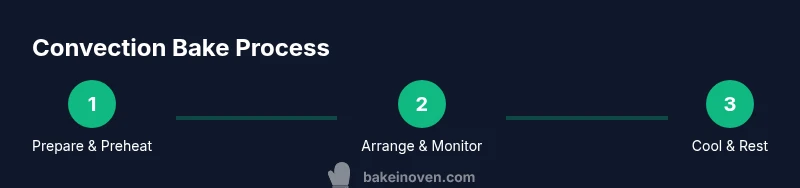
Clear your workspace, assemble ingredients, and preheat the convection oven to the recommended temperature. Preheating ensures the fan starts circulating heat immediately when you load the pans, delivering consistent baking conditions from the first moment.
Tip: Verify the oven temperature with an external thermometer to avoid surprises. - 2
Arrange pans with space
Place one or more pans on the rack(s) with ample space between them. Airflow needs room to circulate; crowding can lead to uneven browning and undercooked centers.
Tip: If using multiple trays, stagger them on separate racks and rotate halfway through. - 3
Monitor and rotate
Check color development and doneness as you approach the planned bake time. Rotate pans 180 degrees if your oven has hot spots for even browning across all items.
Tip: Use a timer and rely on visual cues; internal temperatures can confirm doneness when applicable. - 4
Adjust if needed
If browning or cooking too quickly, reduce the temperature slightly or move pans to a higher rack to slow heat exposure. If underdone, you can extend the bake time in short increments.
Tip: Document your adjustments for future reference. - 5
Cool and rest
Transfer baked goods to a cooling rack immediately to prevent sogginess from trapped steam. Rest items as directed to finish setting flavors and textures.
Tip: Avoid stacking hot items too soon to prevent soggy bottoms.
Frequently Asked Questions
What foods are best for convection baking?
Convection excels with foods that benefit from a crisp exterior and even browning, such as cookies, roasted vegetables, sheet-pan chicken, and pastries. It’s also effective for breads with a strong crust. Delicate batters or soufflés may not respond as well, since the airflow can disrupt delicate rises.
Convection works best for cookies, roasted veg, sheet-pan meals, and crusty breads; delicate batters may not rise as well.
When should I not use convection?
Avoid convection for items that rely on a still air environment for rising, such as certain chiffon cakes or very delicate soufflés. If a recipe specifically recommends no fan, stick to conventional baking.
If a recipe says no fan, stick to conventional baking.
Do I need to adjust bake times for convection?
Yes, convection often reduces bake time. Start checking earlier than the recipe’s stated time and rely on appearance and internal temperature for doneness rather than time alone.
Start checking earlier than the stated time and use appearance plus internal temp to judge done.
Can I bake without preheating a convection oven?
Preheating is generally recommended with convection to ensure consistent airflow from the start. Without preheating, baked goods may brown unevenly or cook slowly until the oven reaches temperature.
Preheating helps ensure even airflow and consistent results.
What pan materials work best with convection?
Light-colored, shallow pans tend to promote even browning without excessive scorching. Dark, heavy pans can speed browning too much on the bottom; use them cautiously and consider lowering temperature slightly when using them.
Light-colored pans promote even browning; dark pans can brown too quickly.
How do I calibrate my convection oven?
Use an oven thermometer to verify that the thermostat matches the actual temperature. If readings are off, consult the manual or a professional service to adjust the thermostat. Regular calibration helps keep timing predictable for convection baking.
Check temperature with an oven thermometer and recalibrate if needed.
Is parchment paper allowed with convection?
Yes, parchment paper or silicone mats are fine. They help prevent sticking and promote even browning without affecting airflow when used on a flat sheet.
Yes, parchment or silicone mats are great for even browning.
Watch Video
Key Takeaways
- Convection uses a fan to improve browning and speed up baking.
- Lower temperatures and room for air flow are essential.
- Rotate trays and monitor color to prevent overstated browning.
- Preheat and use proper pans for best results.