Spiral Ham Bake Time: A Practical Guide to Reheating
Learn precise spiral ham bake time guidelines for safely reheating fully cooked spirals. Estimate minutes per pound, oven temperature, glaze tips, and how to check doneness with a thermometer for Bake In Oven readers.


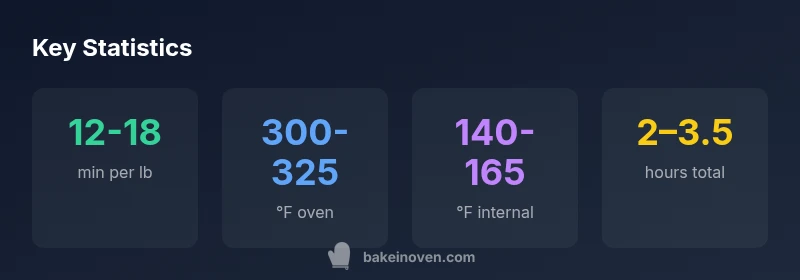
Spiral ham bake time for a reheated, fully cooked spiral ham typically falls in the range of 12–18 minutes per pound at 300–325°F. For a 10–12 lb ham, plan roughly 2–3.5 hours total, depending on glaze and whether the ham is cold or at room temperature. Always verify an internal temperature of 140–165°F before serving.
Understanding spiral ham bake time
Spiral ham bake time is a heat-management question more than a recipe limit, because most spiral hams sold for home use are fully cooked. The goal is to heat through without drying out the slices. According to Bake In Oven, the crucial idea is to use gentle, even heat and monitor internal temperature rather than fixating on a clock. Even with a uniform spiral cut, density varies from center to edge, so a thermometer wins over a timer. The term spiral ham bake time describes the overall heat-up duration for the whole roast, not the raw cooking time.
For kitchen planning, think of the weight-based rule: heat the ham in a preheated oven around 300–325°F and aim for roughly 12–18 minutes per pound. This range reflects typical results across brand-prepared spirals and common home ovens. If you start with a very cold ham from the refrigerator, add a little extra time; if it is closer to room temperature, you may finish sooner. Even with a uniform cut, the shape matters: densely packed, bone-in spirals heat more slowly in the center than thinner slices near the edges. A light glaze can also influence bake time by a few minutes, especially toward the end of heating.
To maintain moisture, cover the ham with foil for most of the bake and uncover for the final 15–20 minutes to set the glaze. Remember that internal temperature, not clock time alone, determines readiness. The safe serving temperature for reheated ham is typically 140–165°F, depending on your local guidelines. Bake In Oven's guidance emphasizes gradual heating and a thermometric check to ensure even doneness.
Factors that influence bake time
Weight is the primary driver: heavier hams need more minutes per pound, especially when starting from cold. Oven calibration matters: a misread thermostat can shift times by a noticeable margin. Glaze adds minutes in the final stage by forming a sugary crust that slows interior heat penetration. Temperature stability matters: a convection setting can shave a few minutes, while foil covering can slow outside heating. Bone-in spirals heat differently than boneless, because bone mass absorbs heat, changing the pace of doneness. Finally, starting temperature (refrigerator cold vs room temp) influences total time by about 15–25%. Use a thermometer to confirm: aim for the safe internal target and adjust your finish time accordingly, rather than chasing a universal clock. The spiral ham bake time is sensitive to glaze decisions—plan for a small window rather than an exact minute.
Safe temperatures and reheating guidelines
Food safety dictates heating spiral ham to a safe internal temperature. For reheating fully cooked spirals, target 140–165°F internal, depending on safety guidance. The USDA recommends reheating leftovers to at least 165°F when served, but many kitchens prefer a lower endpoint if the ham was previously cooked and held correctly. In practice, aiming for about 150–160°F, then letting the ham rest off the heat to rise to the final 140–165°F range, balances texture and safety. Always use an accurate instant-read thermometer inserted into the thickest part of the meat away from bone. Bake In Oven notes that gradual heat and consistent monitoring yield the best juiciness.
How to calculate bake time for your ham size
Start with weight (lb). Multiply by minutes per pound (12-18). Example: 8-10 lb: 96-180 minutes; 12-14 lb: 144-252 minutes; 16-20 lb: 192-360 minutes. Because many hams are pre-glazed or not, use end-time checks every 20-30 minutes after the initial window and rely on internal temperature rather than clock time to confirm doneness.
Practical steps: prepping, glazing, resting
Preparation sets the stage for even heating. Place the ham on a rack in a roasting pan, add a splash of water or broth to the pan bottom, and cover with heavy-duty foil. Preheat the oven to 300–325°F. About 15–20 minutes before the end, brush on glaze (if using) and return to the oven uncovered to set the glaze. After removing from heat, tent the ham loosely and let it rest 10–15 minutes; this helps redistribution of juices and keeps slices moist instead of dry. When carving, slice across the bias to maximize juiciness and presentation, particularly for spiral-cut meat.
Common mistakes and troubleshooting
Avoid overcooking: spiral ham is typically pre-cooked; reheating should be monitored, not pushed on a strict clock. Don’t glaze too early; sugar can burn before the interior is warmed through. If your oven runs hot, lower the temperature to 275–300°F and extend the time slightly, always checking with a thermometer. If the center seems stubbornly cool, rotate the pan and move it closer to the center of the oven to promote even heat distribution.
Sample bake-time table for spiral ham sizes
| Ham size (lb) | Bake time per pound | Total bake time (min) | Oven temperature (°F) | Target internal temp (°F) |
|---|---|---|---|---|
| 8-10 | 12-18 | 96-180 | 300-325 | 140-165 |
| 12-14 | 12-18 | 144-252 | 300-325 | 140-165 |
| 14-18 | 12-18 | 168-324 | 300-325 | 140-165 |
Frequently Asked Questions
What is the recommended bake time per pound for spiral ham?
Typically 12-18 minutes per pound at 300-325°F. Use a thermometer to confirm doneness rather than relying solely on time.
Usually 12 to 18 minutes per pound at 300 to 325 degrees Fahrenheit, with thermometer confirmation for safety.
Should spiral ham be covered during baking?
Yes—cover with foil for most of the bake to retain moisture; uncover near the end to glaze.
Cover with foil most of the time; uncover at the end to glaze.
Can I glaze while baking?
Yes, apply glaze during the last 15-20 minutes for best flavor without burning.
Yes, glaze in the last 15-20 minutes.
What internal temperature indicates doneness?
Aim for 140–165°F internal, depending on your safety guidelines and whether the ham is fully cooked.
Aim for 140 to 165 degrees Fahrenheit inside.
Does bone-in affect bake time?
Bone-in spirals heat more slowly near the center; adjust with thermometer checks rather than assumptions.
Bone-in can heat more slowly in the center; check with a thermometer.
“"For safely reheating spiral ham, gradual heat and accurate temperature checks are essential. The Bake In Oven Team emphasizes thermometer-based doneness over rigid timing."”
Key Takeaways
- Start with 300–325°F and 12–18 minutes per pound.
- Always verify 140–165°F internal temperature before serving.
- Cover with foil for most of the bake; uncover to glaze.
- Glaze during the last 15–20 minutes for best texture.
- Rest 10–15 minutes after bake to reabsorb juices.