What Bake Setting for Cookies: A Practical Guide
Discover the ideal bake setting for cookies, including temperature, convection use, sheet prep, and timing. Bake In Oven shares practical, kitchen-tested guidance for consistent texture and perfect browning.


By the end of this guide, you will know the ideal bake setting for cookies, including oven temperature, convection use, sheet prep, and timing. You'll understand how dough type and cookie size influence the bake, plus practical tips to prevent spreading and ensure even browning. This quick answer sets you up for success before you bake.
What bake setting for cookies means and why it matters
Baking cookies is not just about following a recipe; it’s about choosing the right bake setting (temperature, convection, pan setup) to control how heat interacts with dough. The bake setting determines how quickly fats melt, how sugar caramelizes, and how edges crisp versus centers stay soft. For home bakers, understanding what bake setting for cookies means translates into consistent texture across batches and fewer failed attempts. Bake In Oven emphasizes that success starts with a clear plan: select a temperature that suits your dough, prepare your sheets properly, and monitor time closely. In practice, most cookies benefit from a moderate temperature and a standard bake method unless a recipe specifies otherwise. The main variables to manage are oven temperature, the use of convection, sheet preparation, and exact bake time. A well-chosen bake setting helps you convert a great-tasting dough into a reliably good cookie rather than a misshapen, undercooked, or burnt disappointment. By tuning these settings, you’ll see improvement in spread, color, and texture from tray to tray. According to Bake In Oven, setting the right bake configuration is the cornerstone of repeatable results that keep families coming back for more.
Temperature and time: the core variables
Temperature and time are the two most influential levers when baking cookies. The typical home-bake range is roughly 325–375°F (165–190°C), with many recipes targeting around 350°F (175°C) for a balance of browning and center softness. Cookie size, thickness, and dough composition alter the ideal minutes, so expect a range—smaller, thinner cookies often finish in 8–12 minutes, while thicker drops may need 12–14 minutes. Doughs with higher sugar or butter content spread more quickly, so you might lower the temperature slightly or extend a few seconds to prevent over-browning. Bake In Oven Analysis, 2026 suggests that even small temperature adjustments can change spread and texture, underscoring the importance of a tested, recipe-specific approach. Always start checking a minute or two before the minimum time and rely on visual cues rather than a clock alone.
Convection ovens vs standard ovens
Convection ovens move hot air around the oven cavity, which can reduce bake time and promote even browning. For delicate cookies with pale centers, use standard baking on a middle rack; reserve convection for sturdier cookies that tolerate rapid surface browning. If you choose to use convection, reduce the stated temperature by 20–25°F (about 10–15°C) and keep a closer eye on the clock. In some homes, convection may cause excessive spread if the dough is very soft, so chilling the dough beforehand can help. Bake In Oven’s guidance emphasizes testing a small batch when you switch methods to determine the best balance of color, texture, and spread for your favorite recipes.
Sheet prep and spacing
Proper sheet preparation is essential to consistent cookies. Line sheets with parchment paper or silicone mats to prevent sticking and promote even browning. Space dough portions evenly—at least 2 inches apart for most drop cookies—to allow heat to circulate and minimize merging. Use light, uniform portions with a dough scoop or teaspoons for consistency. If your cookies spread too much, consider chilling the dough 30–60 minutes before baking or adding a touch more flour to the dough. Pans with dark finishes brown cookies faster than light-colored pans, so adjust timing accordingly and rotate trays halfway through baking to promote even results.
Doneness indicators and timing adjustments
Doneness for cookies is a balance between color, set edges, and soft centers. For most cookies, edges should be lightly browned while centers look just set. If you bake at the lower end of the temperature range, you may need a longer bake time; at the higher end, you’ll want to watch closely to avoid overbaking. Remember that cookies continue to set as they cool on the sheet for a few minutes, a phenomenon called carryover baking. To ensure consistent results, remove cookies when the centers still appear slightly underdone for a softer texture, then let them finish on a cooling rack.
Troubleshooting common issues
If cookies spread too much, chill dough longer, reduce butter or sugar slightly, or ensure your flour measurement isn’t too low. If they brown too quickly on the edges, try a lower temperature or move the rack to the center. For recipes with thick centers, increase chill time before baking or use a slightly higher protein flour percentage. If cookies are undercooked in the centers, give them another 1–2 minutes, but watch carefully to avoid overbrowning. Rotating trays and using parchment can also help distribute heat more evenly across different oven zones.
Bake settings for different cookie types
Different cookie families respond to bake settings in distinct ways. Sugar cookies, with their high fat-to-flour ratio and delicate dough, often benefit from a moderate temperature and shorter bake time to retain a soft, cake-like center. Drop cookies (think chocolate chip), with more flour and sugar, usually tolerate 350°F and 9–12 minutes, depending on size. Thin, crisp cookies may do better at 325–350°F with 8–10 minutes and a lighter touch on spreading. If you’re making thicker molasses or peanut butter cookies, you may need to cool the dough and bake longer at a slightly lower temperature to maintain shape and avoid over-browning. In all cases, test a small batch first and adjust for your oven’s quirks.
AUTHORITY SOURCES
- FDA: Food Safety and Cooking Temperatures – https://www.fda.gov
- USDA: Baking Tips and Temperature Guidelines – https://www.usda.gov
- Oregon State University Extension: Cookie Baking Basics – https://extension.oregonstate.edu
Tools & Materials
- Oven thermometer(Calibrate oven to ensure accurate temperature.)
- Parchment paper or silicone mats(Prevent sticking and promote even browning.)
- Baking sheets (rimmed)(Use light-colored sheets if possible for even color.)
- Cooling rack(Cool cookies to stop carryover baking.)
- Mixing bowls(For combining ingredients and chill if needed.)
- Measuring cups and spoons(Accurate measurements prevent texture shifts.)
- Whisk or spatula(Mix dough uniformly without overworking.)
- Timer or clock(Track bake time precisely to avoid overbaking.)
- Oven mitts(Protect hands when handling hot sheets.)
- Dough scoop(Helpful for uniform portions and spacing.)
Steps
Estimated time: 60-75 minutes
- 1
Preheat and prep
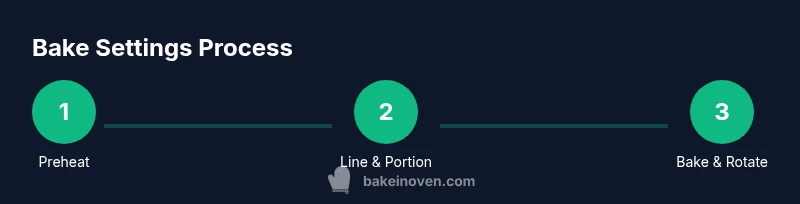
Preheat your oven to the target temperature (e.g., 350°F / 175°C). Gather parchment and cooling racks, and ensure the oven rack is centered. Preheating helps stabilize the bake and reduces uneven browning.
Tip: Use an oven thermometer to verify actual temperature before loading cookies. - 2
Prepare dough and portion
If dough needs chilling, wrap and refrigerate for 30–60 minutes. Use a dough scoop to portion evenly, ensuring uniform cookie sizes for consistent bake times.
Tip: Chilled dough spreads less; for very soft dough, chill longer before baking. - 3
Line sheets and space dough
Line baking sheets with parchment or mats. Space dough mounds at least 2 inches apart to allow heat circulation and to prevent merging during baking.
Tip: If dough is sticky, lightly flour hands or oil the scoop for easy portions. - 4
Bake and monitor
Slide sheets into the center of the oven. Bake for the minimum time on the recipe, then check color and texture; rotate trays halfway if needed.
Tip: Set a second timer for the middle of the bake to catch gradual changes. - 5
Check for doneness
Look for lightly browned edges and slightly soft centers. Cookies will firm up as they cool on a rack.
Tip: If centers look underdone but edges are brown, remove and let carryover baking finish off the heat. - 6
Cool on rack
Transfer to a cooling rack immediately after removing from the oven to prevent sogginess and to promote even texture.
Tip: Don’t stack hot cookies; steam can turn them soft. - 7
Store properly
Once completely cool, store cookies in airtight containers to maintain texture. Separate soft from crisp cookies to preserve texture.
Tip: Re-crisp with a quick bake in a 300°F oven if texture softens over time.
Frequently Asked Questions
What bake setting is best for cookies?
The best setting depends on cookie type, but most drop cookies bake well at around 350°F (175°C) on a center rack with parchment. Convection can reduce time, but not all recipes want it. Always test a small batch first.
For most cookies, bake at about 350 degrees on a center rack with parchment, and test a small batch before scaling up.
Should I use convection for cookies?
Convection can speed up browning and even heat, but it may cause more spreading in delicate doughs. Use it only if your recipe calls for it, and lower the temperature by about 20 degrees.
Convection can help with even browning, but adjust temperature and monitor the batch closely.
How do I know when cookies are done?
Look for lightly browned edges and centers that look set but not hard. Cookies continue to firm up on the rack after removing from the oven, a carryover effect to account for.
Edges browned and centers set, with a little softness that firms as they cool.
Can I freeze cookie dough before baking?
Yes. Scoop portions and freeze on a sheet first, then transfer to a bag. Frozen dough can be baked directly; add 1–2 minutes to bake time as needed.
You can freeze dough in portions for quick baking later.
Do cookies need to cool on a rack?
Yes. Cooling on a rack prevents sogginess and helps texture set evenly. Do not stack until completely cool.
Let them cool on a rack so they set evenly.
Watch Video
Key Takeaways
- Set a clear bake temperature before you bake.
- Line sheets and space dough evenly for even browning.
- Convection requires adjustments in time and temperature.
- Watch doneness visually; cookies continue to bake off the sheet.
- Chill dough when needed to control spreading.