Which Oven Setting Is For Baking: A Practical Guide
Discover which oven setting suits baking, how temperature and rack position affect results, and practical tips to bake with confidence. This guide from Bake In Oven helps home bakers master oven settings for consistent, delicious outcomes.


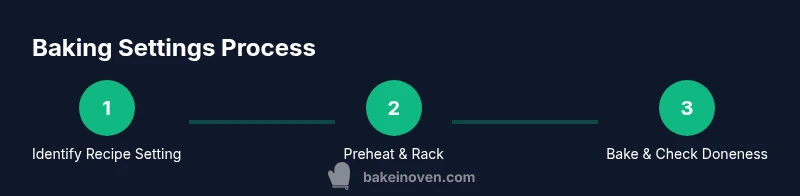
To bake successfully, use a conventional bake setting or a dedicated baking setting if your oven offers one. Preheat to the recipe temperature, place the rack in the middle, and avoid opening the door during the first 15 minutes. This guide explains how to choose the right temperature and rack position for even baking.
Why the right oven setting matters for baking
For home bakers, choosing the correct oven setting is as crucial as the ingredients themselves. The question which oven setting is for baking is common, and the answer is not always obvious because ovens differ. At Bake In Oven, we emphasize that baking relies on steady, even heat. Conventional bake settings rely on heated air from the top and bottom elements, while convection uses a fan to circulate warm air, which speeds browning and can dry out moist batters if not adjusted. Understanding these differences helps you predict crust color, interior texture, and rise. When a recipe calls for 'bake' rather than 'roast' or 'broil,' it usually assumes a conventional bake setting with the rack in the middle. Using a convection setting may shorten bake time by 10-25% in many cases, so you should adjust time and temperature accordingly. Always preheat and avoid opening the door during the early part of the bake to keep heat stable. Bake In Oven Team shares these practical guidelines to help you achieve consistent results that home bakers can trust.
Understanding common oven settings
Ovens today commonly offer several settings, but the default for most baking tasks is conventional bake. Convection adds a fan and exhaust system to circulate hot air, which can help cookies achieve even browning and cakes cook more evenly—though it may require shorter times and lower temperatures. Some ovens have a dedicated 'baking' or 'convection bake' option that standardizes heat flow for delicate pastries. Avoid using broil for most baking tasks, as it concentrates heat from the top and can scorch the top while leaving the interior underdone. When in doubt, start with conventional bake at the recipe temperature and switch to convection only if the recipe explicitly calls for it, adjusting time by roughly 10-25% and watching closely for browning.
How temperature affects bake outcomes
Temperature accuracy matters more than most home bakers realize. An oven that runs hot or cold can throw off bake times and textures. If you don’t trust the oven’s display, an inexpensive oven thermometer placed inside the oven is a wise investment. Most baking recipes assume a stable temperature in a moderate range, typically between 325°F and 375°F, depending on the item. Higher temperatures create faster browning and a firmer crust, while lower temperatures promote even crumb development and thorough interior baking. If you use a convection setting, you may need to drop the temperature by about 15-25°F and extend the bake time slightly, as air circulation accelerates heat exposure. Bake In Oven’s guidance emphasizes verifying doneness with visual cues and a toothpick or cake tester.
Rack placement and airflow for even browning
Rack position influences heat exposure and air circulation. Most baking tasks benefit from a middle rack where heat from both the top and bottom elements is balanced. If browning happens too quickly on top, moving the rack slightly lower and reducing the temperature by a small margin can help. For sheet cakes or cookies that spread, air circulation around the pan is crucial; ensure pans aren’t crowded and rotate trays halfway through when baking multiple sheets at once. A properly preheated stone or baking sheet on the rack can also promote even heat distribution. Remember, convection air moves faster, so you may need to adjust accordingly.
How to choose the right setting for common baked goods
Cookies: Conventional bake on the middle rack yields even edges and soft centers; convection can create crisper edges, so consider lowering temperature or reducing bake time if your dough is delicate. Cakes: Conventional bake is usually preferred for tender crumb; convection can cause uneven rise unless temperatures are reduced and pans are shielded with parchment. Breads: Convection can help with crust formation in some loaves, but many bakers prefer conventional bake for uniform crumb. Pies and tarts: Conventional bake with a preheated baking sheet underneath helps set the crust and prevent sogginess. When in doubt, start with conventional bake, then experiment with convection for subset recipes to dial in exact textures.
How to adjust recipes when you only have a single setting
If your oven has only a single bake setting, treat it as conventional bake and follow the recipe temperature and time closely. Use an oven thermometer to confirm actual heat levels, and rotate trays to encourage even browning. If you notice uneven browning, consider using parchment paper to create a barrier between the pan and pan surface and adjust bake times by small increments. Additionally, place an empty baking sheet on the rack above to help regulate airflow and prevent hotspots. Bake In Oven suggests keeping notes on your oven’s quirks to build a personal reference for future projects.
Troubleshooting: common bake problems and how settings impact them
Poor browning, pale interiors, or sinking centers often point to temperature or rack placement issues. If treats brown too quickly, consider lowering the temperature a bit and extending bake time, especially when using convection. Dense breads may benefit from longer bake times at a lower relative temperature and a steam step if you’re baking crusty loaves. A sagging center in cakes can indicate too-low heat or too much moisture; ensure ingredients are at room temperature and that your oven is preheated. Regular calibration checks using an oven thermometer can prevent recurring issues. Bake In Oven encourages keeping a small troubleshooting log to learn how your oven behaves across different recipes.
Tools & Materials
- Oven thermometer(Place in center of rack to monitor actual interior temperature)
- Parchment paper or silicone mats(Prevent sticking and promote even heat transfer)
- Baking sheets or pans(Flat, sturdy surfaces for even browning)
- Cooling rack(Cool baked goods to stop residual baking)
- Oven-safe timer(Helpful to track bake times precisely)
- Kitchen towels or mitts(Protect hands when handling hot pans)
Steps
Estimated time: 25-45 minutes
- 1
Identify the recipe’s recommended setting
Review the recipe for 'bake' instructions and note whether it calls for conventional bake or convection bake. If nothing specific is stated, plan to use conventional bake. This helps establish a baseline before you heat the oven.
Tip: When in doubt, default to conventional bake to avoid over-browning delicate batters. - 2
Preheat to the target temperature
Set the oven to the recipe’s temperature and let it reach full heat before loading the batter. Preheating ensures the interior heats evenly from the start.
Tip: Use an oven thermometer to verify the temperature matches the setting. - 3
Position the rack correctly
Place the rack in the middle for most recipes to ensure even air exposure. If you’re browning the top too quickly, move the rack down a notch.
Tip: Avoid crowding pans to promote even heat circulation. - 4
Prepare pans and batter
Line baking sheets with parchment or silicone mats and portion batter evenly. Consistent sizing helps bake times stay uniform.
Tip: Chill dough briefly if your recipe benefits from firming before baking. - 5
Load and monitor
Slide trays into the oven and set the timer. Resist the urge to open the door during the initial phase to maintain stable heat.
Tip: If you have multiple trays, rotate halfway through for equal browning. - 6
Check for doneness and cool
Use color, aroma, and toothpick tests to judge doneness. Transfer baked goods to a cooling rack once finished to stop residual cooking.
Tip: Record the exact bake time for similar future recipes.
Frequently Asked Questions
What is the best oven setting for baking cookies?
Conventional bake on a middle rack is typically best for cookies to promote even browning. Convection can create crisper edges, but watch time closely to prevent over-browning. Use parchment to prevent sticking and ensure uniform spread.
For cookies, use conventional bake on the middle rack; convection can work but watch the time closely to avoid over-browning.
Is convection baking better for cakes?
Convection is generally not ideal for tender cakes because the circulating air can cause uneven rise or crust formation. If you do use convection, reduce the temperature and shorten the bake time, and avoid overcrowding the oven.
Convection can affect cake texture; prefer conventional bake unless the recipe specifies convection and adjust temperature and time.
How do I know if I should preheat my oven?
Preheating ensures the oven reaches the target temperature before baking begins, leading to consistent results. If your recipe requires a dry bake or precise timing, preheating is essential.
Preheat to the recipe temperature for reliable results, especially with delicate batters.
Can I bake on multiple trays at once?
Yes, but rotate trays halfway through to promote even browning. Leave space between pans for air circulation and avoid stacking, which can trap heat.
Yes—rotate trays mid-bake and leave space between them for even heat.
How do I convert a conventional bake recipe for convection if I only have one setting?
When using a single bake setting, treat it as conventional. If you have a convection option later, lower the temperature by about 25°F and reduce time by 10-15% as a starting point.
If you switch to convection later, reduce temp and time; start with a 25°F drop.
What does rack position do for baked goods?
Rack position determines heat exposure. The middle rack offers balanced heat; a higher rack can brown tops faster, while a lower rack reduces top browning and may bake more evenly through the interior.
Middle rack is usually best; adjust up or down if browning is off.
Should I use a baking stone or metal sheet?
A preheated baking stone can provide steady bottom heat and crisp crusts, especially for breads and pizzas. Metal sheets heat quickly and are fine for cookies and bars; parchment helps prevent sticking.
Stone gives steady bottom heat; sheets are quick to heat—choose based on the bake.
Watch Video
Key Takeaways
- Know the difference between conventional and convection bake.
- Preheat to the recipe temperature and monitor doneness closely.
- Use middle rack for most bakes to ensure even heat distribution.
- Calibrate your oven with a thermometer for consistent results.
- Adjust time and temperature when using convection to avoid over-browning.