What Temp to Bake Chicken Legs: Temps & Times Guide
Discover the ideal oven temperature and timing for juicy chicken legs. Learn safe internal temps, browning tips, resting guidance, and practical steps for even, delicious results.


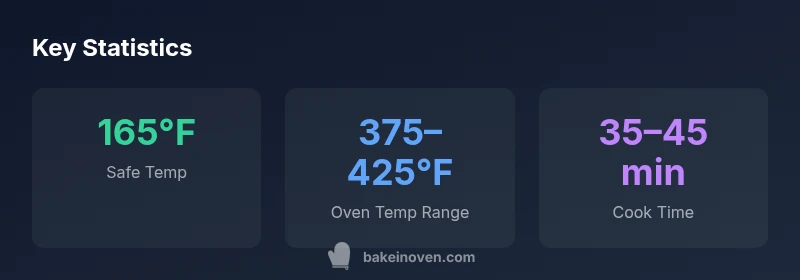
To bake chicken legs, aim for an oven temperature of 375–425°F. For bone-in legs, start at 400°F for 35–45 minutes, then check internal temperature. Target 165–175°F for safe and juicy meat; reduce heat to 350°F if over-browning. Let rest 5–10 minutes before serving for best texture. Adjust times by leg size and preference for crisper skin.
Why Temperature Matters for Chicken Legs
Chicken legs are a combination of thigh and drumstick, two muscle groups with different moisture and connective tissue profiles. Cooking them at a steady temperature matters because you want the meat to reach a safe internal temperature without losing moisture or over-drying the outer skin. A lower temperature can yield juicy meat but may leave the skin undercooked or pale; a higher temperature promotes browning and crisp skin but risks dryness if not monitored. In practice, most home bakers find a middle ground—375–425°F—works well for bone-in legs, producing a flavorful exterior and tender interior. According to Bake In Oven testing, consistent oven temperatures help minimize hot spots and undercooked centers, especially when cooking multiple legs on a sheet pan. Always verify doneness with an instant-read thermometer and allow the meat to rest before serving to reabsorb juices.
Tips from Bake In Oven: pat legs dry before seasoning, space them apart, and avoid overcrowding the pan for even heat distribution.
The Best Temperature Range and Rationale
The recommended oven temperature range for chicken legs is 375–425°F. At the lower end (375°F), you’ll achieve more even cooking across larger legs and thighs, with a lower risk of burning the exterior. At 400°F, you generally see a reliable balance between browning and interior tenderness, making it a favorite compromise for most home cooks. Pushing toward 425°F accelerates browning and crisp skin, but you must monitor closely to avoid overcooking the meat’s surface while the interior finishes. The key is to start checking doneness around the 35-minute mark when cooking bone-in legs at higher temperatures, and to pull once the internal temperature reaches 165–175°F depending on your texture preference. Bake In Oven analyses emphasize that a consistent temperature helps achieve predictable results, which is especially important when cooking multiple trays or different leg sizes.
When you’re batch-cooking, consider using a convection setting if available; it can help with browning by circulating hot air, though you may need to shorten the time slightly.
- 375°F: evenly cooked, slower browning, forgiving for larger legs.
- 400°F: balance of browning and tenderness, popular default.
- 425°F: rapid browning, best for very crispy skin but watch for dryness.
Regardless of temperature, the safest internal target remains 165°F; many cooks prefer 165–175°F for thigh perfection.
Practical Cooking Scenarios: Bone-In vs Thighs, Skin On vs Skin Off
Bone-in chicken legs provide more flavor and structural integrity, but can take longer to reach final doneness than boneless thighs. Skin-on legs browns and crisps best at higher temps; skin-off can dry out faster, so you may want to reduce the temperature slightly or shorten the cook time to maintain juiciness. If you’re after maximum crisp, place legs on a rack on the sheet pan to elevate from rendered fat and ensure even exposure to heat. Conversely, cooking directly on foil or parchment can lead to more contact with fat, potentially softening skin but saving cleanup time. A dry rub or light coating of oil helps with browning and flavor, while marinades should be used sparingly to avoid soggy surfaces.
For larger or bone-in legs, plan toward the upper end of the temperature range and give them extra minutes, while checking for doneness with a thermometer. If you’re cooking in a crowded oven or on two racks, rotate the pans halfway through to balance heat distribution.
Step-By-Step Guide: From Prep to Rest
- Preheat your oven to 375–425°F depending on your target skin texture. 2) Pat dry with paper towels; moisture on the surface can hinder browning. 3) Lightly oil or season with salt, pepper, and your favorite spices; a small amount of fat helps render the skin. 4) Arrange legs on a rack set inside a sheet pan, or on parchment if you don’t have a rack; ensure space between pieces for air circulation. 5) Bake until the thermometer reads 165–175°F in the thickest part of the leg, checking around the 30–40 minute mark for smaller legs and 40–50 minutes for larger ones. 6) If using 425°F, start monitoring earlier to prevent over-browning. 7) Remove from oven, rest 5–10 minutes before serving to allow juices to reabsorb.
Consistency is improved when you bake at a steady temp and check doneness early rather than guessing. Bake In Oven recommends keeping a small thermometer handy and basing decisions on internal temperature rather than time alone.
Common Pitfalls and How to Avoid Them
- Overcrowding the pan: causes uneven browning and longer cooking times. Use multiple pans or a larger sheet tray.
- Skipping preheating: results in uneven heat and underdone centers. Always preheat to ensure consistent results.
- Not drying the skin: moisture prevents crisping. Pat dry and apply a light coating of oil for browning.
- Ignoring rest time: slicing too soon releases juices; rest to reabsorb moisture.
- Using too low a temperature for crispy skin: increase the heat gradually or finish under the broiler for a minute or two if needed.
A reliable approach is to set your oven within the 375–425°F range and monitor internal temperature closely rather than relying on time alone, which can vary by leg size and oven performance.
Warming, Reheating, and Safety Checklist
Leftovers should be reheated to an internal temperature of 165°F to ensure safety. The best approach is to reheat in a preheated oven at 350–375°F, uncovered, until the thermometer in the thickest part reads 165–175°F. If your goal is to preserve moisture, cover the legs loosely with foil for part of the reheating to minimize moisture loss.
Always refrigerate leftovers within two hours of cooking and use within 3–4 days. When serving, check for aroma and texture; if the skin seems soggy after reheating, a brief blast under a hot oven or a quick skillet sear can recover crispness.
Temperature vs. cook time for bone-in chicken legs
| Oven Temp (°F) | Cook Time | Target Internal Temp (°F) | Notes |
|---|---|---|---|
| 350 | 50-60 min | 165 | Even cooking, longer time |
| 375 | 40-50 min | 165-175 | Balanced browning |
| 400 | 35-45 min | 165-175 | Crisp skin, watch for browning |
| 425 | 30-40 min | 165-175 | Rapid browning; risk of dryness |
Frequently Asked Questions
What temp to bake chicken legs?
Bake chicken legs at 375–425°F. For bone-in legs, start around 400°F and monitor doneness with a thermometer, aiming for 165–175°F internal temperature for juicy yet safe meat.
Bake at 375 to 425 degrees and use a meat thermometer to hit 165 to 175 degrees inside.
Rack or pan for best results?
Using a rack inside a sheet pan promotes even cooking and crisper skin by lifting the meat above rendered fat. If you don’t have a rack, line with parchment and flip halfway to improve browning.
A rack helps everything cook evenly and crisp up; if you don’t have one, flip halfway through.
How can I tell when they’re done?
The safe internal temperature is 165°F. For thigh-forward texture, some cooks aim for 165–175°F. Use an instant-read thermometer inserted into the thickest part without touching bone.
Check with a thermometer in the thickest part; 165°F is safe.
Can I bake frozen legs?
It's better to thaw chicken legs first for even cooking. If you must bake from frozen, add about 50% more time and verify the internal temperature thoroughly.
Thaw if possible; if frozen, expect longer cooking and check doneness carefully.
Do legs need to rest after baking?
Yes. Rest for 5–10 minutes after removing from the oven. Resting helps juices re-distribute, keeping the meat moist and flavorful.
Let them rest 5–10 minutes for juicier meat.
Do leg size and bone affect time?
Yes. Larger legs or those with more bone require more time and may reach higher internal temps. Plan on 40–50 minutes for larger pieces at 375–400°F, and check doneness with a thermometer.
Yes—bigger legs take longer; check with a thermometer.
“Consistent oven temperatures and validated doneness with a thermometer yield reliable, delicious chicken legs every time.”
Key Takeaways
- Use 375–425°F for even cooking and crisp skin.
- Check internal temperature with a thermometer at 165–175°F.
- Pat legs dry and space evenly for best browning.
- Rest meat 5–10 minutes before serving.
- Adjust time based on leg size and desired skin texture.