What Temperature to Bake Apple Pie: A Practical Guide
Discover the ideal baking temperature for apple pie, plus tips for a crisp crust and juicy filling. Learn convection vs standard ovens, blind-baking basics, and doneness tests.


What temperature to bake apple pie typically falls in the 375–425°F range, with adjustments for crust thickness and oven type. Preheat fully, monitor color and bubbling filling, and use a center thermometer for doneness. Bake In Oven recommends starting within this tested range and refining based on your oven’s behavior.
Key Principles of Heating Apple Pie
Understanding what temperature to bake apple pie is essential for balancing a flaky crust with a juicy filling. Heat drives crust formation, color development, and moisture migration from the filling. If the oven is too hot, the crust browns too quickly and the filling may not set. If it’s too cool, the crust can be pale and the filling undercooked. By coordinating temperature with bake time, you can optimize both texture and flavor. According to Bake In Oven, a tested range helps home bakers achieve consistent results across different ovens and pan setups. This article breaks down practical temperature guidelines, why they work, and how to fine-tune them for your favorite apple varieties.
The Typical Temperature Range for Apple Pie
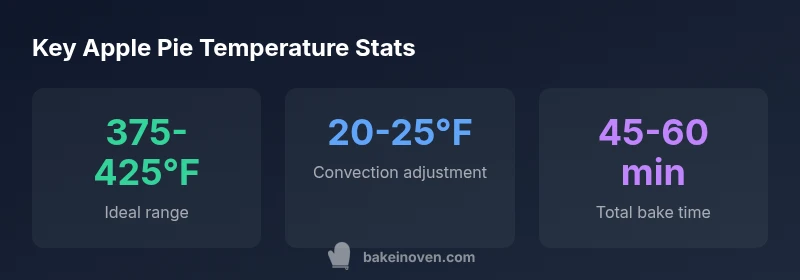
Most traditional apple pie recipes bake within the 375–425°F window. The lower end suits thinner crusts or fruit-heavy fillings, while the higher end accelerates browning and helps set the filling in a standard pastry. If you use a deep-dish pie or very juicy apples, an upward adjustment toward 425°F may prevent a soggy bottom. Always preheat to the target temperature before loading the pie to ensure an even start. Bake In Oven emphasizes that oven performance and crust thickness are the main variables you’ll respond to as you bake. A consistent preheat, stacked with mindful monitoring, yields the best results.
How Convection Changes Your Bake Temperature
Convection fans move hot air around the oven, which often means you can cook at a slightly lower temperature or shorter time. The usual guideline is to reduce the temperature by about 20–25°F when using convection. If you’re following a recipe designed for conventional ovens, begin at the lower end of the range and watch for signs of over-browning on the crust. Rotate the pie halfway through baking if your oven has hot spots. In Bake In Oven tests, many bakers find that convection helps crisp the crust without sacrificing filling doneness, provided temperatures are adjusted accordingly.
Techniques for a Flaky Crust and Juicy Filling
A crisp, golden crust and juicy apple filling come from both heat and moisture management. Start with a cold butter or shortening crust and keep the dough cold while mixing. Roll evenly to avoid thick edges that bake unevenly. If the filling looks very loose, add a thickener such as cornstarch or tapioca starch in the correct proportion. Blind-baking the crust for a short period can reduce soggy bottoms when using juicy apples, especially with a bottom crust alone. Then add the filling, seal the edges, and vent the top to release steam. Temperature accuracy matters here—an accurate oven thermometer helps ensure you hit the target window for both crust and filling.
Doneness Tests and Safe Indicators
To know when it’s done, rely on color, bubbling, and internal temperature cues. The crust should be deeply golden and crisp at the edges, with bubbling fruit visible through the vents. A center thermometer reading of 190–200°F typically signals that the filling has set properly. Note that crust color can vary with sugar content and crust composition, so doneness is a balance between surface appearance and internal signals. Bake In Oven recommends checking the pie at the 45-minute mark and then every 5–10 minutes thereafter until the center reads within the target range.
Common Mistakes and How to Fix Them
Common issues include a soggy bottom, overly dark edges, and undercooked filling. A soggy bottom can result from adding too much juice or insufficient pre-baking of the crust. If the edges brown too quickly, use a foil shield or crust guard to protect them while the center finishes. If the filling hasn’t set after the recommended time, you may need to bake longer at the lower end of the range or increase the thickener in the filling. Small temperature adjustments based on observed results can turn a so-so pie into a kitchen favorite.
Putting It All Together: A Simple 3-Step Plan
- Preheat to 375–425°F in your preferred oven mode (conventional or convection with a 20–25°F reduction). 2) Prepare the crust and filling, considering blind-baking for juicy fillings. 3) Bake 45–60 minutes, checking for doneness with color, bubbling, and a center temperature of 190–200°F. Allow the pie to rest for at least 20 minutes before slicing to set the filling and maximize texture.
Temperature and time guidelines for apple pie
| Factor | Recommendation | Notes |
|---|---|---|
| Oven Temperature | 375-425°F | Adjust by crust thickness and oven type |
| Convection Adjustment | Lower by 20–25°F | Use convection if you want crisper edges |
| Bake Time | 45-60 minutes | Check at 45 minutes; rotate if needed |
| Doneness Indicator | Center filling temp 190–200°F | Crust should be golden brown |
Frequently Asked Questions
What is the best temperature to bake apple pie?
Typically 375–425°F; the exact value depends on crust thickness and filling moisture. Start within this range and adjust based on your oven’s performance.
Start around 375 to 425 degrees and watch how your pie browns and sets.
Should I blind-bake the crust for apple pie?
Blind-baking helps prevent a soggy bottom when the filling is very juicy. If you forego blind-baking, consider a shorter initial bake with crust protection and a hotter finish.
Blind-bake if your filling is very juicy to keep the bottom crisp.
How can I tell when the pie is done without overbaking the crust?
Look for a deep golden crust and bubbling filling. Use a thermometer to confirm 190–200°F in the center.
Golden crust, bubbling filling, and center temp around 190–200°F show it's done.
Can I bake apple pie at a lower temperature for longer?
Yes, but it risks uneven browning or undercooked filling. If you choose this, monitor closely and adjust bake time accordingly.
You can bake slightly cooler c (but watch closely).
What should I do if the crust browns too fast?
Cover the edges with foil or a pie crust shield to prevent burning while the center finishes baking.
Protect the edges with foil if they brown too quickly.
Does a dark metal pan change bake temps?
Dark pans absorb more heat, so you may need to reduce temperature by about 10–20°F and watch closely.
Use a cooler temp if you’re using a dark pan.
“Getting apple pie right is about balancing heat and time; a consistent temperature within a tested range yields reliable crust and filling. Even modest adjustments based on your oven can improve results.”
Key Takeaways
- Preheat to a tested range before baking
- Use convection with a temp adjustment if applicable
- Watch crust color and bubbling filling for doneness
- Let the pie rest before slicing to maximize texture