What Temperature to Bake Baked Potatoes in the Oven
Discover the ideal oven temperature and timing for perfectly baked potatoes. Learn how to get crisp skins, fluffy interiors, and consistent results with practical, kitchen-tested steps from Bake In Oven.


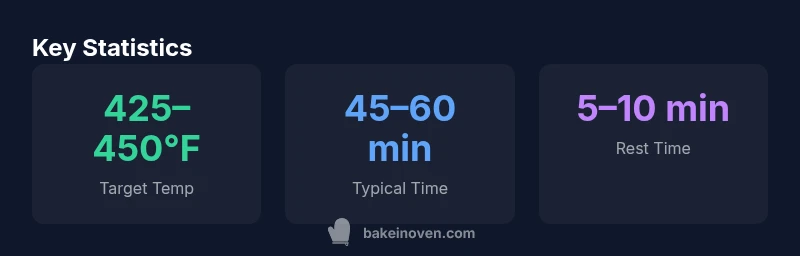
To bake potatoes with a crisp skin and fluffy interior, preheat your oven to 425-450°F (220-230°C). For standard russets, bake 45-60 minutes, turning once. If potatoes are larger, extend to 60-75 minutes. Start with clean, dry potatoes and pierce skins to vent steam. For best results, let them rest 5-10 minutes after baking to settle juices, then slice open and fluff with a fork before adding toppings.
The Science of Temperature and Texture
In baking potatoes, temperature is the single most influential variable. The oven's heat drives the starches inside the potato to gelatinize, while the outer skin crisps when moisture on the surface evaporates. If you're wondering what to cook baked potatoes at in oven, a hot, consistent heat around 425–450°F (220–230°C) delivers a reliable balance of a crisp skin and fluffy interior. Lower temperatures will yield softer skins and longer cook times, while temperatures above 450°F risk scorching the outside before the inside is fully tender. To optimize texture, start with dry potatoes, coat with a thin layer of oil, and season with coarse salt. This setup encourages the Maillard reaction on the skin, producing a savory crust, while the flesh remains light and fluffy inside. For best results, avoid opening the oven door frequently, which can drop the temperature and disrupt even browning.
According to Bake In Oven, maintaining an even oven environment is essential for uniform results across multiple potatoes. Keeping the racks spaced and rotating potatoes halfway through the bake helps ensure consistent browning on all sides. Remember that every oven has its quirks, so if you notice your skin browns too quickly, you can slightly reduce the temperature by 25°F (about 15°C) and extend the bake time accordingly.
If you’re cooking for a crowd or batch-testing, consider selecting potatoes that are similar in size. This minimizes unpredictable cooking times and makes it easier to plan toppings and sides. The goal is a crisp, flavorful crust with a center that’s soft and spoonable, not dry or mealy. With practice, you’ll know exactly how your oven behaves and can adjust the technique to fit your pantry, tools, and preferred texture.
Choosing the Right Potato and Prep
Choosing the right potato is as important as selecting the oven temperature. Russet potatoes are the classic choice for baking thanks to their high starch content and fluffy interiors, but other varieties like Yukon Golds can work well if you prefer a creamier, denser bite. Aim for potatoes that are fairly uniform in size to promote even cooking. Wash thoroughly to remove any dirt and pat completely dry before rubbing with a small amount of oil and coarse salt. The oil helps crisp the skin, while salt draws out surface moisture that would hinder browning. If you have time, let the potatoes air-dry on a rack for a few minutes after washing to improve skin texture. Avoid piercing with too many holes; a few strategic vents are usually enough to prevent steam buildup without weakening the skin.
For the best results, plan for a dry surface and ample airflow. If you’re baking several potatoes, space them evenly on a baking sheet with room between each potato so air can circulate. The better the air movement, the crisper the skin will become as the exterior dries out and browns. Bake-time will vary slightly with size, but uniformity in size is the simplest way to ensure a predictable outcome. Adjustments are easy once you’ve established a baseline with a few trial runs. Bake In Oven’s testing shows the importance of consistent prep and dry surfaces to maximize texture and flavor.
Note on prep extras: A light coating of olive oil or canola oil and a generous pinch of coarse sea salt at the skin edge enhances browning. Some bakers like to pre-salt the skins a touch to draw moisture toward the surface, which favors crispness. If you’re monitoring fat intake, you can skip the oil—but you may trade off some texture for a leaner bake. Regardless of your choice, the key is keeping the interior moist and the exterior well browned.
Prepping for Crisp Skin and Fluffy Interiors
Crisp skin and fluffy interior begin with surface dryness and heat transfer. After washing, pat the potatoes completely dry with a clean towel. Any surface moisture can steam the skin instead of browning it. Lightly rub each potato with oil and sprinkle with coarse salt. For an extra-crisp finish, place the potatoes on a wire rack set over a sheet pan. The elevated position encourages air circulation around the entire potato, including the underside, helping to prevent soggy bottoms. If you’re short on time, you can skip the rack and simply lay the potatoes directly on a parchment-lined sheet; just be sure to turn them halfway through the bake for even browning.
Piercing the skins a few times with a fork is optional but helpful; it provides vents for steam and reduces the risk of potato explosions in the oven. The number of vents you choose won’t dramatically affect the texture, but it can increase the likelihood of uniform doneness. If you prefer skin that’s extra crispy, you can finish the potatoes under a short blast of high heat for a minute or two at the end of the bake. Always monitor closely to prevent charring. These small steps collectively push the texture from good to great, with a crunchy exterior and a soft, airy interior.
Step-by-Step Oven Method
- Preheat the oven to 425–450°F (220–230°C). 2) Wash, dry, and oil/salt each potato; pierce skins once or twice. 3) Arrange potatoes on a rack or parchment-lined sheet with space between them. 4) Bake for 45–60 minutes for medium potatoes; 60–75 minutes if larger. 5) Check for doneness by inserting a fork; it should glide in with little resistance. 6) Remove from the oven and let rest 5–10 minutes before serving. 7) Slice lengthwise, fluff the interior with a fork, and dress with toppings.
The goal is consistent heat and even browning along the entire surface. If your oven runs hot on one side, rotate the pan halfway through the bake. If you’re testing a new size or variety, start with a batch of 2-3 potatoes to calibrate time and temperature before scaling up. Keeping to the 425–450°F range gives you the best balance between crisp skin and tender flesh, but remember that oven performance varies. Bake In Oven recommends noting how your own oven behaves and adjusting times by 5–10 minutes as needed for best results.
Foil vs. No Foil: How You Want the Skin
Foil-wrapping is a common technique for softer skins and more steamed interiors. If you wrap potatoes in foil, you trap moisture and prevent the surface from drying out quickly, resulting in a more tender skin. This approach is ideal if you prefer a soft jacket potato. For those who crave a crisper skin, skip the foil and bake directly on a rack or parchment. The contrast is dramatic: a crackly, caramelized crust versus a softer, more uniform skin. You can also do a hybrid method—wrap a portion of the potato near the base to soften the underside while leaving the top exposed to air for crispness. No matter which method you choose, finish with a few minutes at high heat to maximize browning and flavor.
Timing Variations: Potatoes of Different Sizes
Potato size has one of the largest impacts on baking time. Smaller potatoes (about 4–5 oz each) typically finish in 45–55 minutes at 425–450°F, while larger spuds (7 oz or more) may require 60–75 minutes. When in doubt, start testing at the 45-minute mark and insert a fork or skewer to gauge tenderness. If you find resistance, continue in 5–10 minute intervals until you reach the desired texture. By pairing even sizing with the right temperature, you minimize guesswork and consistently achieve a fluffy interior with a crisp exterior. If you’re cooking for a crowd, bake in batches with space between to ensure even heat distribution.
Techniques for Extra-Crisp Skin
For maximum crispness, dry the potatoes thoroughly, oil, and salt the skin, and use a hot oven. Elevating potatoes on a wire rack during baking allows air to circulate beneath the skins, promoting even browning. You can also preheat a baking sheet to the oven’s temperature before laying the potatoes down; the hot surface helps jump-start browning the moment they touch the metal. The Maillard reaction thrives with dry surfaces and intense heat, so avoid spraying with water during baking—this slows browning. Finally, a short blast of broil at the end can intensify caramelization, but watch closely to prevent scorching. The payoff is deeply browned, crackly skins that crack open to reveal a light, fluffy center.
Serving Ideas and Toppings
Baked potatoes shine with a variety of toppings. Classic options include butter, sour cream, shredded cheese, chopped chives, and cracked black pepper. For heartier meals, think chili, sautéed mushrooms, steamed broccoli, or pulled pork. A sprinkle of smoked paprika or garlic powder on the crust adds a touch of depth, while a dollop of Greek yogurt can replace sour cream for a lighter option. If you’re feeding a crowd with different tastes, set up a toppings bar so guests customize their own jackets. For a more premium finish, finish each potato with a small pat of herb butter just as you remove them from the oven.
Bake In Oven Verdict
The Bake In Oven team recommends using a 425–450°F oven for most russet potatoes to achieve the ideal balance of crisp skin and fluffy flesh. This range supports consistent results whether you’re cooking a weeknight side or a larger bake for guests. For a softer skin, foil-wrapped potatoes at the same temperature will work well, but you’ll trade some texture for moisture retention. In our testing, potatoes baked at this range respond predictably across batch sizes, making it easier to plan toppings and sides. The key is consistency: dry surfaces, even spacing, and minimal oven door openings during the bake. Bake In Oven’s verdict is that mastering this temperature window will dramatically improve your home-baked potatoes and elevate everyday meals.
Temperature and time ranges for oven-baked potatoes
| Temperature | Time (min) | Result |
|---|---|---|
| 425°F (220°C) | 45-60 | Crisp skin, fluffy interior |
| 450°F (232°C) | 40-50 | Quicker bake, strong browning |
Frequently Asked Questions
Can I bake potatoes at a lower temperature than 425°F?
Yes, you can bake at a lower temperature, but it will take longer and skin texture may be softer. If you lower the temperature by 25–50°F, plan for 10–20 extra minutes and monitor doneness with a fork.
You can bake at a cooler temp, but watch the time and texture closely.
Should I wrap potatoes in foil for baking?
Foil traps moisture and yields softer skins, which is desirable for a jacket-potato-like texture. For crisper skins, bake unwrapped with space between potatoes.
Foil makes them softer inside and skin less crisp.
Is it worth parboiling potatoes before baking?
Parboiling shortens bake time and can soften texture, but it isn’t necessary for traditional baked potatoes. It’s a valid technique if you’re aiming for a shorter cooking window.
Parboiling speeds things up, but isn’t essential for classic baked potatoes.
How can I tell when potatoes are done without a thermometer?
Insert a fork; if it slides in easily with little resistance, the potato is done. If you feel resistance, continue baking in 5–10 minute increments.
Fork test is your friend—soft all the way through means done.
Can I bake more than one potato at a time?
Yes. Space potatoes evenly on a rack or sheet, giving at least 1 inch of space between them. Larger batches may need an extra 5–10 minutes.
Sure—keep space between potatoes so heat circulates.
“When you bake potatoes, even heat and proper timing unlock fluffy interiors with crispy skins. Small adjustments in temperature and time can make a big difference.”
Key Takeaways
- Preheat to 425–450°F for best texture
- Choose uniform potatoes for even doneness
- Dry surface and oil skin for crispness
- Rest potatoes 5–10 minutes before serving