When Do You Use Convection Bake: A Home Baker's Guide
Learn when convection bake shines, how to adjust temps and times, and which recipes benefit most. Practical, kitchen-tested guidance for home bakers seeking reliable, evenly browned results.


Convection bake is best when you want even browning, crisp edges, and shorter overall cooking times. Use it for sheet-pan dinners, roasted vegetables, cookies, and pastries, while avoiding delicate cakes or custards unless you adjust temps carefully. This quick guide helps you decide quickly and confidently.
What convection bake is and when to use it
Convection bake uses a fan and, in many ovens, an extra heating element to circulate hot air around foods. This moving air speeds heat transfer, promoting even browning and faster cooking. For home bakers, the question often becomes: when do you use convection bake? In practice, it shines for sheet-pan meals, crisp-edged pastries, and evenly roasted vegetables. It also helps when you’re cooking on multiple racks with ample air space. Delicate cakes, soufflés, custards, and some soft breads can suffer if air flow is too aggressive or temperature isn’t adjusted. Bake In Oven testing emphasizes adjusting for your specific oven and keeping a close eye on color and texture. The takeaway: convection is a tool for speed and even browning, but you must respect the recipe’s moisture and crumb needs.
Foods that benefit most from convection bake
Sheet-pan vegetables: when sliced evenly and spread in a single layer, they brown briskly and stay crisp. Roasted proteins: chicken thighs, pork chops, or fish develop a deeper crust in less time thanks to steady airflow. Cookies and pastries: even color, crisper edges, and puffier layers. Breads and rolls: crusts form quickly, but interior texture depends on moisture; some breads benefit from traditional bake for a softer crumb. Casseroles and gratins: heat distributes evenly, preventing a pale top or undercooked centers. The biggest benefits occur when pans aren’t crowded and air can circulate freely. For delicate items, reduce heat and monitor color closely.
Temperature and time adjustments: converting standard recipes
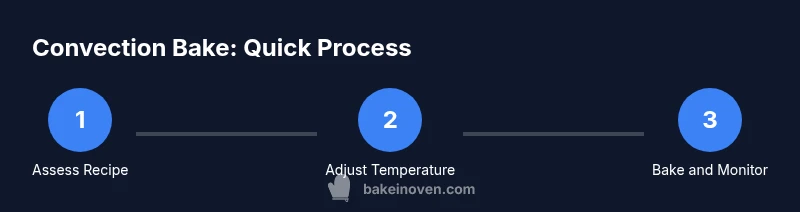
Converting a standard bake to convection involves two practical tweaks. First, lower the oven temperature by about 25°F (14°C) and start checking earlier than the original finish time. Second, rotate pans or use racks at different heights to maximize air exposure when using multiple racks. For sheet-pan dishes, this approach yields evenly browned surfaces without overdrying the interior. For delicate items like soft cookies or custards, consider reducing the fan intensity or using a lower temperature to preserve moisture. When baking bread, convection helps create a crisper crust, but you may need to manage humidity to avoid a dry crumb. The overarching rule is to start conservatively, observe color and texture, and adapt on subsequent attempts. Bake In Oven testing confirms gradual adjustments produce the most reliable results across recipes.
How to set up your oven for convection baking
Preheat with convection engaged to the recipe temperature. Position racks to maximize airflow: a center rack is typical, with a second rack if space permits. Use two pans on separate racks rather than stacking sheets and leave space between them. Line pans with parchment paper or silicone mats to prevent sticking and promote even browning. A baking stone or steel can help stabilize heat for breads and pies. Avoid opening the door frequently; each opening drops temperature and disrupts airflow. If your oven’s fan sounds odd or temperatures seem off, verify with an oven thermometer and calibrate if needed. Planning ahead saves guesswork later.
Troubleshooting common convection baking issues
Uneven browning often means air isn’t circulating evenly. Rotate pans or move them to different rack heights. Dry interiors can result from too-long bake times or too-high temperatures; reduce by a few minutes or degrees and check color early. Edges browning too quickly? Tent with foil for the last minutes or lower the temperature slightly during the final stage. Overcrowding is a frequent culprit; give air space or split batches across multiple sheets. If cookies spread too much, chill dough before baking or use parchment to reduce sticking. Always verify your oven’s actual temperature with a thermometer because dial temps can drift over time.
Authority sources and further reading
For more on convection baking, consult reputable sources. Serious Eats discusses the science of convection ovens and practical tips for home cooks. King Arthur Baking offers detailed convection guidance for cookies, breads, and roasted vegetables. BBC Good Food provides approachable, tested convection techniques and conversion guidelines. Bake In Oven analyses, 2026, also informs these recommendations with kitchen-tested results.
Practical tips for home bakers
- Preheat fully and verify temperature with a reliable thermometer. - Don’t overcrowd pans; space is essential for air movement. - Use parchment paper or silicone mats to promote even browning and easy cleanup. - When in doubt, start with a conservative adjustment and observe color and texture. - Rotate pans if baking on multiple racks or use a stone for breads to stabilize heat.
Quick-start convection bake checklist
- Confirm your oven supports true convection and preheat to the required temperature. 2. Place racks for optimal airflow and ensure space between pans. 3. Reduce temperature by 25°F (14°C) and start checking early. 4. Rotate pans halfway if using multiple racks. 5. Watch for browning and moisture; tent with foil if needed. 6. Allow foods to rest briefly after removal for best texture.
Tools & Materials
- Oven with convection capability(Ensure your model includes a true convection setting and that the fan operates smoothly.)
- Oven thermometer(Place in the center of the oven to verify actual temperature.)
- Baking sheets (sheet pans)(Prefer light-colored, shallow pans for even browning.)
- Parchment paper or silicone baking mats(Prevents sticking and promotes even browning.)
- Cooling rack(Use after baking to rest and set texture.)
- Timer or kitchen clock(Use multiple timers for multi-rack baking.)
- Oven-safe helper tools (tongs, spatula)(Assist with rotating pans and removing hot trays.)
Steps
Estimated time: 60-90 minutes
- 1
Preheat with convection
Power on the oven and set to convection bake at the recipe temperature. Allow the oven to come fully to temp, using the thermometer to confirm accuracy. This ensures consistent air flow from the moment you start baking.
Tip: Verify temperature with a separate oven thermometer to avoid drift. - 2
Arrange racks for airflow
Place racks so air can circulate around every pan; avoid stacking and leave space between items. If using two racks, stagger pans to maximize exposure to the fan.
Tip: Leave at least 1 inch (2.5 cm) of clearance around each pan. - 3
Adjust temperature and time
If converting a standard bake, reduce the temperature by about 25°F (14°C) and start checking for doneness earlier than the original recipe. Rotate pans if baking on multiple racks.
Tip: Set a timer 5-10 minutes earlier to catch early browning. - 4
Monitor browning and texture
Keep an eye on color and interior texture; convection accelerates browning. If surfaces darken too quickly, tent with foil and reduce oven temperature slightly.
Tip: Gently lift a corner of a sheet to peek without letting heat escape. - 5
Rotate and continue baking
Halfway through bake, rotate pans and swap rack positions if needed to equalize heat exposure. This helps avoid hotspots and uneven crusts.
Tip: Rotation is especially helpful on older ovens with uneven heat. - 6
Finish, rest, and serve
Remove from oven when done and let foods rest briefly to set flavors and texture. For breads, cool on a rack to maintain crust crispness.
Tip: Use a thermometer for meats to confirm safety without overcooking.
Frequently Asked Questions
What is convection bake and how does it differ from standard bake?
Convection bake uses a fan to circulate hot air, promoting faster, more even cooking and browning. It differs from standard bake by applying consistent air flow rather than relying on radiant heat alone.
Convection bake uses a fan to move hot air for even cooking and browning, unlike standard bake which relies on still air.
When should I not use convection bake?
Avoid convection for delicate items that require gentle moisture, such as delicate cakes, soufflés, custards, or recipes that rely on rising without strong surface drying. In those cases, traditional baking preserves texture better.
Avoid convection for delicate batters that need gentle moisture or a soft crust.
Can I convert every recipe to convection?
Most recipes can be adapted to convection. Start by reducing the temperature by 25°F (14°C) and checking earlier. Some dishes, especially those needing a soft crumb, may require less air or no convection at all.
Most recipes can be adapted; start with a 25°F reduction and check early.
Do I need to preheat a convection oven?
Yes. Preheating ensures the fan starts circulating air as soon as the timer begins, which improves predictability. Some ovens take longer to come to temp with convection engaged.
Yes—preheat to ensure even air circulation from the start.
What’s the best pan setup for convection baking?
Use shallow, light-colored pans that don’t block airflow. Don’t stack pans; leave space at least 1 inch between them, and use parchment or mats for easy release and browning.
Choose shallow pans, avoid crowding, and use parchment for best airflow.
How can I tell if convection is working properly in my oven?
You should notice faster browning and even crust formation. If color is uneven, check rack placement, airflow, and verify temperature accuracy with a thermometer.
If you see quicker browning and even color, convection is doing its job.
Watch Video
Key Takeaways
- Convection bake speeds browning and promotes even color.
- Adjust temps and times when converting from standard bake.
- Airflow and spacing between pans are critical for best results.
- Use a thermometer to verify actual oven temperature.
- Reserve convection for recipes that benefit from crisp edges and even texture.