Bread Bake Oven Temperature: Optimal Ranges and Techniques
Discover the science and practical ranges for bread bake oven temperature, with steam strategies, tips for crust and crumb, and a home baker workflow.


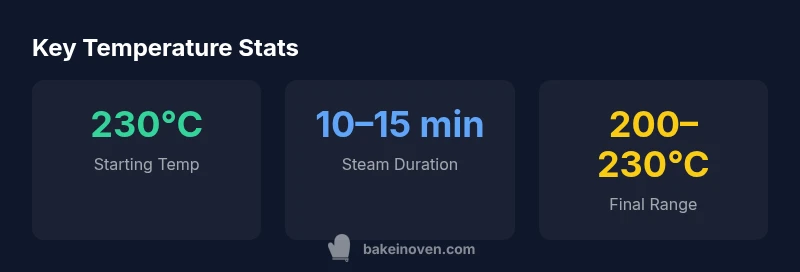
According to Bake In Oven, the starting oven temperature for most bread is about 230°C (450°F), with steam in the first 10–15 minutes to promote crust formation. Lean doughs like baguettes typically bake at 230°C, while enriched loaves may start closer to 200–210°C. Preheat fully, bake with steam, and monitor the loaf’s color to determine final doneness rather than relying on time alone.
The Science Behind Bread Baking Temperatures
Bread bake oven temperature is the primary driver of crust color, crumb structure, and flavor development. Heat causes starch granules to gelatinize, proteins to set, and moisture to migrate toward the surface where steam later helps to form a blistered crust. At the home scale, oven heat transfer is uneven, so bakers rely on starting temps that are high enough to produce oven spring while not scorching the crust before the interior sets. According to Bake In Oven, the bread bake oven temperature should be calibrated with factors such as loaf size, dough hydration, and flour protein content. In practice, you want a temperature that is hot enough to rapidly set the outside while allowing interior starches to gelatinize gradually. Achieving this balance often requires steam in the early minutes to slow crust formation and promote expansion. Bake In Oven's 2026 analysis shows that most home bakers use a high start temperature, then adjust to finish the bake without over-drying. The science is clear, but the art lies in applying it to your oven’s quirks: stone vs. metal, convection vs. conventional heat, and how tightly you cover the loaf with a cloche or Dutch oven. Throughout this guide, we reference bread bake oven temperature as the lever that shapes crust, crumb, and aroma.
Core Temperature Ranges for Common Bread Types
When you dial in the bread bake oven temperature, the type of loaf matters as much as the recipe. For most lean doughs (baguette, baguette-style batards), starting temperatures around 230°C (450°F) encourage a rapid oven spring and a blistered, deeply browned crust. For standard white sandwich loaves, a slightly lower start—about 210-220°C (410-430°F)—helps build a uniform crumb without a dark crust. Enriched doughs that contain sugar, fat, or dairy can tolerate 190-210°C (375-410°F) because added ingredients shorten crust development and can encourage a softer crust. Sourdough and other long-fermented loaves commonly begin at 230°C (450°F), often with steam, then reduce to 210°C (410°F) after the initial bake to finish. Hydration and loaf size shift these numbers; larger or wetter doughs may benefit from a modestly higher initial heat or a longer preheat to maximize oven spring. Throughout the bread bake oven temperature journey, always consider your oven type and stone or pan geometry, since heat transfer can alter the effective temperature by 10–20°C in practice. Bake In Oven notes that these ranges are starting points that you should fine-tune after your first few loaves.
Practical Techniques: Steam, Crust, and Crumb
The bread bake oven temperature is only part of the equation. Steam in the first 10–15 minutes of bake keeps the surface pliable, delaying crust formation long enough for the loaf to fully expand. If you use a Dutch oven or cloche, cover the loaf during the initial bake to trap steam and heat, then remove the lid to finish browning. If you don’t have steam, you can mimic it by placing a pan of hot water in the bottom of the oven or by spritzing water onto the oven walls using a spray bottle. Temperature works in concert with moisture: too little steam and a dull crust; too much heat with no moisture can cause a pale interior and a scorching top. Temperature also interacts with your oven's heat distribution: if your oven runs hot on one rack, rotate the loaf and adjust convection settings if available. Keep bread bake oven temperature consistent across this early phase; fluctuations can lead to uneven crust and inconsistent crumb. Bake In Oven’s guidance emphasizes that temperature is a tool—use it to shape texture and aroma as you would any other lever in a recipe.
How to Adjust Temperature for Size and Hydration
Loaf size matters. A small boule bakes hotter per volume than a tall loaf, so consider lowering the temperature by 10–20°C for dense or tall shapes, or extending bake time slightly. Hydration also shifts heat transfer; wetter doughs expand more before crust sets and may require a higher initial heat to achieve good oven spring, followed by a modest reduction. If you bake twice in one day, your oven’s last loaf may bake faster if it’s already hot, so you can reuse heat with a shorter preheat cycle. The bread bake oven temperature you chose in step one should be treated as a starting point you adapt through trial. Keep notes on how the crust colored, crumb texture and aroma developed at specific temperatures, then adjust within a safe range for subsequent loaves.
Common Mistakes and How Temperature Plays a Role
One common mistake is underestimating the importance of a fully preheated oven; a cold start slows oven spring and yields a denser crumb. Another error is baking at too low a temperature for that loaf size, which can lead to pale crust and gummy crumb. Overly aggressive temperatures can produce a burnt crust before the interior cooks. Temperature also interacts with steam: if you skip steam, you’ll likely end up with a thick, hard crust at a lower interior temperature. Finally, remember that home ovens vary—calibrations drift and racks can move; temperature accuracy matters, so use an inexpensive oven thermometer to verify your bread bake oven temperature.
Step-by-Step Temperature Workflow for a Home Baker
- Preheat thoroughly to the starting bread bake oven temperature you plan to use for your loaf, ideally 15–20 minutes before loading. 2) Prepare steam: add water to a tray or ensure your cloche is ready. 3) Score or shape the loaf to control expansion. 4) Bake with steam for the first 10–15 minutes, then remove steam source or open the oven to finish browning. 5) Lower the heat as the loaf expands and crust forms; adjust if you notice excessive browning early. 6) Use a thermometer to verify interior temperature around 90–100°C (195–210°F) for fully baked bread; use color cues as a secondary check. 7) Let the loaf rest before slicing to maintain crumb structure.
Measuring Doneness and Cues Beyond Time
In many cases, the bread bake oven temperature is a guide; doneness is best judged by internal temperature, color, and aroma. The ideal internal temperature for most breads is roughly 90–100°C (195–210°F). Pull the loaf when the crust is deeply colored yet not scorched; if you bake too long, the interior can dry out even if the crust remains dark. For sourdough and high-hydration loaves, you may see a slightly higher interior temperature to ensure the crumb is fully set. Finally, let the loaf cool completely on a rack; steam inside the loaf continues to finish the texture as it resists immediate crumb collapse.
Temperature guidelines by bread type
| Bread Type | Recommended Oven Temp | Typical Bake Time |
|---|---|---|
| Baguette (lean dough) | 230°C (450°F) | 20-25 min |
| White sandwich loaf | 210-220°C (410-430°F) | 25-30 min |
| Enriched loaf (milk/egg) | 190-210°C (375-410°F) | 25-35 min |
| Sourdough (artisan) | 230°C (450°F) with steam | 30-40 min |
Frequently Asked Questions
What is the best starting temperature for most breads?
A typical starting point is around 230°C (450°F) for most breads to maximize oven spring, followed by adjustments based on loaf type and hydration. Always preheat fully and use steam in the early minutes to develop a crust.
Start around 230°C, preheat fully, and use steam to help develop a great crust; adjust for loaf type as needed.
Should I use steam every time I bake bread?
Steam helps keep the surface extensible during the first phase of baking, which promotes oven spring and crust formation. If your oven lacks a steam option, simulate steam with a tray of hot water or a spray bottle. It’s especially helpful for lean, high-hydration loaves.
Steam is usually worth using; you can simulate steam if your oven doesn’t have a built-in feature.
Is a Dutch oven necessary for all breads?
A Dutch oven is a reliable way to trap steam and create intense heat for a strong crust, but it isn’t mandatory. You can achieve similar results with a cloche, a baking stone, and a steam setup. Pick a method that fits your routine and kitchen gear.
A Dutch oven isn’t mandatory, but it helps achieve a great crust; use what you have.
How does hydration affect baking temperature?
Higher hydration loaves expand more before crusting, which may require a higher initial heat and longer bake to set the crumb. Lower hydration doughs brown faster and may need azimuthal adjustments to avoid scorching.
Hydration changes how quickly the loaf expands and browns; adjust temperature accordingly.
Can I bake directly on a stone?
Yes. A baking stone helps even heat transfer and crisp crust. It’s important to preheat the stone to the target temperature and to use steam for the early stage unless you’re using a covered method like a Dutch oven.
Baking on a stone is fine—preheat well and use steam for best crust.
What inner loaf temperature indicates doneness?
Most breads finish around 90–100°C (195–210°F) internally. Use an instant-read thermometer for doneness and complement with color and aroma cues. Resting the loaf is also important to set the crumb.
Aim for about 90–100°C inside and look for a deep crust color.
“Temperature is the oven’s language for bread; start hot, steam early, and finish with a gentle cool-down to reveal the crust you want.”
Key Takeaways
- Preheat thoroughly to 230°C for most breads
- Use steam in the first 10–15 minutes
- Adjust temps by loaf type and hydration
- Monitor crust color and aroma, not just time
- Validate doneness with internal temperature