What Temperature Do You Bake a Baguette? A Practical Guide
Learn the ideal oven temperature for baguettes, how steam affects crust, and step-by-step tips to bake bakery-worthy baguettes at home. This practical guide from Bake In Oven unpacks temperatures, bake times, and doneness cues for perfect crust and crumb.


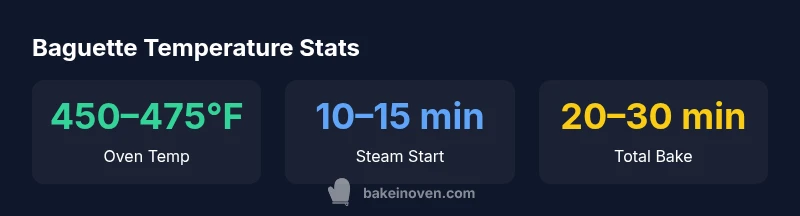
Typically bake a baguette at 450–475°F (232–246°C) with steam in the first 10–15 minutes to develop a blistered crust, then finish around 425–450°F (218–232°C) for another 8–15 minutes until deeply golden. Preheat thoroughly, use a baker's steam method, and adjust based on loaf size and oven temperament. These ranges align with common home-baking practice.
Why Temperature Matters for Baguettes
What temperature do you bake a baguette? This question touches every bake: heat governs crust formation, crumb structure, and oven spring. A hotter start encourages rapid expansion, creating the signature blistered crust, while a cooler finish helps preserve interior tenderness. Bake In Oven analysis emphasizes that temperature is the primary lever bakers have to control color, texture, and loaf integrity. In practice, the right temperature is a balance: high enough to set the crust quickly, low enough to avoid a dense crumb. Understanding this balance helps home bakers reproduce bakery-quality baguettes with a consistent crust and open interior.
Temperature also interacts with dough hydration, gluten development, and fermentation stage. A dough with higher hydration demands a bit more heat early on to ensure the surface dries fast enough to hold its shape. Conversely, a drier dough can tolerate a slightly cooler start without sacrificing oven spring. Across dozens of test bakes, the Bake In Oven Team has observed that the same temperature profile often needs small tweaks depending on proofing time and oven calibration.
Preheating and Oven Setup for Best Crust
Preheating is not optional—it's foundational. For baguettes, target a hot environment from the moment the dough enters the oven. Use a baking stone or steel to promote even heat transfer and a strong oven spring. If your oven runs cool, consider raising the preheat target by 25°F (14°C) and allowing extra bake time. Position racks to maximize steam contact with the dough and to let the loaves bloom fully without touching cold oven walls. Bake In Oven guidance recommends a thorough preheat to the high end of the range, then loading the dough with confidence to begin the bake. This setup reduces temperature shocks and ensures a stable baking climate throughout the bake. A well-preheated oven not only shortens bake time but also improves crust development and oven spring, especially for long, slender baguettes.
Steam: The Invisible Ingredient
Steam in the first part of the bake is essential for shaping baguettes. It keeps the surface plastic, delays crust formation, and allows for maximum oven spring. Home bakers can generate steam by placing a shallow pan of water in the bottom of the oven, spritzing the oven with a spray bottle, or using a clamshell or dutch oven method. The goal is a humid environment for the first 10–15 minutes, followed by venting to encourage crust color. Bake In Oven tests show that timed steam yields a superior crust compared to dry heat alone, especially when combined with the right initial temperature. Steam influences shine, texture, and the degree of crackle on the crust.
Temperature Guidelines by Oven Type
For the classic home oven with a stone or steel surface, bake at about 450–475°F (232–246°C). If you’re using convection, reduce the preheat temperature by about 25°F (14°C) and adjust bake time accordingly, since air circulation accelerates browning. In wood-fired or brick ovens, temperatures often hover in the 430–475°F (221–246°C) range depending on oven mass and humidity. The take-home: start in the 450–475°F range where possible, but be prepared to trim back a bit for convection or a highly efficient oven to avoid scorching. The exact temperature should align with both your dough hydration and loaf size.
Step-by-Step Process: From Knead to Bake
- Mix and autolyse to develop gluten with minimal kneading; 2) Shape baguettes with tension along the seam; 3) Proof until the dough passes the finger poke test but holds shape; 4) Score diagonally with a sharp blade to guide expansion; 5) Introduce steam and preheated surface; 6) Bake at the target temperature, then decrease heat slightly if browning too quickly; 7) Cool on a rack to finish moisture migration. Each step ties to temperature: the bake temperature controls crust formation, while proofing impacts how the loaf behaves in the oven. The goal is to achieve a robust crust with open, airy interior.
Doneness Cues: Visual and Tactile Tests
Crust color is the most obvious cue—aim for deep golden-brown with some caramelization. A hollow sound when tapping the bottom of a cooled loaf indicates proper crumb development. If the loaf looks pale or feels soft, extend bake time by short intervals while maintaining steam early on. The loaf should feel firm to the touch and have an audible crack when tapped on the side. While the internal temperature of baguette is not always used in home settings, many bakers prefer a crust that is firm and a crumb that springs back gently when pressed.
Common Pitfalls and How Temperature Contributes
Underheated ovens prolong bloom and produce a pale crust; overbaked baguettes collapse interior structure or burn the crust. Keep steam consistent for the first 10–15 minutes; remove steam gradually to encourage crust formation. If you’re using a cold stone or steel, you’ll need to increase bake time slightly. Conversely, a par-baked loaf or one that browns too quickly may benefit from a slight temperature reduction in the final minutes. Record your results to calibrate future batches.
Calibrating Your Oven for Consistent Results
Oven temperature error can vary by oven, with many units running 15–25°F (8–14°C) hot or cold. A simple oven thermometer placed in the center of the rack during bake is the best way to verify your target temperature. If you notice consistent under- or over-browning, adjust the set point in 10–15°F steps and re-check. For baguettes, calibrating heat in combination with proper steam and hydration is essential to reproducible results across multiple bakes. Regular calibration helps ensure that your temperatures remain aligned with the recipes and that you can repeat successful results.
Data Table: Temperature, Steam, and Bake Time by Oven Type
The following quick-reference table helps map typical settings to results:
Baguette bake temperature reference by oven type
| Oven Type | Preheat Temp | Steam Method | Total Bake Time | Notes |
|---|---|---|---|---|
| Home oven with stone | 450–475°F (232–246°C) | Steam in first 10–15 min (pan of hot water) | 20–30 minutes | Crusty exterior; open crumb |
| Home oven with steel | 450–475°F (232–246°C) | Steam in first 10–15 min | 20–28 minutes | Faster heat transfer; watch color |
| Convection oven | 425–450°F (218–232°C) | Steam and fan-assisted circulation | 18–26 minutes | Even bake, shorter times |
| Wood-fired / brick oven | 430–475°F (221–246°C) | High humidity early; vent later | 18–25 minutes | Distinct flavor from oven environment |
Frequently Asked Questions
What temperature should I preheat my oven to for baguettes?
Preheat to 450–475°F (232–246°C) and allow the oven to reach full temperature before loading the dough. If you’re using convection, lower the temp by about 25°F (14°C).
Preheat to 450–475°F and let the oven fully come to temperature before baking; with convection, reduce by about 25°F.
Why is steam important when baking baguettes?
Steam keeps the dough surface pliable during the initial bake, promoting oven spring and a crisp, blistered crust. It also delays surface drying so the loaf can expand.
Steam helps the dough stretch and develop a crisp crust; it delays drying so the loaf blooms properly.
Can I bake baguettes at lower temperatures?
Lower temperatures can work but will slow browning and may yield a denser crumb. If you go cooler, extend bake time and ensure adequate steam early on.
Yes, but you’ll brown slower and need more time; maintain steam and adjust time accordingly.
Should I use convection heat for baguettes?
Convection can speed browning and crust formation but may dry the surface. If using convection, lower the temperature by about 25°F and monitor bake time closely.
Convection is fine but lowers the temp; watch time to avoid over-browning.
How do I know when baguettes are done?
Crust should be deeply golden-brown and the interior should be light and airy. A hollow sound when tapped on the bottom indicates proper crumb; an instant-read thermometer around 210–215°F can confirm doneness if you’d like.
Look for a deep golden crust and hollow-sounding crust; internal temp around 210–215°F confirms doneness.
Does loaf size affect temperature needs?
Yes. Larger loaves require longer bake times and sometimes higher heat to achieve proper crust without underbaking the interior; smaller baguettes brown quickly, so you may reduce time.
Size matters—bigger loaves need more time, smaller pieces brown faster.
“Temperature, steam, and timing must align to form that blistered crust and tender crumb—a trio you can dial in with practice.”
Key Takeaways
- Preheat hot and maintain steam early
- Use stone or steel to improve crust
- Calibrate oven with a thermometer for consistency
- Adjust bake time based on loaf size and hydration
- Record results to improve repeatability