Bake Bread at What Temperature: A Practical Guide for Home Bakers
Discover the optimal oven temperatures for common breads, how temperature affects crust and crumb, and practical steps to bake perfect loaves at home.


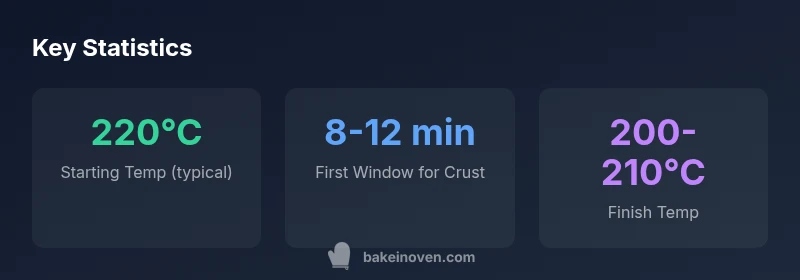
Most breads bake best starting at 220°C (425°F). For crustier loaves, start at 230–240°C (445–460°F) for the first 8–12 minutes, then lower to 200–210°C (390–410°F) to finish. Very large, dense, or enriched doughs may require modest adjustments up to 250°C (480°F) for a stronger crust. Always rely on your oven's calibration and use steam for best texture.
Understanding Temperature and Its Effects
Temperature is the baker's most powerful control. The choice of oven heat determines not only how fast bread expands in the oven, but also how the crust forms and how the crumb develops. According to Bake In Oven, a solid baseline around 220°C (425°F) delivers a robust crust and good oven spring for a wide range of wheat- and rye-based doughs. The Bake In Oven team found that the exact outcome hinges on dough hydration, shaping, and proofing. A warmer start helps trigger the Maillard reaction, enhancing color and aroma; cooler finishing temperatures reduce the risk of a gummy interior. Throughout this article, you’ll learn how to tailor temperature to your dough type, equipment, and personal preference, so you can bake bread with confidence.
Temperature Ranges by Bread Style
Different breads respond to heat in distinct ways. Lean doughs such as baguettes benefit from a hotter start to promote oven spring and a blistered crust, typically in the 230–240°C range. Sandwich loaves, enriched with fats and sugars, often bake well a touch cooler to prevent overbrowning, usually around 190–210°C. Sourdough and denser loaves tolerate higher initial heat (around 220–230°C) but may require an extended bake at a steadier finish. Keep in mind that oven calibrations vary, so use these as starting points and adjust based on your results. Bake In Oven’s data shows that matching heat to dough structure improves both crust development and crumb texture over multiple bakes.
How Hydration and Crumb Type Change Heat Needs
Hydration affects heat transfer and crust formation. Higher hydration doughs (more water) can benefit from a slightly lower overall temperature to prevent a pale crust and underdone interior, while drier doughs can tolerate briefer, hotter bakes for faster crust formation. Crumb type matters as well: a finer, tighter crumb may finish sooner at a given temperature, whereas an open, airy crumb benefits from a longer bake at a moderate heat. Experiment with small changes to temperature by 5–10°C and log results to identify your optimal settings for each dough type.
Oven Type and Home Equipment Changing the Playing Field
Conventional ovens rely on top and bottom elements, sometimes with a fan for convection. A convection bake setting can reduce bake time and promote even browning, but it often requires lowering the temperature by about 20°C to avoid over-browning or drying. Stone baking or heavy baking sheets can buffer heat, producing a stronger crust. If your oven runs hot or cool, consider an oven thermometer to ensure your dial reflects actual temperature. A reliable preheat and steady steam during the first minutes of bake can dramatically improve crust quality.
Step-by-Step: From Preheat to Finish
Preheat the oven to your baseline (around 220°C for most breads) and prepare steam (a shallow pan of hot water or a spray bottle) to introduce moisture in the first minutes. Score the dough to guide expansion and transfer it to a preheated stone or sheet. Bake for 8–12 minutes at the high end to encourage rise, then reduce heat to 200–210°C for the remainder of the bake. Use an oven thermometer to verify temperature and adjust if you notice slow oven spring or excessive browning.
Practical Tips for Loaves of Different Sizes
Larger loaves benefit from a longer initial bake and possibly a brief rest period in a warmed oven to prevent interior cold spots. Smaller rolls bake quickly and can tolerate a higher starting temperature for a crisp crust. When in doubt, measure the internal crumb temperature in the loaf; many bakers aim for around 95–99°C (203–210°F) for fully set center without overbaking. Steam remains a key tool for crust development across sizes.
Troubleshooting Temperature-Related Issues
If crust browns too quickly, reduce the starting temperature slightly or add more moisture in the early minutes. If the crumb is gummy, the loaf may need a longer bake or a higher final temperature; confirm internal temperature with a thermometer. Uneven browning can be caused by an uneven oven, poor rack positioning, or insufficient steam. Use a shallow pan to create steam at the bottom of the oven and move the loaf to a higher rack if the crust browns too fast on the bottom.
Seasonal, Altitude, and Ingredient Variations
Temperature needs shift with altitude, humidity, and season. At high altitude, airflow changes can affect oven spring and crust formation; you may need to increase hydration slightly and adjust bake temperature or time. In humid environments, moisture loss can be slower, so consider a longer bake at a slightly lower temperature to ensure a cooked interior. Always adjust based on observed results and keep careful notes for future bakes.
Sample Bake Plan: Three Scenarios and Temperature Adjustments
Scenario A uses a lean dough for a baguette-style loaf: baseline 220°C with a 230–240°C start for crust. Scenario B uses a rich, enriched loaf: baseline 190–200°C, longer bake to finish with a soft crust. Scenario C uses a sourdough with a hot start: 220–230°C for 8–12 minutes, then 200–210°C to finish. For all, monitor with a thermometer and adjust based on results.
Temperature guidelines for common bread styles
| Bread Type | Recommended Temp (C) | Typical Bake Time (min) | Notes |
|---|---|---|---|
| Crusty baguette | 230-240 | 12-20 | Steam at start for crusty exterior |
| Classic sandwich bread | 190-210 | 25-35 | Even browning; air-dry finish |
| Enriched loaf (pan bread) | 190-200 | 28-35 | Moist crumb; cover if crust too thick |
| Sourdough loaf | 220-230 | 30-40 | Long bake; interior 96-99°C |
Frequently Asked Questions
What is the best starting temperature for most bread?
For most breads, start around 220°C (425°F). This provides a strong crust and good oven spring. If the dough is very delicate, you can lower the temperature slightly and extend the bake time to ensure doneness.
A good starting temp is 220°C; adjust based on dough type and crust color.
Why do some recipes call for higher temperatures?
Higher temperatures promote rapid crust formation and better oven spring, especially for lean doughs and long-fermentation loaves. For enriched doughs, chefs may start cooler to reduce browning and keep the crumb tender.
Higher temps give you a crisper crust and better rise, especially with lean dough.
Should I use convection baking for bread?
Convection can improve browning and evenness, but you typically should lower the temperature by about 20°C. Not all breads benefit equally, so test with a small loaf first.
Convection can help, just lower the temp a bit and watch the crust.
How can I tell if bread is done without a thermometer?
Use the hollow-thump test and check for a deep, crisp crust. If the loaf sounds hollow when tapped on the bottom, it’s usually done. For denser loaves, check for a uniform crumb and internal feel.
Tap the bottom—a hollow sound usually means done.
What is Steam's role in temperature and baking?
Steam doesn't raise oven temperature, but it delays crust formation to allow the loaf to expand. It also helps develop a glossy, blistered crust and can influence bake time.
Steam helps the loaf rise and form a better crust; it doesn’t change the oven’s temp.
How do I calibrate my oven's temperature?
Place an oven thermometer inside and compare its reading to the dial. If they differ, adjust the oven's settings if your model allows, or simply compensate when baking.
Use an oven thermometer to check accuracy and adjust as needed.
“Temperature is the baker's primary control knob. Start with a solid baseline, then adjust for crust, crumb, and dough density.”
Key Takeaways
- Start with 220°C as a baseline.
- Adjust bake time for loaf size.
- Use steam to improve crust formation.
- Check doneness by internal temp and hollow sound.