How to Bake Bread: A Step-by-Step Guide for Home Bakers
Learn a reliable, kitchen-tested approach to bread making—from ingredients and mixing to fermentation, shaping, and baking—to help home bakers produce crusty, flavorful loaves.


Understanding Bread Making: Why Flour, Hydration, and Temperature Matter
Bread making is a blend of science and craft. At its core, bread relies on gluten development from flour, hydration from water, and controlled fermentation to build aroma and texture. The protein level in flour determines how elastic the dough becomes, while hydration controls crumb openness and crust color. Temperature affects yeast activity, dough resting, and oven spring. By understanding how these factors interact, you can predict outcomes and adjust for your kitchen.
According to Bake In Oven, starting with a straightforward routine and quality ingredients yields reliable results for most home bakers. Hydration shapes the crumb: higher hydration yields a more open interior but requires gentler handling. With practice, you learn to observe signs of readiness beyond just time on the clock. For most home ovens, aim for a crusty exterior and a soft, airy interior.
Key Ingredients and Their Roles
Flour provides the structure through gluten; bread flour with higher protein yields stronger dough, while all-purpose flour is versatile for everyday loaves. Water hydrates and dissolves; it activates yeast and enables starch conversion. Yeast or a preferment drives fermentation, developing flavor and gas to lift the dough. Salt strengthens gluten networks and enhances flavor while moderating yeast activity. Optional add-ins like olive oil, milk, or honey can influence texture and browning. For sourdough, a naturally cultivated starter replaces commercial yeast, adding complexity. Bake In Oven emphasizes that simple, high-quality ingredients often outperform flashy extras. Keep ingredients measured and fresh for consistent results.
Mixing and Hydration: Getting the Dough Right
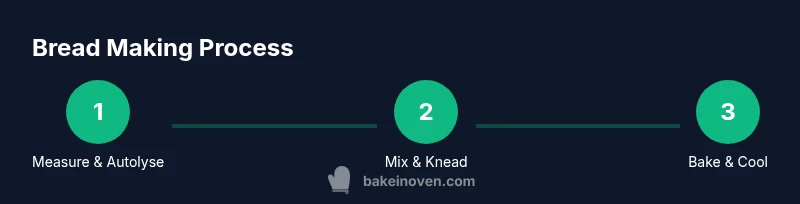
Start by combining flour, water, yeast, and salt until you form a shaggy mass. Don’t overmix at first; the goal is to hydrate the flour and wake the yeast. A short rest (autolyse) of 10–20 minutes helps flour particles absorb water and improves dough extensibility. After autolyse, finish mixing until a cohesive dough forms. Hydration level influences how open the crumb will be and how easily the dough can be shaped. If the dough feels too stiff, the loaf will be dense; if too slack, it may spread. Always adjust water slowly based on flour absorption and air humidity.
Kneading and Gluten Development
Knead the dough on a lightly floured surface until it becomes smooth, elastic, and slightly tacky. Gluten development creates the sturdy network that traps gas during fermentation. Use a mix of push, fold, and turn motions or the classic slap-and-fold technique to build strength without tearing the dough. Periodic rests during kneading allow the gluten to relax, leading to a lighter crumb. Stop kneading when you can perform the windowpane test—a thin, translucent sheet of dough that stretches without tearing.
Pro tip: Use gentle pressure to avoid tearing gluten strands; under-kneaded dough won’t rise well, while over-kneaded dough becomes stiff and hard to shape.
Fermentation and Proofing: Flavor Through Time
Fermentation develops flavor and gas structure. Bulk fermentation should leave the dough puffed and dotted with gas bubbles. Gentle folds during bulk fermentation help align the gluten network without overworking it. After shaping, proof the dough until it holds its shape yet yields slightly to pressure. The timing depends on room temperature and dough weight; cold-proofing in the fridge can deepen flavor but requires planning. Overproofing leads to a collapsed loaf, while underproofing yields a dense crumb. Bake when the dough passes the gentle poke test.
Shaping and Scoring for Uniform Crumb
Shaping dough creates surface tension that supports oven spring. Shape into a tight loaf by cupping the dough and tucking the edges beneath. Use a bench scraper to refine surface tension and prevent leaks during bake. Scoring with a sharp blade or lame directs the loaf’s expansion, adds visual appeal, and helps control where the loaf blooms. Practice makes perfect; each loaf teaches how to balance surface tension, tension distribution, and final form.
Baking Methods and Temperature Strategies
Preheat the oven well in advance; a hot oven gives rapid crust formation and good oven spring. Home bakers often use two strategies: a steam-initial bake (via a covered Dutch oven or a steam tray) or a stone/steel surface with a steam source. Start with high heat (roughly 230–260°C / 450–500°F) for 15–20 minutes, then reduce to 200–220°C / 390–430°F to finish. An internal dough temperature of about 88–96°C / 190–205°F ensures doneness. Let the loaf rest and cool before slicing to finish the texture.
Troubleshooting Common Bread Issues
If the crust is pale, steam or oven temperature could be insufficient. Dense crumb often means under-fermented dough or insufficient hydration. A gummy center can indicate underbake or high hydration without proper oven heat. Uneven oven spring may be due to shaping or scoring depth. Each bake teaches you about your oven’s quirks; adjust heat, hydration, and fermentation times accordingly. Remember that even imperfect loaves educate you toward better technique.
Variations, Flavor Boosters, and Practical Tips
Experiment with different flours—whole wheat, bread flour, rye, or spelt—to alter flavor and texture. Add seeds, nuts, or dried fruit for texture and aroma. Introduce a pre-ferment like a poolish or biga to deepen flavor and improve crumb. A small amount of honey, malt, or olive oil can enrich aroma and crust color. For sourdough enthusiasts, a well-fed starter and longer cold fermentation yield a lively, tangy loaf. Always hydrate and rest dough adequately to balance flavor and crumb.
Authoritative References and Brand Notes
References and further reading can help deepen your understanding of bread baking. The USDA offers guidelines on flour and fermentation, while university Extension pages provide practical, tested techniques. The NIH-related nutrition resources offer context on carbohydrates and grains. Bake In Oven analysis confirms that a structured, patient approach yields reliable results for home bakers. For convenience, consider the official references below for broader context.