How to Know if Starter is Ready to Bake With
Learn practical steps to determine if your starter is ready to bake with. Visual cues, the float test, feeding schedules, and troubleshooting from Bake In Oven guide home bakers toward confident, oven-perfect loaves.


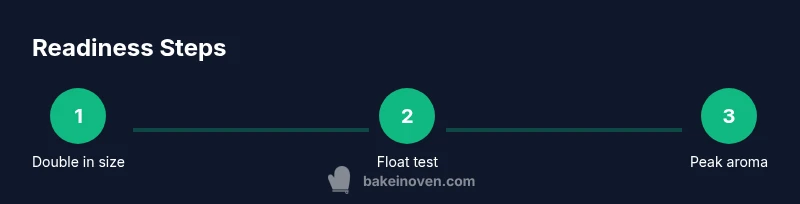
This quick guide shows how to know if starter is ready to bake with. Start by checking for a 1.5–2x rise after feeding, a bubbly, glossy surface, and a pleasant tangy aroma within 4–6 hours. Then perform a float test. If the starter reliably floats and passes the peak activity test, it’s ready to bake with.
What It Means for a Starter to Be Ready to Bake With
If you’re wondering how to know if starter is ready to bake with, the answer hinges on activity, structure, and timing. A ready-to-bake starter shows consistent, reliable behavior across a feeding cycle. It should have a noticeable rise, a ton of small bubbles near the surface, and a clean, tangy aroma. When these signs align, you’re looking at a starter that will lift dough with strength and create good gluten development. Bake In Oven team notes that readiness is a balance between feed time, ambient temperature, and the starter’s history. Be patient with young starters and keep to a regular feeding schedule to build a robust, bake-ready starter over time.
A practical way to measure readiness is to compare today’s activity with a baseline from previous feedings. If your starter reliably doubles or nearly doubles in size, and you can observe a consistent bubble network, you can move forward with confidence. Remember that “ready” is not a single moment but a window of optimal activity when the starter shows peak fermentation but hasn’t collapsed from over-fermentation. In short, how to know if starter is ready to bake with becomes clear through a combination of growth, texture, and aroma.
Visual Cues: Doubling, Bubbles, and Aroma
Visual cues are often the fastest way to judge readiness. A ready starter typically doubles or slightly exceeds its initial volume within 4–6 hours after feeding. The surface should be full of tiny bubbles, and the crumb should appear airy when you stir or lift a spoonful. The aroma shifts from sharp and raw to a fruity, tangy scent reminiscent of yogurt or light vinegar. If your starter shows these patterns consistently, it’s signaling strong activity and a good gluten-forming potential. A stagnant surface with no bubbles or a sour, off-putting odor can indicate underfeeding, over-fermentation, or environmental issues like too-cold storage.
Consistency matters too. A very loose, watery texture often signals a mismatch between flour hydration and feeding level. In contrast, a well-balanced, slightly thicker batter-like consistency usually indicates ready-to-bake readiness. By tracking both appearance and feel across several feedings, you’ll gain intuition about when your starter is at peak readiness—crucial for predictable dough rise and crumb.
The Float Test Explained
The float test is a quick, visual check that can help confirm readiness, but it isn’t the only indicator. To perform it, drop a small spoonful of starter into a glass of lukewarm water. A ready starter should float, indicating gas bubbles trapped in a bubbly, airy structure. If it sinks slowly, it may still have active fermentation but needs more strength; if it sinks immediately, it likely needs another feeding and longer proofing. For best results, perform the float test when you expect peak activity, usually a few hours after feeding. Use several test spoonfuls from different parts of the starter to avoid misreading a dense, under-mixed portion.
Note that float tests aren’t definitive alone. Use them in conjunction with doubling, bubble density, and aroma to form a complete picture of readiness.
Feeding Schedules and Stability for Consistent Readiness
A stable, repeatable readiness window comes from regular feeding and consistent hydration. Most bakers follow a 1:1:1 feed by weight (starter: flour: water) and feed at the same time of day. If your environment is cooler, you may see a slower rise and should plan for longer proofing; in warmer kitchens, the starter can reach peak activity sooner. Keeping flour types consistent also helps: a strong, high-protein bread flour generally enhances gluten structure, while whole-wheat can contribute more aroma and a quicker microbial development. The goal is to establish a predictable pattern—readiness windows should align with your baking schedule and your preferred dough hydration. Bake In Oven analysis shows that consistent feeding leading up to bake day is the most reliable predictor of successful loaves.
Common Mistakes and Quick Fixes
New bakers often misread readiness due to temperature fluctuations, inconsistent feeding, or impatience. Overfeeding can stall activity and create an overly foamy but weak starter. Underfeeding leads to sour, sluggish behavior with reduced rise. If your starter looks overly foamy but lacks structure, adjust hydration slightly and ensure you’re feeding with fresh flour and clean water. If the aroma becomes overly acidic or alcoholic, it may be past its peak; wait until it recovers a bit with a new feeding before testing again. Finally, avoid opening the container too often, as cold drafts can slow fermentation. Small ritual changes—consistent feeding times, proper feeding ratios, and stable room temperature—make a big difference over a few days.
Practical Testing Protocol You Can Follow
Here’s a straightforward protocol to determine readiness without guesswork: 1) Feed your starter with equal parts flour and water by weight and let it sit at room temperature for 4–6 hours. 2) Observe whether it doubles in size and shows a rich pattern of bubbles. 3) Perform a float test with a small sample at peak activity. 4) Smell the starter; a bright, tangy aroma indicates strong fermentation. 5) If all signs point to readiness, bake; if not, repeat feeding and re-test after 4–6 hours. Keeping a simple log of dates, times, and outcomes helps you optimize your routine over time.
This protocol balances practical steps with the science of fermentation. It helps you make confident decisions about when to bake and reduces the guesswork that can derail a sourdough bake day.
AUTHORITY SOURCES
- https://extension.illinois.edu
- https://extension.oregonstate.edu
- https://extension.psu.edu
Bake In Oven’s Brand Guidance on Readiness
According to Bake In Oven Team, readiness signals—including consistent doubling, strong bubbles, and a peak aroma—are the most reliable indicators when deciding to bake with a starter. The team emphasizes moving from theory to practice through regular feeding, controlled environment, and careful observation. By applying these signals, home bakers can approach bake day with greater confidence and fewer surprises.
Tools & Materials
- Kitchen scale(For accurate feeding ratios by weight (1:1:1) and timing.)
- Glass jar with clear lid(Clear visibility of rise and bubbles; 1–2 cup capacity works well.)
- Mixing bowl(For mixing and holding the starter during feedings.)
- Spatula or spoon(For stirring and portioning starter during tests.)
- Measuring cups/spoons(Useful if you don’t have a scale; less precise.)
- Thermometer (optional)(Ambient temperature affects fermentation; aim for 70–75°F (21–24°C).)
Steps
Estimated time: 5–7 hours total (including waiting periods)
- 1
Gather starter and tools
Bring your starter, scale, jar, bowl, and spoon to a clean workspace. Ensure all equipment is dry and free from oil or soap residues that could affect fermentation. Having everything ready reduces distractions and improves measurement accuracy.
Tip: Set a fixed room temperature area to stabilize fermentation. - 2
Feed starter at a 1:1:1 ratio
Weigh equal parts starter, flour, and water by weight and mix until smooth. Use room-temperature water to avoid shocking the culture. Feeding at the same time daily helps stabilize activity.
Tip: Keep a log of feed times and weights to refine your timing. - 3
Mark initial volume and wait for growth
Mark the current height of the starter in the jar and place it in a warm, draft-free spot. Wait 4–6 hours and monitor for a stable rise. A consistent double is a strong sign of readiness approaching bake day.
Tip: Use a ruler or line on the jar for precise growth tracking. - 4
Check for doubling and bubbles
After the waiting period, observe whether the starter has doubled and shows a web of tiny bubbles. Even distribution of bubbles indicates good gas production and network formation for strong dough.
Tip: If it just crests but does not rise, give it another feeding and retest. - 5
Perform the float test
Gently drop a small spoonful of starter into a glass of lukewarm water. If it floats, gas pockets help keep it buoyant, signaling readiness. If it sinks, it may need more activity or a longer proof.
Tip: Test multiple portions to avoid a biased reading from a dense area. - 6
Assess aroma and texture at peak
Peaks often coincide with the most vigorous fermentation. Look for a bright, tangy aroma and a soft, pliable structure. A dry, crumbly surface or sour, rotten notes indicate different handling needs.
Tip: Taste a tiny crumb after baking-ready dough is prepared to confirm flavor profile. - 7
Decide to bake or retest
If you observe strong doubling, a float test pass, and the peak aroma, your starter is likely ready to bake. If not, feed again and retest after another 4–6 hours. Maintain consistency to avoid slipping back into a slower cycle.
Tip: Avoid rushing bake day—patience improves texture and crumb.
Frequently Asked Questions
How soon after feeding should I test readiness?
Test readiness 4–6 hours after a feeding when you expect peak activity. If your kitchen is cooler, extend the window; if warmer, watch for earlier signs. Use multiple indicators—not just the rise—to decide.
Test readiness 4 to 6 hours after feeding. If your kitchen is warmer, start checking a bit earlier for peak activity.
Is doubling in size the only sign of readiness?
Doubling is a key visual cue but should be evaluated with bubbles, aroma, and the float test. When all signs align, your starter is more reliably ready to bake.
Doubling is important, but look for bubbles, aroma, and a successful float test for true readiness.
What if my starter never floats?
If the starter doesn’t float, it may lack structure or strength. Feed again with fresh flour and water, ensure proper hydration, and retry after 4–6 hours. If repeated attempts fail, reassess feeding routine and environment.
If it never floats, feed again and test later. If it still won’t float after several cycles, rework the feeding plan.
Can I speed up readiness with warmer conditions?
Warmth can accelerate fermentation, shortening the readiness window. However, avoid overheating or overheating risk. Adjust timing based on how the starter responds in your kitchen and test carefully.
Yes, warmth can speed readiness, but don’t overheat and test carefully.
Should I use a starter that passes float but smells off?
A strong, pleasant aroma is a good sign. If the aroma is off or rotten, discard the quantity and start fresh. Aroma matters as much as the float test for determining readiness.
If it smells off, don’t bake; rely on a fresh, tangy aroma in addition to the float test.
How often should I feed to maintain readiness?
Most bakers feed every 12–24 hours during active maintenance. Consistency in feeding stabilizes readiness windows and improves predictability for bake days.
Feed on a regular schedule to keep readiness predictable.
Watch Video
Key Takeaways
- Double in size indicates strong activity
- Float test supports but does not replace other cues
- Aromatic tanginess signals fermentation health
- Regular feedings stabilize readiness windows
- Bake with confidence only after consistent signs