When Can You Bake Sourdough: A Practical Guide for Home Bakers
Learn exactly when to bake sourdough, how to judge readiness, and timing strategies for consistent crust and crumb in home baking setups.


You bake sourdough once the dough has proofed enough to feel airy and hold its shape, and your oven is properly preheated with a hot baking surface. The key cues are a springy poke test, visible gas bubbles, and a domed loaf with a glossy crust. Start with an active starter and a 60- to 75-minute bake window.
Why timing matters for when can you bake sourdough
If you’re asking when can you bake sourdough, timing matters because fermentation, shaping, and oven readiness together determine crust development, crumb structure, and oven spring. Sourdough is a living dough; its behavior depends on temperature, hydration, and the health of your starter. By learning to read the dough at each stage, you can predict the moment to bake with more confidence. Bake timing also influences flavor: longer, cooler proofs tend to deepen tang, while warmer conditions speed fermentation and shorten the overall timeline. Bake timing is not a fixed clock — it’s a dynamic dialogue between your ingredients and your oven. Bake with intention, and you’ll achieve consistent results that improve with practice.
Understanding fermentation and proofing stages
Fermentation happens in two broad stages: bulk fermentation (first rise) and final proof (second rise after shaping). During bulk fermentation, dough expands as yeast consumes available sugars, producing gas that creates the crumb. The duration depends on temperature, starter strength, and dough hydration. Final proof is typically shorter but depends on the dough’s behavior after shaping. A dough at the right stage will be airy, pillowy, and hold a gentle dome when lightly pressed. Temperature controls speed: in warmer rooms, expect faster rises; in cooler kitchens, longer times are necessary. Knowing these stages helps you plan when to bake, ensuring maximum oven spring and a crisp crust.
How to judge readiness: poke test, structure, and aroma
Judging readiness blends tactile cues and aroma. The poke test is your go-to method: gently press the dough about half an inch deep; if it springs back slowly and leaves a slight indentation, you’re likely near peak readiness. If it resists and feels rigid, it may be underproofed; if it collapses quickly, it’s overproofed. Look for a well-developed surface with slight dimples and the dough’s overall volume expanded by roughly 1.5x to 2x from its start. Aroma matters too: a mild tang signals fermentation is ongoing; a strong, sour aroma suggests the dough has fermented fully and is ready to bake. Combining these cues with your experience yields consistent results.
Timing a sourdough bake using different methods
Doughs can be baked after room-temperature proofing or, for flavor and texture, after a cold retard in the fridge. Room-temperature proofing is faster but requires careful observation to avoid overproofing. Cold retardation slows fermentation, concentrates flavor, and often improves oven spring when baked after bringing the dough back to room temperature. If you’re using a starter fed on the day of baking, expect a brisk rise; a stiff starter or higher hydration dough will behave differently. Adapt bake timing to your starter activity and kitchen conditions, not a fixed clock.
Preheating, hydration, and shaping: aligning steps
Preheating is critical: a hot oven and a preheated baking surface maximize oven spring. Hydration level influences gas retention and crumb structure; higher hydration yields an open crumb but can be harder to manage. Shaping tightens surface tension, helping the loaf rise predictably in the oven. Use a sharp blade to score for controlled expansion. Parchment paper and a baking vessel with good heat transfer help maintain steam early in the bake, which broadens the crust and improves lift. Align each step so you have a predictable, repeatable timeline rather than a rushed, improvised bake.
Common mistakes and how to fix them
Underproofing yields pale crusts and dense interiors; overproofing collapses or collapses, with a hooded, pale crust. Inconsistent hydration can lead to a gummy crumb or dry crust. If your dough resists shaping or tears, you may need to adjust strength with a longer autolyse or a series of gentle folds during bulk fermentation. Temperature is a silent factor: a few degrees can swing timing by hours. To fix common issues, observe the dough’s response, adjust proofing times, and maintain consistent dough handling. When in doubt, err on the side of shorter fermentations and cooler temperatures to preserve structure.
Putting it all together: a sample schedule
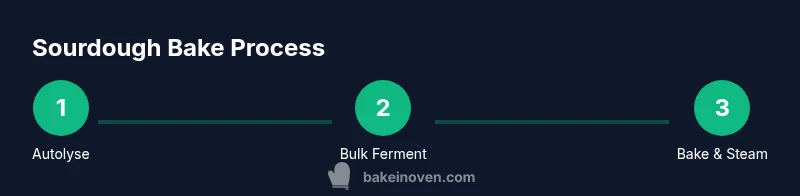
A practical schedule helps home bakers plan from morning to bake time. Example: Feed a mature starter the evening before. In the morning, mix flour and water for autolyse, then add starter and salt after 30–60 minutes. Do a bulk fermentation with a few folds over 2–3 hours at room temperature, shaping after the final fold. Final proof can be 1–2 hours at room temperature or 8–12 hours refrigerated. Preheat your oven with a stone or Dutch oven inside, then bake with steam, score, and monitor for 30–45 minutes until deeply caramelized crust forms. Adjust this timeline to your kitchen temperature, starter vigor, and loaf size.
Troubleshooting wet dough and crust issues
If your dough feels wetter than expected, you may need to adjust hydration slightly or use folds to strengthen the gluten network. A soggy crust can result from insufficient steam or underproofing; ensure your oven is hot and the loaf is properly scored for controlled expansion. If the crust becomes too dark early, lower the oven temperature by 25°F/15°C after the first 15 minutes and extend the bake by a few minutes. Remember that every oven behaves differently, and learning to read your dough will reduce uncertainties over time.
Tools & Materials
- Active sourdough starter(fed 4–12 hours before bake)
- Strong bread flour
- Water (lukewarm)(about 75–80°F / 24–27°C water when mixing)
- Large mixing bowl
- Kitchen scale(to measure ingredients precisely)
- Dough scraper
- Proofing basket (banneton) or lined bowl
- Parchment paper
- Dutch oven or cloche
- Lame or sharp kitchen knife
- Baking stone or heavy sheet pan(helps with even heat transfer)
- Oven thermometer(for accurate temperature readings)
- Towel or couche(for shaping and drafting)
Steps
Estimated time: 4-6 hours (including bulk fermentation and final proof)
- 1
Prepare ingredients and starter
Gather all ingredients and ensure your starter is active and bubbly. Weigh flour and water precisely, then reserve salt separately. This preparation minimizes mid-process delays and helps you follow steps with confidence.
Tip: A ready, bubbly starter is your best guarantee for strong rise. - 2
Autolyse and mix dough
Mix flour and water to let gluten develop passively. After 20–60 minutes, add your starter and salt, then mix until cohesive. Rest again for 15–30 minutes to hydrate flour fully.
Tip: Autolyse improves dough extensibility, reducing tearing during shaping. - 3
Bulk fermentation with folds
Leave dough to ferment at room temperature, performing a gentle fold every 30–45 minutes for 2–3 hours. Let the dough rise and gain volume, but avoid overfermentation by watching for air pocket formation rather than clock time.
Tip: Folds strengthen gluten and improve structure without overworking the dough. - 4
Shape and final proof
Turn dough onto a lightly floured surface, shape into a tight boule or baton, and place in a proofing basket. Final proof can be 1–2 hours at room temperature or 8–12 hours refrigerated for flavor.
Tip: Shaping with tension helps the loaf hold its form in the oven. - 5
Preheat oven and prepare steam
Preheat your oven to 450°F/230°C with a baking stone or Dutch oven inside. Use steam to promote an open crumb and shiny crust for the first 15–20 minutes of bake.
Tip: Steam is crucial for oven spring and crust development. - 6
Score and bake
Score the loaf to control expansion, carefully slide it into the hot vessel or stone, and bake for 30–45 minutes until deeply caramelized crust forms. Remove to a rack to cool fully before slicing.
Tip: Cool completely; internal structure finishes developing while the loaf rests.
Frequently Asked Questions
When is the right time to bake sourdough after mixing?
Bake when the dough passes the poke test, holds its shape, and has strong internal gas. Allow final proof to bring rise and flavor, while watching room temperature and starter activity.
Bake when it’s springy to the poke test and has a visible rise; don’t rush if it needs more time.
Is it okay to bake sourdough even if it’s under-proofed?
Under-proofed dough will have less oven spring and a denser crumb. It’s safer to wait a bit longer unless you’re following a specific schedule. You can still bake, but expect tighter crumb.
If it’s under-proofed, you might get less rise and a denser crumb.
Can I bake sourdough straight from the fridge?
Yes. Cold-proofed dough can be baked directly after a short warming period or overnight, depending on your recipe. You may see stronger flavor but require slightly longer bake time.
Cold-proofed dough can be baked after warming a bit; it often has great flavor.
What happens if dough over-proofed?
Over-proofed dough may spread and collapse in the oven, yielding a flatter loaf with irregular crust. It’s best to shorten final proof next time and watch for telltale signs of excessive gas pockets.
Over-proofing usually causes a flatter loaf with less structure.
What oven temperature should I use for sourdough?
A common starting point is around 450°F/230°C, then adjust after the first 15 minutes to maintain steam and avoid burning. Different ovens may require minor tweaks.
Start at 450°F, adjust after 15 minutes if needed to maintain even heat.
Watch Video
Key Takeaways
- Read dough cues, not clocks, to time bake
- Aim for a springy poke test and a domed, glossy loaf
- Use proper steam, preheat, and shaping for optimal oven spring
- Cold retardation can deepen flavor without sacrificing rise
- Practice creates consistency across ovens and seasons