Optimal temperatures for baking sourdough bread
Learn the exact temperatures to bake sourdough bread for a crisp crust and tender crumb. This comprehensive guide covers preheating, steam, loaf size, timing, and doneness cues for repeatable results.


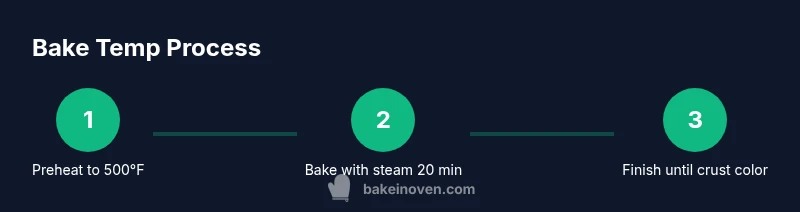
Goal: bake sourdough bread at high heat to encourage oven spring and a blistered crust. Start by preheating to 450-500°F (230-260°C) with steam, then bake with the lid on for the first 20-25 minutes before finishing uncovered. Adjust by loaf size and crust preference, and aim for a fully baked interior around 200-210°F (93-99°C).
Why Temperature Control Is Critical for Sourdough
Temperature matters more than many home bakers expect. It influences oven spring, crust color, aroma, and the crumb structure inside your loaf. A properly controlled bake helps the dough spring upward before the crust sets, trapping gas and creating the characteristic open crumb. According to Bake In Oven, beginners often misjudge heat and miss the dramatic rise that defines a great sourdough loaf. By understanding the temperature window and adapting it to your oven, you gain consistent, bakery-like results at home.
Standard Bake Temperatures for Sourdough
Most sourdough bakers start with a very hot bake to maximize oven spring. A common target is 450-500°F (230-260°C) for the initial phase, using steam to keep the crust tender as the loaf expands. If you’re using a Dutch oven or cloche, preheating the vessel helps trap steam and jumpstart crust formation. After the initial 20-25 minutes, many bakers switch to a lower temperature (around 425-450°F / 220-230°C) to finish baking without overdeveloping the crust. Internal doneness is typically judged by time, color, and a crust that sounds hollow when tapped. Bake In Oven analyses suggest that a fully baked sourdough should reach a moist, set interior with a crust that’s deeply browned but not burnt.
Oven Setup, Steam, and Vessel Choice
Steam is critical in the first half of the bake because it delays crust setting and promotes maximum oven spring. You can achieve steam by placing a pan of water in the bottom of the oven, spritzing the dough, or by using a preheated Dutch oven. A preheated stone or steel can also help with oven spring and crust development, but a vessel with a tight lid (like a Dutch oven) is the most reliable way to trap steam. Ensure your oven is fully heated before loading the dough; a cold start can lead to dense loaves and flattened domes.
Adapting Temperatures for Loaf Size, Shape, and Crust Preference
Loaf geometry matters. A boule (round) often bakes with a bit more internal moisture, which may require a slightly longer bake at a consistent high temperature. Batards (elongated loaves) tend to finish faster due to their shape. If you prefer a darker, thicker crust, you can maintain the higher temperature a bit longer or increase steam duration. For lighter crusts, a shorter high-heat phase followed by more gentle heat can work well. Always calibrate with your oven’s quirks, as inconsistent heat is a common cause of uneven crust color.
Troubleshooting Temperature Issues: Common Problems and Fixes
If your crust is pale or doughy in the center, you may need more oven spring or a hotter initial phase. Conversely, a burnt crust with an undercooked center usually means the bake was too long at high heat or the loaf was too large for the oven’s heat capacity. Uneven crust color can result from hot spots in the oven, insufficient steam, or a cold start. Use an oven thermometer to verify your target temperature and rotate the loaf if your oven heats unevenly. Consistency comes from practice and accurate temperature control.
Bake Day Checklist: Setups That Support Temperature Control
Prepare your tools in advance: a sharp lame for scoring, a digital scale for precise ingredients, a preheated Dutch oven or cloche, a baking stone or steel, parchment paper for easy transfer, and an accurate oven thermometer. Preheat your oven well in advance, aiming for a consistent high temperature with steam available. Shape dough smoothly and give it gentle bench rest to maintain gas. A final check on doneness should consider internal crumb temperature (around 200-210°F / 93-99°C) and sensory cues like aroma and crust color.
Tools & Materials
- Digital kitchen scale(measure ingredients accurately to ±1 g)
- Oven thermometer(verify actual oven temperature during bake)
- Dutch oven or cloche(helps trap steam for oven spring)
- Baking stone or steel(provides a hot, even surface for crust formation)
- Parchment paper(for easy transfer and shaping)
- Sharp lame or razor(score dough with clean cuts)
- Bench scraper(aids shaping and transfer)
- Cooling rack(cool loaf evenly after bake)
Steps
Estimated time: 60-90 minutes
- 1
Preheat oven and vessel
Preheat your oven to 500°F (260°C) with the Dutch oven inside or a cloche. Allow 30-60 minutes for the vessel to reach temperature so the loaf receives immediate heat on load. This step sets the stage for strong oven spring.
Tip: A longer preheat (60 minutes) improves uniform heat distribution and reduces cold spots. - 2
Score and transfer dough
Lightly flour the surface, then score the dough with a sharp blade to control expansion. Transfer the dough carefully onto parchment or a floured surface and slide it into the preheated vessel or onto the hot stone.
Tip: Make clean, decisive cuts; shallow scores can impede expansion. - 3
Create steam and start bake
Cover the vessel to trap steam and bake at high heat for the first 20-25 minutes. Steam keeps the crust柔soft long enough for the loaf to expand fully and develop a blistered crust.
Tip: If not using a covered vessel, create steam by placing a pan of water in the oven and misting the dough. - 4
Uncover and finish baking
Remove the lid and continue baking at a slightly lower temperature until the crust is deeply colored and crisp, typically another 15-25 minutes depending on loaf size. The interior should be firm and set.
Tip: Rotate the loaf halfway through the finish to promote even browning. - 5
Check for doneness
Check for an internal crumb temperature around 200-210°F (93-99°C) or tap the bottom; it should sound hollow. Color and aroma are also good indicators of done-ness.
Tip: Use an instant-read thermometer for accuracy rather than relying on time alone. - 6
Cool before slicing
Let the loaf rest on a rack for at least 1-2 hours before slicing. Cooling helps set the crumb and prevents gumminess, ensuring the crust remains crisp.
Tip: Cool completely for best texture and flavor development.
Frequently Asked Questions
What is the best temperature to bake sourdough bread?
Most bakers start around 450-500°F (230-260°C) to maximize oven spring, then finish at a lower temperature to complete the bake. Steam during the early phase helps develop a blistered crust.
The best starting temperature is typically around 450 to 500 degrees Fahrenheit, then you finish at a lower heat to complete the bake, using steam in the early phase for a blistered crust.
Should I use a preheated Dutch oven?
Yes. A preheated Dutch oven traps steam, promotes oven spring, and produces a better crust. It’s the most reliable method for consistent results.
Yes. Preheating a Dutch oven traps steam and helps the loaf rise, giving you a better crust.
Do I lower temperature mid-bake for sourdough?
Many bakers reduce heat mid-bake to finish the loaf without scorching the crust. Start hot, then lower to finish your bake for an even crust.
Some bakers reduce heat after the first 20 minutes to finish the bake without burning the crust.
How does oven temperature affect crust texture?
Higher initial heat promotes oven spring and a blistered crust; lower, steady heat helps set the crumb and deepen crust color without burning the exterior.
High heat gives you a blistered crust, but you finish with steady heat to set the crumb.
What internal temperature indicates doneness?
Aim for an internal crumb temperature around 200-210°F (93-99°C). Use an instant-read thermometer for accuracy.
About 200 to 210 degrees Fahrenheit inside the loaf shows it’s fully baked.
Can I bake sourdough at different temperatures for crust texture?
Yes. Higher initial heat yields a thicker crust and more oven spring; a gentler finish can produce a lighter crust. Adapt based on loaf size and crust preference.
Definitely—adjust the initial heat and finish bake to influence crust texture.
Watch Video
Key Takeaways
- Preheat thoroughly for optimal oven spring
- Use steam during the initial bake
- Aim for 200-210°F interior for doneness
- Adjust temperature by loaf size and crust preference
- Cool fully before slicing