How to Bake a Fruitcake: A Complete Step-by-Step Guide
Learn how to bake a fruitcake with a kitchen-tested method. This guide covers ingredients, technique, aging, and storage to create a moist, flavorful fruitcake that shines for holidays and beyond.


This guide shows you how to bake a fruitcake from start to finish, covering ingredient choices, moisture balance, and aging for best flavor. You’ll learn soaking options, mixing methods, baking times, and storage tips to produce a moist, flavorful cake that stays tender for days or weeks.
Understanding Fruitcake Basics
Fruitcake is a dense, versatile bake that benefits from slow baking and aging. In this block we cover what makes a good fruitcake and how mastering moisture, fruit soaking, and spice blends yields a cake that stays moist for days or weeks. According to Bake In Oven, the key to a reliable fruitcake is controlling moisture and sweetness while preventing crumbly texture. This means selecting a fruit mix that has both juicy and chewy pieces, balancing fat and sugar, and using a gentle mixing approach to preserve tenderness. We'll discuss the role of fruit soakings, alcohol infusions, and the timing of adding dried fruit so the batter holds together without toughening. Understanding the science helps you adapt the recipe for different seasons, pan sizes, and oven types, whether you bake for a holiday crowd or a quiet family celebration. This foundation will guide you through later steps with confidence.
Selecting Dried Fruits and Nuts
The fruitcake's character comes from a balanced mixture of dried fruits, chopped candied citrus, and nuts. Choose a combination that offers both tart and sweet notes, plus textural contrast. A common approach is to include currants, raisins, chopped dates, dried cherries, and candied orange peel, totaling about 2 to 3 cups of fruit per standard loaf or ring pan. For nuts, walnuts or pecans give a pleasant crunch and depth; roughly 1 cup is a good starting point. If you prefer a milder fruitcake, reduce the candied pieces and boost the dried fruits with more citrus zest. Either way, evenly distribute the fruit so every bite has consistent moisture. Soaking the fruits in a warm liquid with a splash of brandy, orange juice, or tea helps plump them and infuse flavor. If you skip soaking, you can still achieve moisture by using slightly more fat in the batter and a longer bake time. Bake In Oven recommends tasting a small amount of the chopped fruit before mixing to check for sweetness and texture.
Spices, Flavorings, and Moisture
The spice blend defines a fruitcake's warmth. Ground cinnamon, allspice, nutmeg, and a pinch of cloves work well, but adjust to taste. A typical mix uses 1 to 1.5 teaspoons of cinnamon, 1/2 teaspoon allspice, and 1/4 teaspoon nutmeg per batch, with optional cardamom or mace for a brighter aroma. Vanilla extract, orange zest, and a splash of brandy, rum, or orange liqueur deepen the fruitcake's complexity. For moisture, consider a blend of butter and brown sugar rather than white sugar alone; brown sugar adds caramel notes and helps retain tenderness. If the batter seems dry, whisk in a spoonful of milk or juice to reach a soft, droppable consistency. The goal is a batter that clings to the spoon but doesn’t feel gummy. Remember: flavor compounds intensify after aging, so layering spices in the batter now pays off later.
Equipment and Temperatures
In baking fruitcake, pan choice and heat control matter as much as ingredients. A traditional loaf pan (8x4 inches) or a mini ring pan yields a tall, evenly baked cake; line pans with parchment for easy release. Preheat the oven to around 300-325°F (150-160°C). Fruitcake benefits from slow, steady heat to avoid drying the edges before the center cooks through. If your oven runs hot, rotate the pan halfway through baking and consider covering the top with foil to prevent over-browning. An oven thermometer helps ensure accurate temperature, since many home ovens deviate by 25 degrees or more. For moisture maintenance, position the rack in the center and place a shallow pan of water on the bottom oven shelf during the first half of baking. Once baked, allow the cake to cool on a rack before glazing or aging. Good practice: test doneness with a skewer; it should emerge with a few moist crumbs, not raw batter.
Step-by-Step Overview: Prep to Bake
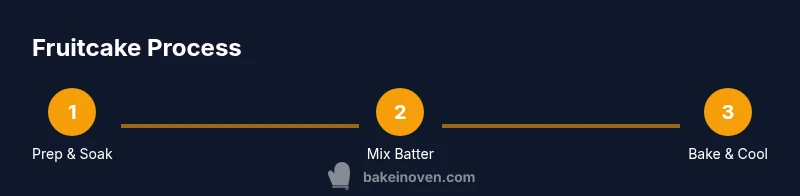
Prepare pan and preheat oven. Soak fruit (optional) and toast nuts. Cream butter and sugar until pale and fluffy. Add eggs one at a time with flavorings. Sift dry ingredients and spices. Fold dry ingredients into the wet along with the fruit and nuts. Spoon batter into prepared pan and bake low and slow. Let the cake cool completely on a rack before wrapping for aging. This overview maps the journey from a shaggy batter to a fragrant, tender fruitcake.
Batter Consistency and Mixing
Mixing order matters for tenderness. Start by beating softened butter with brown sugar until fluffy, then gradually beat in eggs; add vanilla and zest. Sift dry ingredients to remove lumps, then fold into the batter with the fruit and nuts. Use gentle folds rather than vigorous mixing to avoid developing gluten that could make the cake dry or dense. If the batter is too thick, splash in a bit of milk or juice. If too loose, chill the batter briefly to set the fat aggregation. This step ensures a cohesive batter that holds the fruit pieces evenly and bakes into a moister loaf. Always scrape the bowl down a few times to redistribute ingredients.
Baking, Testing, and Cooling
Pour batter into the pan and bake low and slow. Check doneness after 60-90 minutes by inserting a skewer; it should come out with moist crumbs. Rotate the pan for even browning and cover the top if the crust darkens too quickly. When done, cool in the pan for 15 minutes, then transfer to a rack to finish cooling completely. This cooling period sets the structure and makes slicing safer. If you plan to aging the cake, wrap it tightly (foil + plastic wrap) and store in a cool, dark place. Some bakers brush the surface with a little liquor to kick-start aging—do this only if you’re comfortable with alcohol use.
Aging, Storage, and Variations
Fruitcake ages gracefully; aging enhances moisture and flavor as the fruit rehydrates gently. For best results, wrap the cooled cake in multiple layers of foil and store in an airtight container for at least a week, ideally two to six weeks. Some families age for months to deepen the flavor. When ready to slice, re-wrap to maintain moisture and cut with a sharp knife. You can also freeze fruitcake for longer storage; wrap well to prevent freezer burn. For variations, swap in dried pineapple or pineapple juice, or add a touch of espresso powder for a modern twist. Bake In Oven recommends tasting a small slice during aging to monitor changes in sweetness and texture.
Authority Sources
- https://www.usda.gov
- https://extension.illinois.edu
- https://extension.oregonstate.edu
Tools & Materials
- All-purpose flour(250-300 g (about 2 cups))
- Baking powder(1 teaspoon)
- Baking soda(1/2 teaspoon)
- Salt(1/2 teaspoon)
- Unsalted butter, softened(1/2 cup (1 stick))
- Light brown sugar(1 cup)
- Eggs, large(3)
- Milk or orange juice(1/2 cup)
- Dried fruits (currants, raisins, chopped dates, dried cherries, candied citrus)(2 to 3 cups total)
- Chopped nuts (walnuts or pecans)(1 cup)
- Ground cinnamon(1 to 1.5 tsp)
- Ground allspice(1/2 tsp)
- Ground nutmeg(1/4 tsp)
- Vanilla extract(1 tsp)
- Orange zest(1 tablespoon)
- Alcohol for soaking (optional; brandy/rum)(1/4 to 1/2 cup)
- Parchment paper or discs(For lining the pan)
- Loaf pan or ring pan(8x4 inches or similar)
- Mixing bowls, spoon or mixer(For batter and fruit prep)
- Oven thermometer(Ensure accurate temperature)
- Cooling rack(Cool completely before aging)
Steps
Estimated time: Total time: 2 hours 45 minutes
- 1
Preheat and prep pan
Preheat the oven to 300-325°F (150-160°C). Grease the pan and line with parchment for easy release. This prepares a smooth surface so the cake comes out intact.
Tip: Line the corners with extra parchment to prevent sticking. - 2
Soak fruit (optional)
If you soak fruit, combine dried fruits with alcohol or juice in a bowl and let sit 20-60 minutes. Soaking plumps the pieces and deepens flavor; skip if you prefer a faster bake.
Tip: Warm liquid speeds plumping and enhances aroma. - 3
Cream butter and sugar
Beat softened butter with brown sugar until pale and fluffy. This creates a tender base and helps trap air for a lighter crumb.
Tip: Scrape the bowl often to keep mixture uniform. - 4
Add eggs and flavorings
Add eggs one at a time, mixing well after each addition. Stir in vanilla and citrus zest for bright aroma and depth.
Tip: Too much air can weaken structure; mix just until incorporated. - 5
Whisk dry ingredients
Sift flour, baking powder, baking soda, salt, and spices to remove clumps and evenly distribute leavening.
Tip: Even distribution prevents uneven rises. - 6
Fold dry into wet with fruit
Gently fold dry ingredients into the wet batter using a spatula. Add fruit and nuts and fold until just combined.
Tip: Overmixing creates a dense loaf. - 7
Bake and monitor
Spoon batter into prepared pan and bake slowly until a skewer comes out with a few moist crumbs. Rotate if needed for even browning.
Tip: If top browns too quickly, tent with foil. - 8
Cool and wrap
Cool in the pan briefly, then transfer to a rack to finish cooling. Wrap tightly for aging if desired.
Tip: Cooling fully prevents condensation that can spoil texture. - 9
Age and store
Aging enhances moisture and flavor. Wrap in foil and store in a cool, dark place for days to weeks, or freeze for longer storage.
Tip: Check periodically for moisture and reseal if needed.
Frequently Asked Questions
What pan size should I use for a fruitcake?
A standard 8x4 inch loaf pan or a small ring pan works well. Adjust bake time slightly if you change pan size, and be sure to line the pan with parchment to prevent sticking.
Use an 8x4 inch loaf pan, lined with parchment; bake time adjusts a bit for different sizes.
Can I substitute fresh fruit for dried fruit?
Fresh fruit can add moisture but may not hold up during long storage. Dried fruits are preferred for texture and shelf stability in fruitcake.
Fresh fruit isn’t ideal for long storage; dried fruits keep texture and flavor longer.
Should I soak the fruit in alcohol?
Soaking is optional but common. Alcohol adds flavor and helps preserve moisture during aging. If you skip it, you can use juice or tea instead.
Alcohol soak is optional; it boosts depth and moisture but you can substitute with juice if you prefer.
How should I store and age fruitcake?
Wrap the cooled cake tightly in foil and store in a cool, dark place. Aging can last from a week to several weeks for richer flavor; you can freeze for longer storage.
Wrap and store in a cool, dark spot; aging improves flavor, and freezing extends storage.
Can I bake a fruitcake without aging?
Yes, you can bake and slice soon after cooling, but aging enhances moisture and depth of flavor. The texture will be firmer but enjoyable.
You can bake and slice right away, but aging improves flavor and moisture.
Watch Video
Key Takeaways
- Prepare the pan thoroughly to ensure release.
- Soak or hydrate fruits for moisture and flavor impact.
- Fold ingredients gently to preserve tenderness.
- Bake low and slow; test doneness with moist crumbs.
- Age and store correctly to maximize flavor.