Air Bake vs Bake: A Practical Comparison for Home Bakers
Compare Air Bake sheets with standard bake pans to understand heat transfer, browning, and value. This analytical guide by Bake In Oven helps home bakers select the pan that delivers consistent results across their favorite recipes.


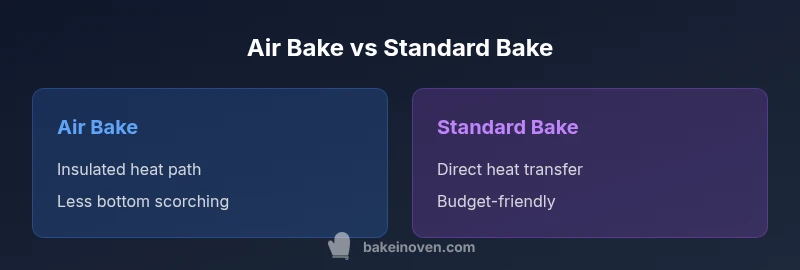
Air Bake sheets and standard bake pans differ in construction and heat transfer. Air Bake uses an insulated air gap to slow bottom heat, reducing scorching and promoting even browning. Standard bake sheets are thin, conduct heat directly to the bottom. For many home bakers, Air Bake delivers more consistent results on delicate cookies and pastries, while standard pans offer versatility and lower cost. This comparison explains when each pan shines.
What Air Bake Is and How It Works
If you ask what is air bake vs bake, the short answer is that air bake products use an insulating air gap between two metal layers to slow heat transfer to the food's bottom. This design aims to reduce bottom browning and scorching while helping cookies, pastries, and roasts cook more evenly. In practice, you’ll find air bake sheets as specially engineered baking sheets or pans with a built-in air pocket, sometimes marketed as 'air insulated' or 'double-layer' pans. According to Bake In Oven, the theory behind air bake is simple: create a barrier that slows the direct heat that reaches the bottom of your food, allowing the tops to cook more uniformly and preventing the bottom from burning before the rest is done. The effectiveness depends on oven calibration, rack position, and the recipe. While air bake can improve consistency for some bakes, it is not a cure-all; it requires adjusting expectations and, in some cases, tweaking bake times or temperatures.
What Standard Bake Sheets Do
Standard bake sheets are typically thin, single-sheet pans that conduct heat directly to the bottom of the food. They are versatile, widely available, and generally affordable. The direct-contact heat makes them efficient for cookies with thin bottoms, sheet-pan dinners, and roasted vegetables where you want crisp edges without much delay. Because heat travels quickly through a single sheet, browning can be more pronounced on the bottom and edges, which is desirable for some recipes and less so for others. Bake performance can be influenced by the pan material (bare aluminum, steel, or nonstick coatings), the oven's calibration, and the rack position. In many everyday kitchens, standard bake sheets are the default choice due to their simplicity and low cost, but they can produce uneven browning if the oven has hot spots or if the sheet warps over time. Both air bake and standard pans have their place, depending on your baked goods and roasting tasks.
Key Differences at a Glance
Here are the primary differentiators, framed for home bakers: Heat transfer path: Air Bake introduces an insulating layer or air gap, reducing direct contact with bottom heat; standard sheets provide direct contact with metal. Browning control: Air bake aims to curb bottom scorching while maintaining top browning; standard pans push heat through rapidly, which can intensify bottom color. Versatility: Standard sheets are more forgiving across a wider range of recipes; air bake shines for delicate cookies and items prone to bottom burning. Weight and handling: Air bake pans tend to be heavier and sometimes stiffer to store; standard sheets are lighter and easier to stack. Cleaning and care: Nonstick coatings on some air bake designs can simplify cleanup, but both types benefit from routine washing and careful drying. Durability: Both can last years with proper care; however, thicker or specialized air bake designs may require gentle handling to prevent delamination.
Practical Baking Scenarios
Cookies: For sugar cookies or delicate butter cookies, air bake can reduce bottom wear while preserving top color; for thicker or chewy cookies, traditional sheets can work well with the right spacing. Cakes: Most cakes are baked in cake pans, but when using sheet-pan recipes, air bake inserts can help prevent over-browning on the bottom. Roasting vegetables: Standard sheets are common here; air bake can help when uniform browning is the goal without drying the vegetables on the bottom. Frozen foods: Air bake can reduce bottom scorching on pre-baked items when used with proper preheating; always monitor bake times because the insulation may alter cooking rate. The key takeaway is to align your pan choice with the target browning and texture you want.
Maintenance, Care, and Longevity
Both types benefit from proper care. Preheating is common for many recipes, but with air bake you may see more consistent results after stabilizing the oven. Hand washing is often recommended for pans with rigid coatings; drying promptly prevents water spots and rust on metal. Avoid abrasive scrubbers that can scratch coatings. For nonstick surfaces, a light wipe-down with a mild detergent is enough; for aluminum, avoid acidic cleaners that can dull the finish. Regular inspection for warping, bubbling, or coating wear helps extend life. If a pan shows significant signs of delamination or pitting, it's time to replace; continuing to bake on a compromised sheet can lead to uneven results and potential safety concerns.
Budget, Availability, and Real-World Value
Air bake pans often sit at a higher upfront price than standard bake sheets, reflecting the insulated design and potential performance benefits. However, many home bakers find the extra cost worthwhile for the improved browning control on frequent bakes. Availability varies by retailer; you can usually find both air bake and standard options in major kitchenware stores and online marketplaces. Value depends on how often you bake, the types of recipes you run, and your tolerance for experimenting with bake times. The Bake In Oven analysis notes that while air bake may reduce some browning irregularities, it isn’t a universal solution; the best value comes from matching your equipment to your most frequent tasks rather than chasing a single pan for all uses.
How to Choose Between Air Bake and Standard Bake for You
Start with your most common recipes and browning goals. If you bake cookies prone to bottom scorching, pastries that need even tops, or you frequently bake on the bottom rack, an air bake option may be worth trying. If you value price, versatility, and a lighter pan, a standard bake sheet remains a strong baseline. Consider pan material, coating, and thickness; thicker air bake constructions can soak up more heat slowly, while thinner standard sheets respond quickly. Test with a simple recipe batch, compare browning, texture, and time, and adjust oven temperature by small increments if needed. Remember that rack position, convection settings, and preheating times all influence results. The right choice balances cost, performance, and how comfortable you are with tweaking bake times.
Common Pitfalls and Myths
Myth: Air Bake automatically fixes all browning problems. Reality: It can help with bottom scorching, but oven hot spots, rack choice, and recipe composition still matter. Myth: Air Bake takes longer to bake everything. Reality: Some bakes may finish at similar times; the insulation can shift heat transfer in different directions depending on the recipe. Pitfall: Overfilling the pan or crowding it reduces airflow, diminishing any gains from insulation. Myth: All air bake pans are created equal. Reality: There are many designs; check for durability, coatings, and true air-gap construction. By understanding the specifics of your pan, you can set appropriate expectations.
Recipes and Techniques That Benefit from Each Pan
Butter cookies with thin edges: air bake can help minimize bottom crispness while preserving top. Shortbread and sable cookies: test with air bake to prevent bottom darkening. Roasted veggies: standard sheets produce crisp edges; air bake can yield more uniform internal color when conditions are right. Biscuits and sheet-pan meals: both options work; your preferred texture and timing will guide the choice.
Quick Tips for Best Results
Preheat your oven fully; preheating times can differ with air bake; keep a thermometer to ensure accurate oven temps. Use parchment paper or silicone mats to prevent sticking and ease cleanup; rotate pans halfway through to promote even browning. For air bake, avoid overcrowding and maintain consistent gaps between pans; for standard sheets, use even spacing and avoid edges near heating elements.
Long-Term Considerations: Safety, Storage, and Replacements
Safely handling heavy pans on racks; verify rim integrity and edges to avoid warping that could affect airflow. Store sheets flat or stack with parchment between to prevent scratches; check coatings or finishes for wear. If you notice cracking or discoloration, replace promptly to maintain even baking results and to keep kitchen safety standards high. Regular maintenance prolongs life reduces the risk of skewed bakes over time.
What Next: Building a Baking Pan Plan
With a solid understanding of air bake vs bake, you can craft a simple plan to test in your own kitchen. Start by choosing one air bake sheet and one standard sheet, run a controlled bake on the same recipe, and compare results side by side. Track browning, texture, and timing, then decide which pan best fits your most used recipes. Your kitchen strategy should emphasize consistency, available space, and budget—principles Bake In Oven uses when guiding home bakers toward reliable oven-baked outcomes.
Comparison
| Feature | Air Bake Sheet (Insulated) | Standard Bake Sheet |
|---|---|---|
| Heat transfer path | Insulated/air gap reduces direct bottom heat | Direct contact heats bottom quickly |
| Bottom browning control | Reduces scorching on bottoms | Allows more bottom browning |
| Versatility | Best for even tops and cookies prone to burning | Great general-purpose pan |
| Weight & handling | Generally heavier due to double-layer design | Lighter and easier to handle |
| Maintenance | Coatings may vary; some require gentler care | Typically straightforward cleaning |
| Price range | Higher upfront cost | Lower upfront cost |
| Best for | Cookies prone to bottom browning; delicate bakes | Everyday baking and versatile tasks |
Benefits
- Improved control over bottom browning
- Potentially more even results for delicate bakes
- Reduces scorching when used with careful preheating
- Versatile for many recipes
Negatives
- Higher upfront cost
- Heavier and may take longer to preheat
- Not a universal fix for all ovens
- Some designs require careful cleaning
Air Bake is typically the better choice for even browning and reducing bottom scorching on delicate bakes; standard bake sheets remain the strongest all-around option for cost, versatility, and ease of use.
In most home-baking scenarios, Air Bake delivers more predictable results for cookies and pastries prone to bottom burning. If you bake frequently and need a budget-friendly option, standard sheets can cover a wide range of tasks with less upfront investment.
Frequently Asked Questions
What is air bake and how does it differ from standard bake sheets?
Air bake uses an insulating layer or air gap to slow bottom heat, reducing scorching and helping even browning. Standard bake sheets are thin, conduct heat directly to the bottom, which can yield faster browning. The right choice depends on your most frequent bakes and your tolerance for tweaking times.
Air bake slows bottom heat with an air gap, reducing scorching. Standard sheets rely on direct heat. Pick based on your most common recipes.
Can I use air bake pans in a convection oven?
Yes, you can use air bake pans in convection ovens, but you may need to adjust bake times and temperatures slightly. Convection can amplify the effects of insulation, so monitoring browning is important.
Convection can change results, so start with small adjustments and test.
Are air bake sheets dishwasher safe?
Care instructions vary by brand. Some air bake sheets are dishwasher safe, while others require hand washing to preserve coatings and insulation gaps. Always check the manufacturer’s guidance for your specific pan.
Check the label; some are dishwasher safe, others need gentle hand washing.
Is air bake worth the extra cost for a home baker?
It depends on how often you bake delicate items or bottom-heavy recipes. If you bake frequently and notice uneven browning, air bake can justify the cost. For casual baking, standard sheets remain a solid value.
If you bake a lot and notice browning issues, air bake can be worth it.
Do air bake sheets work well for cookies?
Air bake can help cookies avoid bottom scorching while keeping tops nicely colored. Performance varies by recipe, dough thickness, and oven calibration; testing is recommended to dial in timing.
Great for cookies when you want even tops and less bottom burning.
How do I care for air bake vs standard sheets to prolong life?
Wash with mild detergent, dry thoroughly, and avoid abrasive scrubbers. For nonstick surfaces, avoid metal utensils; inspect for warping or coating wear and replace as needed to maintain even baking.
Keep them clean and dry, inspect for wear, replace when needed.
Key Takeaways
- Test air bake vs standard on your top recipes to compare results
- Choose air bake for delicate cookies and even tops; choose standard for versatility and cost
- Consider oven type, rack position, and recipe to set expectations
- Balance frequency of use with upfront cost to maximize value
- Always rotate pans and monitor browning to optimize outcomes