Bake Chicken at 400°F: How Long to Cook It Perfectly
Master oven-baked chicken at 400°F with practical timing for breasts, thighs, and bone-in cuts. Prep, temps, rest, and common mistakes—guided by Bake In Oven.


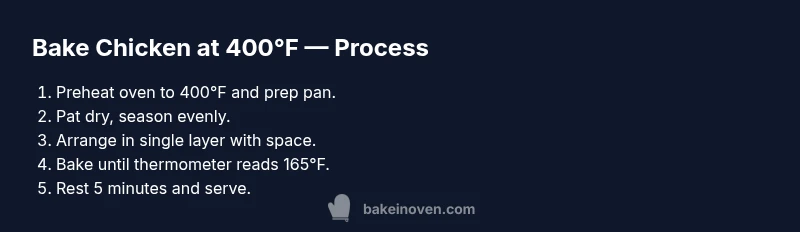
At 400°F, bake chicken until the internal temperature reaches 165°F. Boneless, skinless breasts typically take about 18–22 minutes; bone-in breasts about 28–35 minutes; and thighs or legs generally finish in 35–45 minutes. For even results, pat dry, arrange in a single layer with space, and preheat the oven. Rest 5 minutes before serving to keep juices inside.
Why 400°F Is a Reliable Standard for Oven-Baked Chicken
Cooking chicken in a hot oven is a balance of browning, moisture retention, and safety. Setting the oven to 400°F (204°C) hits that balance by promoting a crisp exterior through the Maillard reaction while keeping the interior juicy when the pieces are not overly thick. At this temperature, most chicken cuts reach the safe internal temperature of 165°F in a reasonable time, reducing the risk of overcooking. For best results, start with uniform pieces, pat dry, and arrange on a single layer with space between them. Remember that carryover cooking can raise the internal temperature a few degrees after removal, so plan to pull the pan slightly before the final target.
Prep Essentials: Preheating, Drying, and Seasoning
Preheating to 400°F is essential for even color and crust. While the oven warms, prepare the chicken: pat dry with paper towels to remove surface moisture, which otherwise steams the surface and prevents browning. Lightly oil or spray the pieces to help seasonings adhere. Use a simple mix of salt, pepper, paprika for color, and garlic powder or onion powder for depth. If you have time, brine or dry-brine the breasts for extra juiciness, but skip it if you’re short on time. The goal is to leave the meat seasoned but not drenched in liquid before it goes into the hot oven.
Choosing the Right Cut: Breast, Thigh, and Whole Bird
Breasts dry out faster, so bake times are shorter and more sensitive to thickness. Boneless, skinless breasts typically finish around 18–22 minutes at 400°F, while bone-in breasts take roughly 28–35 minutes. Thighs and legs are forgiving and often finish in 35–45 minutes due to higher fat content. A whole chicken requires more time and sometimes a different technique (truss the bird, start breast-side up, then flip). Consider pounding thick portions or slicing thicker breasts to create uniform thickness.
Arranging for Even Cooking: Pan, Rack, and Spacing
Line a sheet pan with parchment paper or foil for easier cleanup. If you have a rack, place the chicken on the rack so air can circulate around the pieces; otherwise, lay them directly on the pan with space between each piece. Ensure pieces are similar in thickness, as uneven pieces will cook at different rates. Turn or flip the pieces halfway through for even browning, especially when baking bone-in pieces.
Temperature and Doneness: Using a Thermometer and Resting
Use an instant-read thermometer to verify a minimum internal temperature of 165°F in the thickest part, away from bone. If using bone-in pieces, measure near the bone but not touching it. Remove the chicken from the oven when it reads slightly below 165°F, as carryover heat will finish cooking during a 5-minute rest. Resting helps redistribute juices and improves the final texture.
Common Mistakes and How to Fix Them
Overcrowding the pan leads to steaming instead of browning. Not preheating results in pale crust. Cutting uniform thickness matters; irregular size yields uneven doneness. To fix, use a rack, ensure proper preheating, and trim uneven pieces. If surfaces look dry, a light brush of oil before baking supports browning. For crisp skin on bone-in pieces, pat dry and consider a quick broil for color at the end.
Finishing Touches: Glazes, Herbs, and Finishing Color
After 165°F is reached, you can broil for 1–3 minutes to intensify browning, watching closely to prevent burning. Add a glaze or herb butter during the last minute for extra flavor. Slice and serve with lemon wedges, fresh herbs, or a simple pan sauce. For leftovers, refrigerate within 2 hours and reheat gently.
Meal Planning: Sides and Make-Ahead Options
Plan compatible sides like roasted vegetables, mashed potatoes, or a bright salad. You can bake vegetables on the same sheet pan before or after chicken by adjusting timing. If making ahead, portion into meal-sized containers and reheat in the oven or microwave, ensuring the internal temperature is safe before serving.
Tools & Materials
- Sheet pan or baking tray(Large enough for even spacing; consider a rack to lift chicken above the pan.)
- Parchment paper or aluminum foil(For easy cleanup; optional if you use a rack.)
- Cooling rack (optional)(Raises chicken for air circulation and crisper surfaces.)
- Oven thermometer (optional but recommended)(Helps verify oven is truly at 400°F.)
- Meat thermometer (instant-read)(Insert into thickest part; aim for 165°F (74°C).)
- Oil or nonstick spray(Lightly coat the pan or rack to prevent sticking.)
- Salt, pepper, paprika, garlic powder(Basic dry rub; customize with herbs, chili powder, or lemon zest.)
- Optional brine or marinade(Can add juiciness or flavor if time allows.)
Steps
Estimated time: Total time: 30-50 minutes depending on cut and thickness
- 1
Preheat oven and prep the pan
Preheat the oven to 400°F (204°C). Line a sheet pan with parchment paper or foil, and set up a rack if you have one. Why: preheating ensures immediate browning as soon as the chicken hits the surface, and a rack promotes even air flow for crisper edges.
Tip: While the oven heats, pat the chicken dry and gather seasonings so you’re ready to go. - 2
Pat dry and season the chicken
Pat every piece dry with paper towels to remove surface moisture, then lightly coat with oil. Rub with a simple mix of salt, pepper, paprika, and garlic powder. Why: dry surfaces brown evenly and create a flavorful crust without steaming.
Tip: Even coating yields uniform browning across all pieces. - 3
Arrange in a single layer on the pan
Place the pieces in a single layer with at least 0.5 inch (1.25 cm) of space between them. If using a rack, place the chicken on the rack over the pan. Why: crowding causes steaming instead of browning and uneven cooking.
Tip: Turn pieces halfway through for even color. - 4
Bake until near doneness and monitor temperature
Slide the pan into the oven and bake until the thickest pieces approach the target time for their cut. Begin checking near the minimum time with a thermometer for accuracy rather than relying on color alone.
Tip: Larger or thicker pieces may need extra minutes; check early and often. - 5
Verify with a thermometer and finish if needed
Insert the thermometer into the thickest part without touching bone. Remove when it reads 165°F (74°C) or just below to allow carryover cooking. Why: this guarantees safety while preserving juiciness.
Tip: Don’t rely on color alone to judge doneness. - 6
Rest briefly, then finish for color if desired
Let the chicken rest for 5 minutes after removing from the oven. If you want crisper skin or deeper color, broil for 1–3 minutes while watching closely.
Tip: Resting redistributes juices and improves texture. - 7
Serve and store leftovers
Slice and serve hot, or portion into containers for later. Refrigerate leftovers within 2 hours and reheat to 165°F when reheating to ensure safety.
Tip: Label and date containers to avoid confusion later. - 8
Optional glaze or herb finish
If you like, brush with a glaze or herb butter during the last minute for bright flavor and sheen. Why: a light glaze adds aroma and visual appeal without overpowering the chicken.
Tip: Choose a glaze that complements your rub (honey mustard, citrus, or teriyaki work well).
Frequently Asked Questions
Can I bake chicken at 400°F if the pieces are very thick?
Yes, but uniform thickness helps; consider pounding thicker breasts or slicing larger pieces for even cooking. Always verify doneness with a thermometer.
Yes. Make sure the pieces are even in thickness and check the internal temperature with a thermometer.
Is marinating required for 400°F baking?
Marinating is optional. It can add flavor and moisture, but it isn’t required for safe cooking. Dry brines can help juiciness without complicating timing.
Not required. You can marinate if you want extra flavor, but it’s perfectly fine to bake with a simple seasoning.
What is the safe internal temperature for cooked chicken?
The safe internal temperature for cooked chicken is 165°F (74°C) in the thickest part, away from bone.
165 degrees Fahrenheit, measured in the thickest part, away from bone.
Can I bake frozen chicken at 400°F?
It’s best to thaw for even cooking. If baking from frozen, plan for 50% more time and check frequently for doneness.
Better to thaw first. If you bake from frozen, add extra time and use a thermometer to be sure it’s cooked through.
Should I cover the chicken while baking?
Baking uncovered promotes browning and crust formation. Covering traps moisture and can lead to softer exteriors.
Uncovered is usually better for browning; cover only if you’re worried about drying out a particular piece.
How do bone-in pieces differ from boneless in timing?
Bone-in cuts generally need a bit more time due to the bone, but the exact duration depends on size and thickness. Always check with a thermometer.
Bone-in can take a little longer, but use a thermometer to confirm it’s done.
Watch Video
Key Takeaways
- Preheat to 400°F for even browning.
- Use a thermometer to confirm 165°F doneness.
- Rest 5 minutes to improve juiciness.
- Space pieces evenly to avoid steaming.
- Avoid overcrowding the pan for best crust.