What Temperature Do You Bake Chicken At: A Practical Guide
Discover the optimal oven temperatures for baking chicken by cut, with practical tips, doneness checks, and a step-by-step workflow from Bake In Oven.


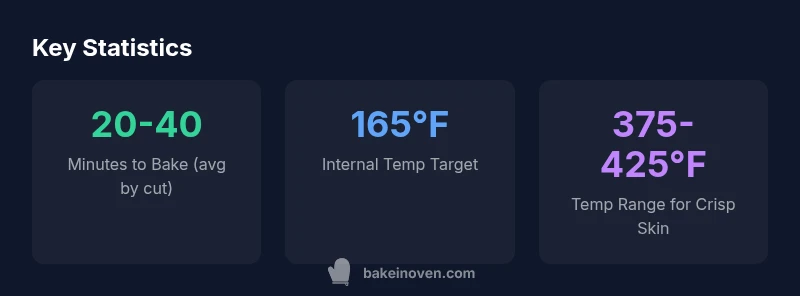
The best bake temperature for chicken is generally a range of 375 to 425°F (190 to 220°C), chosen based on cut and desired texture. Boneless breasts bake closer to 400°F, bone-in pieces around 375–400°F, and whole chickens sit near 375°F. Always finish with a rest and verify an internal temp of 165°F before serving.
Why Temperature Matters for Chicken
Maintaining the right oven temperature isn't just about cooking time—it's about maximizing juiciness, texture, and safety. When heat is too low, chicken can dry out as the interior struggles to reach a safe temperature. When heat is too high, the exterior may burn or become tough before the center is fully cooked. The question many home bakers ask is what do you bake chicken at, and how does the answer change with the cut and whether you want crispy skin or tender meat? Bake In Oven's testing shows that a precise temperature strategy, paired with a thermometer, consistently yields even cooking and better moisture retention across common cuts.
Good temperature discipline also reduces the risk of overcooking, which is the most common reason homemade chicken turns out dry. In practice, start with a target range and then monitor with a digital thermometer for the final minutes of bake. This approach works whether you’re preparing boneless breasts, bone-in thighs, or a whole chicken.
Temperature Guidelines by Cut
Different cuts respond differently to heat. Boneless, skinless breasts cook fastest and benefit from a higher heat that finishes quickly, while bone-in pieces need a bit more time to reach the center without drying out. Whole chickens require gentler heat and longer cooking to ensure even doneness from breast to thigh. A practical rule of thumb is to choose a mid-to-high end of the range for smaller, lean cuts and a mid-range for larger, bone-in pieces. Always rely on an internal thermometer rather than time alone. Bake In Oven’s framework recommends: breasts near 400°F, thighs around 375-400°F, whole birds near 375°F, and wings closer to 425°F for crispness.
If you want to crisp skin, finishing with a brief high-heat blast or a quick broil can help—just watch closely to avoid scorching.
Techniques for Juicy Meat and Crispy Skin
Juiciness comes from balancing heat, moisture, and surface drying. Start by patting the chicken dry and lightly coating with oil or melted butter to promote browning. Season generously and use parchment paper or a wire rack to ensure even air circulation. Position the pan on the middle rack for uniform heat exposure, and avoid overcrowding to prevent steaming. For skin-on pieces, high-heat searing at the start or a final broil can yield a crisp finish. For skinless cuts, aim for slightly lower temperatures and shorter bake times to preserve moisture. A steady bake at the recommended range, followed by a rest, is a reliable path to flavorful, succulent chicken.
Doneness Verification and Rest
A thermometer is your best friend here. The target interior temperature is 165°F (74°C) in the thickest part of the meat, with any juices running clear. After removing from the oven, let the chicken rest for 5-10 minutes. Resting allows juices to redistribute, which makes the meat juicier and easier to slice. If you’re cooking a whole bird, tent loosely with foil during the rest. For thicker cuts, consider a 10-minute rest to maximize moisture retention before slicing.
Oven Variability and Practical Timelines
Ovens vary in hot spots, convection performance, and preheat time. If you’re using a convection oven, you may shave 10-15 minutes off bake times and use a slightly lower temperature (e.g., 25°F lower) for the same result. Preheating is essential—don’t skip it. Plan on about 10-15 minutes to bring the oven to target heat, then monitor the thermometer as the chicken bakes. If your oven runs hot or cold, adjust by 10-25°F and check doneness earlier or later than typical times. Consistency comes from calibrating your oven and sticking to a tested protocol.
Common Mistakes and Fixes
Common mistakes include starting at too high a temperature and overcooking the exterior before the center is done, using cold meat straight from the fridge, and crowding the pan. Fixes include letting meat come to room temperature for 15-20 minutes, patting dry, using a rack, and employing a thermometer for accuracy. If the skin isn’t crisp, finish with a quick broil or a brief high-heat blast at the end, watching closely. For leftovers, refrigerate promptly and use within 3-4 days to preserve quality.
Quick, Recipe-Ready Workflow
Mise en place matters. Gather chicken pieces, oil, salt, pepper, and any herbs or spices you want. Preheat the oven to the target range, line a sheet pan with parchment, and place the pieces on a rack if possible. Bake until the thickest part registers 165°F (74°C). Rest for 5-10 minutes, then slice and serve. A simple workflow like this can be adapted for weeknight meals or batch cooking for the week ahead. If you need to scale, measure by weight rather than just pieces for consistent results.
Temperature guidelines by chicken cut
| Cut Type | Recommended Temperature | Notes |
|---|---|---|
| Boneless chicken breasts | 400°F (205°C) | Juiciest when not overcooked; monitor internal temp |
| Bone-in chicken thighs | 375-400°F (190-205°C) | More forgiving; skin helps crisp |
| Whole chicken (roasted) | 375°F (190°C) | Roast until center is 165°F; rest before carving |
| Chicken wings | 425°F (220°C) | Crispy exterior; watch for over-drying |
Frequently Asked Questions
What is the safest internal temperature for baked chicken?
The USDA recommends 165°F (74°C) as the safe internal temperature for poultry. Use a meat thermometer to verify doneness at the thickest part without touching bone, and adjust times by cut if needed.
Cook chicken to 165°F and verify with a thermometer for safety. Rest before serving.
Should I bake chicken at a single temperature or vary by cut?
Vary by cut. Breast meat benefits from a higher finishing temperature to seal in moisture, while thighs can handle longer, gentler cooking and still stay juicy.
Yes—different cuts need different temperatures for best texture.
Can I bake chicken from frozen?
It’s best to thaw first for even cooking. If baking from frozen, expect longer times and monitor internal temperature closely to ensure doneness.
Don’t bake from frozen if you can avoid it; thaw first for even cooking.
Is broiling after baking helpful for crisp skin?
Yes. A brief finish under the broiler or a high-heat blast can crisp the skin, but watch closely to prevent burning.
Finish with a quick broil to crisp the skin, then rest briefly.
How long should I rest chicken after baking?
Rest chicken for 5-10 minutes after removing it from the oven. Resting helps juices redistribute, resulting in juicier slices.
Let it rest for 5-10 minutes before slicing.
“Temperature precision is the most reliable way to ensure chicken comes out juicy and safe every time. Pair this with a rest and thermometer to lock in moisture.”
Key Takeaways
- Choose temperature by chicken cut and skin status.
- Always verify doneness with a thermometer.
- Resters improve juiciness and slicing ease.
- Preheat and avoid overcrowding for even cooking.
- Finish with a brief high-heat blast if you want crisper skin.