Can You Cook Chicken If Not Fully Defrosted? A Practical Guide
Learn how to safely cook chicken when it isn’t fully defrosted. This comprehensive guide covers defrosting basics, safe temperatures, cooking methods, step-by-step plans, common mistakes, and tips for home bakers.


Yes, you can cook chicken that isn’t fully defrosted, but you must ensure the entire piece reaches a safe internal temperature of 165°F (74°C). Use a thermometer to verify doneness, choose cooking methods that promote even heat, and be prepared to extend cook times for thicker cuts.
Can you cook chicken when not fully defrosted?
Yes, you can cook chicken that isn’t fully defrosted, but it must be treated with care to ensure safety and even cooking. The outer layers will begin to heat and cook before the center fully thaws, which can lead to uneven doneness if you ignore the defrosting status. According to Bake In Oven, safe kitchen practices start with understanding how defrosting status affects heat transfer. The key is to bring every portion to a safe internal temperature of 165°F (74°C) and to use a reliable thermometer to check the thickest part of the meat. With thicker cuts such as bone-in breasts or thighs, planning for a longer cooking time and using heat that penetrates gradually helps the center catch up with the edges. This approach aligns with modern food-safety guidance and helps home bakers achieve juicy, safe results even when time is tight.
Defrosting basics: what you need to know
Defrosting chicken safely reduces the risk of uneven cooking and bacterial growth. The fridge thaw method is the safest for whole birds or large cuts, but it requires time—plan about 24 hours per 5 pounds of chicken. If you’re in a pinch, the cold-water thaw method can speed things up: submerge the chicken in its sealed packaging in cold water, changing the water every 30 minutes until thawed or until the center remains only slightly frozen. Never thaw chicken at room temperature, as surface heat can promote bacterial growth even while the inside remains frozen. For partially thawed chicken, proceed with cooking, but expect longer total cook times and use a thermometer to monitor doneness. Bake In Oven emphasizes that planning ahead by thawing in the fridge is ideal, but not always practical for weeknight meals.
Safe temperatures and doneness: what to aim for
The definitive safety target for chicken is an internal temperature of 165°F (74°C) measured with a calibrated thermometer. Check the thickest part of the meat and avoid touching bone, which can give a false high reading. After reaching 165°F, let the chicken rest for 3-5 minutes; carryover heat can raise the temperature slightly, but resting also improves juiciness. If you’re cooking from not fully defrosted, start checking earlier in the cook and verify that every portion reaches 165°F. Keep sauces or braising liquids hot to ensure consistent transfer of heat into the center. This approach reduces the risk of undercooked centers while preserving moisture in thinner edges.
When not fully thawed: practical cooking strategies
If the center is still icy, you have a few reliable options:
- Cut thick portions into smaller pieces to shorten heat penetration time and promote even thawing while cooking.
- Start with a gentle simmer or bake at a lower temperature to allow heat to travel inward before finishing at higher heat for browning.
- Consider a braise or sauce-based method where hot liquid maintains steady heat and helps thaw the interior gradually.
- For bone-in pieces, you may need a longer overall cook time; monitor temperature closely to avoid dry edges. These strategies help ensure safety and quality without relying solely on a fully thawed exterior.
Cooking methods: oven, stovetop, and air fryer compared
- Oven: Provides even heat and is forgiving for not fully thawed pieces, especially when you cover the pan to trap moisture. Preheat to 350–375°F (177–190°C) and monitor with a thermometer.
- Stovetop: Great for searing and then finishing in a covered pan with a small amount of liquid. This method helps heat travel to the center, but you’ll want to monitor moisture to prevent drying.
- Air fryer: Fast and convenient, but can dry out the outer layers if not watched. Use a lower starting temperature and check frequently for doneness. Each method benefits from starting with pat-dried chicken, using a thermometer, and avoiding overcrowding the cooking surface. Bake In Oven’s guidance supports choosing the method that best fits your kitchen setup and the thickness of the chicken.
Step-by-step plan (practical, hands-on guidance)
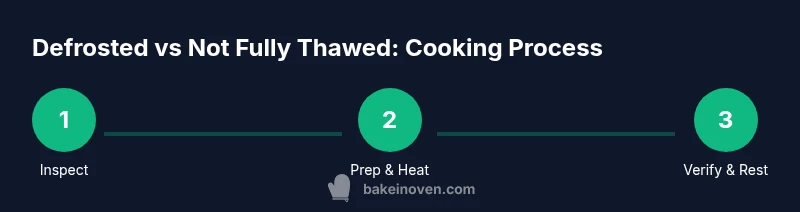
This section provides a practical plan you can follow in the kitchen. For the complete, step-by-step instructions, see the dedicated Step-by-Step block later in this article.
- Inspect and prep: Remove packaging, pat the chicken dry, and trim any excess fat. If pieces are thick, consider portioning to promote even heat transfer. Pro tip: sanitize surfaces after handling raw chicken to prevent cross-contamination.
- Preheat and ready your cooking vessel: Set your oven to 375°F (190°C) or prepare a skillet for stovetop cooking. Pro tip: a heavy-bottom pan ensures even heat distribution.
- Add moisture and seasoning: Lightly oil and season the chicken. If needed, add aromatics like garlic, herbs, or a splash of broth to start building flavor as the interior thaws.
- Start cooking with a method that promotes even thawing: For not fully thawed pieces, begin with covered cooking to trap steam, then uncover to brown. Pro tip: avoid overcrowding to keep heat consistent.
- Check internal temperature early and often: Insert a thermometer into the thickest part. Pro tip: read the thermometer without hitting bone for the most accurate reading.
- Rest and finish: When you reach 165°F, remove from heat and rest for 3-5 minutes. Pro tip: rest helps juices redistribute and improves texture.
Tools & Materials
- Instant-read meat thermometer(Crucial for verifying 165°F doneness.)
- Baking dish or skillet (oven or stovetop)(Choose based on your cooking method.)
- Cutting board and sharp knife(For safe prep and portioning.)
- Tongs or spatula(To handle hot chicken safely.)
- Aluminum foil(Useful for tenting and moisture retention.)
Steps
Estimated time: 60-75 minutes
- 1
Prep and assess the chicken
Remove packaging and pat dry. Check for any off smells or color changes. If the piece is very thick, consider portioning it to promote even thawing and cooking.
Tip: Patience at this stage prevents soggy or uneven outcomes. - 2
Preheat and prepare your cooking vessel
Preheat the oven to 375°F (190°C) or heat a skillet over medium heat. Lay a light coating of oil to help browning and moisture retention.
Tip: A hot preheat helps start even cooking from the outside in. - 3
Season and add moisture
Season all surfaces and consider a splash of broth or water to help heat travel toward the center. If you’re using a sauce, plan for it to simmer with the chicken.
Tip: Season generously; flavor helps compensate for longer cooking times. - 4
Begin cooking with coverage
Start with a covered method to trap heat and moisture, especially for not fully thawed pieces. Move to uncovered to brown once the center begins to thaw.
Tip: Covering early prevents surface scorching while the center finishes thawing. - 5
Monitor doneness with a thermometer
Probe the thickest part, avoiding bone. Target an internal temperature of 165°F (74°C) for safety.
Tip: If readings vary, continue cooking in small increments until all parts reach 165°F. - 6
Rest before serving
Let the chicken rest for 3-5 minutes after cooking to redistribute juices. Slice and serve with your favorite sides.
Tip: Resting prevents juice loss and yields juicier bites.
Frequently Asked Questions
Can you cook chicken from frozen or partially thawed without thawing at all?
Yes, you can cook chicken that’s not fully thawed, but you must extend the cooking time and verify doneness with a thermometer to reach 165°F. Not all cuts defrost evenly, so check multiple spots.
Yes, you can cook not fully thawed chicken, but extend cooking time and check the temperature everywhere until it reaches 165°F.
What is the best method to cook not fully thawed chicken?
Oven or stovetop with covered-to-exposed technique works well. Start covered to help thaw inside, then uncover to finish browning and ensure safety.
Use an oven or covered stovetop method, finishing uncovered for browning, and always check the internal temperature.
Is it unsafe to thaw chicken at room temperature?
Yes, thawing at room temperature can promote bacterial growth. Safer methods are fridge thawing or cold-water thawing with careful handling.
Avoid room temperature thawing; use fridge or cold-water methods for safety.
How long does it take to cook not fully thawed chicken?
Total time varies by piece size and thickness, but plan for roughly 60-75 minutes for thicker cuts when not fully thawed, plus resting time.
Plan for about an hour to an hour and a half, depending on thickness, plus resting time.
Can I use a microwave to defrost and cook at the same time?
Microwave defrost can lead to uneven thawing and partial cooking. If you use it, finish with a thorough oven or stovetop cooking to reach 165°F.
Microwave defrost can cause uneven thawing; finish cooking to 165°F with another method.
Can I re-freeze chicken that was not fully defrosted but cooked?
It’s best to freeze only cooked chicken or properly thawed raw chicken before refreezing. Follow food-safety guidelines to avoid quality loss.
Freeze only after cooking or thaw completely before refreezing for safety.
Watch Video
Key Takeaways
- Cook not fully thawed chicken safely to 165°F.
- Use a thermometer to confirm doneness.
- Choose methods that promote even heat transfer.
- Avoid room-temperature thawing for safety.
- Plan ahead to reduce cook time and improve texture.