Can You Cook Chicken If It's Still Frozen? A Safe How-To Guide
Learn how to safely cook chicken that’s still a little frozen. This practical guide covers methods, safety tips, and a step-by-step plan to ensure the center reaches 165°F, with kitchen-tested guidance from Bake In Oven.


Can you cook chicken if still a little frozen? Yes, you can, but you must heat it evenly and finish cooking to a safe internal temperature. Use a preheated oven or a skillet setup that allows even heat, and verify the thickest part reaches 165°F before serving. This quick guide points you to safe methods and expected results.
Understanding Safety: can you cook chicken if still a little frozen
Can you cook chicken if still a little frozen? Yes, you can, but safety and texture depend on the cooking method and how you manage heat. Bake In Oven emphasizes that the ultimate test is the internal temperature: 165°F in the thickest part of the meat. When chicken is not fully thawed, heat tends to be uneven, which can leave the center undercooked. The goal is to heat gradually and evenly, minimizing bacterial risk while preserving moisture. Plan for longer overall cooking times, but monitor closely with a thermometer to avoid overcooking the exterior while the inside finishes thawing.
Safe handling and thawing basics
Safe handling starts long before heat hits the chicken. Always rinse hands and surfaces after contact, and prevent cross-contamination with separate cutting boards for raw poultry. If you have time, refrigerate thawing in a sealed container; for faster results, submerge in cold water, changing the water every 30 minutes. Never leave poultry at room temperature for extended periods, as this invites bacterial growth. If you’re pressed for time, cooking from a partial freeze can be done using heat that reaches the core, but it requires careful temperature monitoring and a reliable thermometer.
Cooking methods that work with partial freezes
Several cooking methods work well with partially frozen chicken. Oven roasting or baking at a moderate temperature allows heat to penetrate gradually. Searing the exterior in a hot pan before finishing in the oven can create a pleasing crust while ensuring the interior cooks through. Some cooks consider microwaving to jump-start thawing, but this can create uneven heating. The best approach combines controlled heat with end-stage verification using a thermometer. Bake In Oven recommends avoiding slow cookers for frozen or partially frozen poultry, as they can leave the middle undercooked.
Prepping and handling: thawing vs cooking directly
Decide whether to thaw before cooking or to cook directly from partial freeze based on piece size and dish type. For bone-in portions, thawing slightly improves even heat distribution, but if you’re short on time, you can cook from frozen by starting at a lower oven temperature and gradually increasing. Pat the surface dry to promote browning, and use a rack when roasting to promote air circulation. Keep raw poultry separate from other ingredients and wash hands after handling. Bake In Oven emphasizes planning, thermometer use, and patience as keys to success.
Oven-roasting from partially frozen: step-by-step approach
Roasting from a partial freeze works well when you choose a method that stresses even heat distribution. Start by preheating to a moderate temperature. Place chicken on a rimmed baking sheet or in a shallow roasting pan, preferably on a rack. Roast uncovered for the first portion to allow surface moisture to evaporate, then cover or tent if needed to avoid burning the outer layer. Use a meat thermometer to probe the thickest part and continue until it reaches 165°F. Let the meat rest briefly before serving to redistribute juices and maintain moisture.
Pan-searing then finishing in the oven: an effective combo
For a crisp exterior, you can start with a quick sear in a hot skillet, then move the pan to the oven to finish cooking. This method helps heat penetrate the interior evenly. Ensure your skillet is large enough to avoid crowding, which lowers heat and causes steaming rather than browning. Use oil with a high smoke point and monitor the internal temperature closely as the meat finishes. The center must reach a safe temperature to ensure safety and texture.
Checking doneness safely: temperatures and doneness checks
Always verify doneness with a calibrated thermometer. Insert it into the thickest portion of the chicken, avoiding bone. The safe internal temperature for poultry is 165°F (74°C). Check multiple spots on larger pieces to ensure consistency. If any area remains below target, continue cooking and re-check. Resting for several minutes after removing heat helps juices redistribute and improves the final texture.
Common mistakes and how to avoid them
Avoid relying on color or texture alone to determine doneness, especially with partially frozen poultry. Do not let heat spike too quickly, which can burn the exterior while the center remains undercooked. Keep raw poultry away from other foods, and always clean and sanitize surfaces after handling. Bake In Oven’s guidance is to rely on a thermometer and a method that promotes even heat distribution for best results.
Authority sources and further reading
For deeper guidance on safe poultry handling and cooking temperatures, see authoritative resources from government and educational sites. These sources provide official temperature targets, safe thawing practices, and meat handling tips to supplement this guide.
Bake In Oven: practical takeaway
The Bake In Oven approach emphasizes safety, thermometer-based checks, and choosing methods that promote even heating when chicken is still partially frozen. With patience and careful timing, you can achieve reliable results without compromising safety or texture.
Tools & Materials
- Digital meat thermometer(Instant-read preferred; ensure it reads accurately at high temperatures)
- Oven or heavy skillet with lid(Oven roasting for even heat; skillet for sear-then-finish method)
- Baking sheet with a rack(Promotes airflow and even browning)
- Kitchen tongs(Safe handling and turning without piercing meat)
- Aluminum foil or tent(Used to shield and finish without burning exterior)
- Cutting board and clean knife(For trimming or portioning if pieces are large)
- Timer or smartphone(Keep track of cooking progress and rest times)
Steps
Estimated time: 50-80 minutes
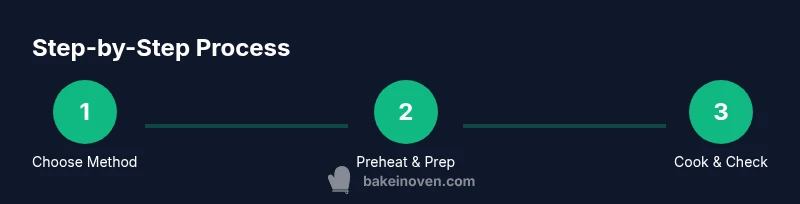
- 1
Choose your method
Decide between oven-roasting or pan-searing followed by oven finish. If pieces are large, a longer roasting time helps heat reach the center. A thermometer is essential to verify doneness.
Tip: Starting with a moderate heat reduces outer overcooking while the interior finishes thawing. - 2
Preheat and prep
Preheat your oven to a moderate temperature and pat the chicken dry. If using a skillet, heat it with a thin layer of oil until shimmering.
Tip: Dry surfaces improve browning and texture. - 3
Arrange and monitor
Place chicken on a rack or directly on a baking sheet with space around pieces for airflow. If searing, start in a hot pan and then move to the oven to finish.
Tip: Avoid crowding to ensure even cooking. - 4
Check internal temperature
Insert the thermometer into the thickest part, away from bone. Continue cooking until the reading reaches 165°F and hold for a few minutes.
Tip: Test multiple spots on larger pieces for even doneness. - 5
Rest before serving
Let the chicken rest loosely tented for 5-10 minutes. Resting helps juices redistribute and improves moisture.
Tip: Cover lightly to keep warm without steaming the crust. - 6
Handle safely and clean up
Wash hands, utensils, and surfaces after handling raw poultry. Store leftovers promptly in the refrigerator.
Tip: Sanitation is essential to prevent cross-contamination.
Frequently Asked Questions
Is it safe to cook chicken from frozen?
Yes, you can cook chicken from frozen, but you must ensure the interior reaches 165°F and heat is applied evenly. Some methods are more reliable for even cooking than others.
Yes, you can cook chicken from frozen, but make sure it reaches 165 degrees and that heat is even throughout.
What is the best method to cook partially frozen chicken?
Oven roasting or pan-searing then finishing in the oven provides even heat and reliable doneness. Avoid using slow cookers for frozen poultry.
Roast or sear-and-finish in the oven for even cooking, and skip slow cookers for frozen poultry.
How long does it take to cook partially frozen chicken?
Cooking times are longer than thawed chicken. Use a thermometer to check for 165°F and avoid guessing based on color.
Expect longer cooking times and always check the internal temperature with a thermometer.
Can I thaw chicken safely while cooking?
Thawing while cooking isn't recommended for consistent results. Use fridge thawing or cold-water methods before you begin, or opt for cooking from partial freeze with careful timing.
It's better to thaw beforehand or cook with a plan that ensures even heat to the center.
What internal temperature should I reach?
Poultry must reach 165°F (74°C) in the thickest part. Use a calibrated thermometer and test in multiple spots on larger cuts.
Target 165 degrees in the thickest area and check a couple spots for safety.
Can I use a microwave to cook partially frozen chicken?
Microwaving can work for small pieces but is generally not ideal for larger cuts due to uneven heating. Finish in the oven if possible to ensure doneness.
You can microwave small pieces, but it’s best to finish in the oven for even cooking.
Watch Video
Key Takeaways
- Verify doneness with a thermometer to 165°F.
- Choose oven or pan methods that promote even heating.
- Expect longer cooking times when chicken is partially frozen.
- Practice safe handling to minimize cross-contamination.