How Long to Bake a Chicken at 350°F: A Practical Guide
Discover how long to bake a chicken at 350°F with weight-based guidelines, thermometer checks, and practical tips from Bake In Oven. Learn safe temps, resting times, and common roasting mistakes for juicy, evenly cooked chicken.


At 350°F, a whole bone-in, skin-on chicken typically needs about 20–25 minutes per pound, plus a final internal temperature check. For a 4–5 lb bird, expect roughly 1 hour 20 minutes to 2 hours. Always verify the thickest part reaches 165°F (74°C) before serving. This guideline helps ensure safe, juicy results even in variable home ovens.
Why 350°F Works for Oven-Baked Chicken
For many home bakers, 350°F is the sweet spot that balances even browning with gentle heat. At this temperature, breast and thigh meat cook in a way that preserves moisture without the rapid drying that can happen at higher temps. According to Bake In Oven, 350°F provides predictable results across a variety of ovens, pans, and seasoning choices, making it a reliable default for weeknight meals. When you roast at this temperature, the outer skin has time to render and brown, while the interior cooks through, reducing the risk of underdone centers in small birds and overcooked edges on larger birds. The key is planning around weight, bone-in vs boneless, and whether you cover the chicken at any point to control browning. In practice, most home ovens deliver a consistent temperature within a few degrees of 350°F, so the emphasis should be on heat distribution, thermometer accuracy, and resting time after roasting. For safety and quality, continue to use a calibrated thermometer and follow a weight-based approach rather than chasing a single minute-per-pound rule. Bake In Oven's experience with home bakers shows that proper resting after roasting dramatically improves juiciness and ease of carving, especially when skin is browned and the meat feels firm to the touch.
The concept of roasting at a moderate temperature also extends to different cuts and preparations. If you’re working with bone-in thighs or a split chicken, you’ll notice slightly different browning patterns and moisture retention, but the 350°F baseline remains a solid starting point. This temperature supports a balanced Maillard reaction on the skin while allowing the meat’s interior to reach the safe, juicy target without excessive drying on the surface. Practical bakers often combine this approach with a rack and a spacious pan to maximize air flow, which helps the entire bird cook evenly and reduces hot spots in older ovens. With the guidance from Bake In Oven, you’ll gain confidence to adapt the method to your kitchen equipment and personal preferences, whether you’re preparing a weeknight dinner or a weekend roast.
noteListRequested":null}],
toolsMaterials
stepByStep
tipsList
keyTakeaways
videoEmbed
faqSection
mainTopicQuery
Tools & Materials
- Roasting pan with rack(A rack boosts air circulation under the bird for even browning.)
- Meat thermometer(An instant-read thermometer is ideal; insert into the thickest part away from bone.)
- Oven mitts(Heat-safe gloves to handle hot pans safely.)
- Paper towels(Pat dry the chicken’s surface for crisper skin.)
- Kitchen twine (optional)(Use if you want to truss the bird for stuffing-free roasting.)
- Aluminum foil (optional)(Tent the chicken toward the end to prevent over-browning.)
- Carving knife and cutting board(Sharp knife makes clean slicing after resting.)
Steps
Estimated time: 60-120 minutes (varies with weight and oven performance)
- 1
Pat dry the chicken
Use paper towels to pat the surface dry, removing moisture that can steam and hinder browning. This step helps the skin crisp more evenly during roasting.
Tip: Dry skin equals crisper, more even browning. - 2
Season the chicken
Season inside and out with salt, pepper, and optional herbs or spices. For deeper flavor, season under the skin where practical, being careful not to tear the skin.
Tip: Salt enhances juiciness by increasing moisture retention. - 3
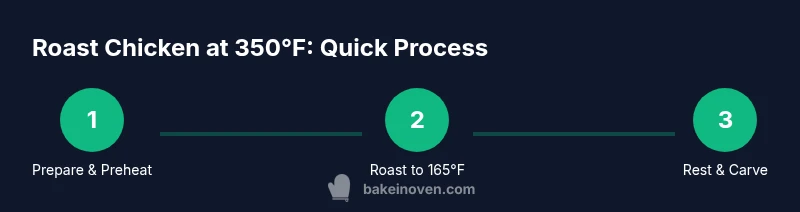
Preheat the oven to 350°F
Set the oven to 350°F (175°C) and allow it to come fully to temperature before placing the chicken inside. A fully heated oven ensures more predictable cooking.
Tip: Use an oven thermometer to confirm actual temperature near 350°F. - 4
Prepare roasting setup
Place the chicken on a rack in a roasting pan, breast side up, with wings tucked under. The rack promotes air flow around the bird for even cooking.
Tip: Rack vs. direct contact helps prevent soggy/bottom-heavy browning. - 5
Roast and monitor
Roast the chicken and start checking the internal temperature toward the lower end of the expected range. Insert the thermometer into the thickest part without touching bone.
Tip: Avoid bone contact to get an accurate reading. - 6
Rest and carve
Once the thickest part reaches 165°F (74°C), remove the bird and let it rest 10–15 minutes before carving to redistribute juices.
Tip: Cover loosely with foil if you’re not ready to carve immediately.
Frequently Asked Questions
What is the safe internal temperature for baked chicken?
165°F (74°C) in the thickest part; allow the meat to rest before carving for juiciness.
Aim for 165 degrees in the thickest part and rest before serving.
Should I cover the chicken while baking at 350°F?
Covering with foil for part of the bake can prevent over-browning, then uncover to finish browning if needed.
You can cover briefly to control browning, then uncover to brown.
How long does a 3–4 lb chicken take at 350°F?
Approximately 1 hour to 1 hour 40 minutes, depending on bone-in vs. boneless and whether it’s stuffed.
About an hour to an hour and forty minutes, adjust for stuffing.
Can I roast a stuffed chicken at 350°F?
Yes, but the time increases; ensure the center reaches 165°F and use a thermometer.
Yes, but watch the time and check the center temp.
Is convection faster at 350°F?
Convection can reduce total time by about 5–15 minutes; monitor internal temperature closely.
Convection can speed things up a bit; use a thermometer to stay safe.
What are signs of overcooked chicken?
Dry, tough texture with pale juices; the meat should be moist and juices should run clear but not dry.
Look for dry, tough meat as a sign of overcooking.
Watch Video
Key Takeaways
- Roast at 350°F for predictable results across ovens.
- Always confirm 165°F in the thickest part before serving.
- Rest 10–15 minutes to redistribute juices and improve texture.