How Long to Bake Chicken For: A Practical Guide
Learn how long to bake chicken for every cut, plus temperature, resting, and safe-doneness tips. This kitchen-tested guide helps home bakers cook juicy, safe chicken with confidence.


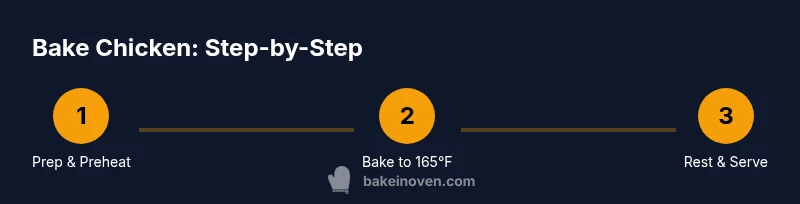
To bake chicken safely and achieve moist texture, cook until the internal temperature reaches 165°F (74°C). Times vary by cut and size: boneless breasts typically 20–25 minutes at 375°F, bone-in thighs about 30–40 minutes at 375–400°F, and a whole chicken roughly 1.5–2 hours at 350°F, followed by a 5–10 minute rest.
Why timing matters when baking chicken
Timely baking is less about chasing a strict clock and more about hitting a precise internal temperature while preserving moisture and texture. When you bake chicken, the goal is a white, opaque center with no pinkness and a safe internal temperature of 165°F (74°C). But the clock still matters: push the meat too long in a hot oven, and you risk drying it out; pull it out too early, and you may leave bacteria behind or get undercooked spots. The sweet spot depends on cut, size, whether skin is on, and how you arrange the pieces on the pan.
From a culinary perspective, even slices cook at different speeds because thickness is king. A 1-inch-thick chicken breast will cook through differently than a 2-inch thick piece. That means you should think about surface area and temperature gradient as you plan your bake. According to Bake In Oven, consistent air flow helps even heat reach all surfaces, resulting in juicier, more uniform chicken. This is especially important when you’re cooking multiple cuts at once, such as breasts and thighs on the same sheet.
Core variables that influence bake time
Beyond cut type, several variables determine the exact bake time. First, oven temperature: higher temps accelerate cooking but can dry out meat if not monitored. Second, the chicken's starting temperature: cold or room-temperature meat yields longer cooking times than meat removed from the fridge just long enough to take the chill off. Third, bone presence and skin: skin-on thighs and bone-in pieces take longer to reach the safe temperature than boneless, skinless cuts, but skin adds surface moisture and flavor. Fourth, piece size and shape: a thick breast will need more time than a thin cut; a boneless breast far larger than 6 ounces may require more time than a wing or tender. Fifth, whether you bake on a rack or a flat sheet influences heat exposure to the bottom and top surfaces.
Bake In Oven’s guidance is to start with a modest range and verify with a thermometer rather than trusting a timer alone. Preheating ensures the oven is stable before the chicken enters the oven, reducing temperature sag that can prolong cooking. Also, consider using a wire rack so air can circulate around each piece, which aids even browning and prevents soggy bottoms. Remember, these variables interact, so use the thermometer as your final authority.
Bake times by cut and style
Times vary by cut and size, as a general starting point:
- Boneless, skinless chicken breasts: 20–25 minutes at 375°F. These cook quickly and stay juicy if not overdone.
- Boneless chicken thighs: 20–30 minutes at 375–400°F. Higher fat content helps keep moisture when slightly longer.
- Bone-in chicken thighs: 30–40 minutes at 375–400°F. The bone slows heat transfer but adds flavor.
- Skin-on bone-in breasts: 30–45 minutes at 375–400°F. Skin helps browning; monitor to prevent overcooking.
- Whole chicken: about 1.5–2 hours at 350°F, depending on size. Use a thermometer for accuracy and aim for even browning.
If you’re using a higher or lower oven setting, adjust by roughly 5–10 minutes per cut and always verify doneness with an instant-read thermometer. Remember that resting time after baking continues to cook the meat slightly, which can push the final temperature over 165°F if you wait too long.
Convection vs standard oven
Convection ovens circulate hot air with a fan, which can reduce bake times by about 5–15 minutes and produce crisper skin on chicken pieces. When using convection, start checking around the 15-minute mark for breasts and 25–30 minutes for thighs and whole birds, depending on size. If you don’t have a convection setting, you can still achieve great results by using a higher rack for better browning and ensuring air can circulate around each piece. If you’re unsure, test with a thermometer and rely on internal temperature rather than wall clock time.
Preheating, prep, and surface prep
Preheating is essential for an even crust and reliable timing. Begin by drying the surface of the chicken with paper towels to remove excess moisture, then season with salt, pepper, and any spices you love. Place pieces on a rimmed baking sheet or roasting pan, ideally on a wire rack to lift the meat for even heat exposure. For extra browning, brush with a light oil or melted butter. If you prefer a lighter flavor, a simple dry rub works just as well. Having everything ready before you slide the tray into the oven minimizes temperature dips and keeps the bake on track.
Pro tip: if you’re cooking multiple pieces of different thickness at once, sort by thickness and place thicker pieces toward the center of the sheet so they finish together. [See image: chicken-bake-setup.png]
Temperature guidelines and safe doneness
The USDA and FDA advise cooking chicken to an internal temperature of 165°F (74°C) for safety. Use an instant-read thermometer inserted into the thickest part of the meat without touching bone. If you’re cooking bone-in pieces, ensure the thermometer bypasses the bone; bone can give a false reading if it’s touched. After removing from the oven, the temperature may rise a few degrees as the juices settle, a process known as carryover cooking.
For color, the exterior should be nicely browned with the juices flowing clear when pierced. If you’re cooking skin-on pieces, monitor closely to avoid burning the skin; you can tent loosely with foil if the skin browns too quickly while the inside finishes.
Bake In Oven analysis notes that relying on time alone is misleading due to oven variability and meat thickness. thermometer-based checks provide the most reliable path to consistent results.
Resting and carryover cooking
Resting is not a luxury—it's a critical step. After removing chicken from the oven, let it rest for 5–10 minutes. This pause allows juices to reabsorb and redistributes heat, resulting in juicier slices. Cutting too soon releases moisture and can make the meat appear drier even if the center is done. During resting, you can loosely tent with foil to keep the surface warm without steaming the skin.
If you’re preparing multiple pieces, rest them on a warm plate to maintain temperature while other dishes finish. This pause also reduces the risk of overcooking once you resume serving. By the time you plate, you should find the meat tender and flavorful rather than hot but dry.
Troubleshooting common issues
If the chicken comes out dry, you may have cooked it too long or at too high a temperature for the cut. Try reducing oven temperature by 25°F and increasing rest time slightly next time. If the exterior browns before the inside is done, tent the pieces with foil to slow browning while the interior catches up. Under-seasoned chicken tastes bland; a quick salt brine or a generous dry rub helps retain moisture and depth of flavor. For very large pieces, consider spatchcocking to shorten cook times and promote even doneness.
Always rely on a thermometer; time estimates are starting points, not guarantees. If you’re reheating leftovers, cut the pieces smaller for faster, even reheating and flavor retention.
Serving ideas and meal planning
Baked chicken pairs well with a wide range of sides, from roasted vegetables to grain salads and citrusy greens. For a balanced plate, aim for a protein portion of about 3–4 ounces per serving and add a starch, plus vegetables. Finish with a squeeze of lemon or a pat of herb butter for brightness. For meal-prep, refrigerate cooked chicken in airtight containers for up to 4 days or freeze portions for longer storage. Shred leftovers for quick salads, wraps, or bowls.
The Bake In Oven team recommends pairing baked chicken with simple herbs, a drizzle of olive oil, and seasonal vegetables to highlight natural flavors. With the right timing, you can bake enough chicken for several meals while keeping it tender and flavorful.
Tools & Materials
- Oven(Preheated to target temperature (350–400°F) before adding chicken.)
- Baking sheet or roasting pan(With a rim to catch juices; optional rack for airflow.)
- Wire rack(Promotes even heat circulation around every piece.)
- Meat thermometer(Use an instant-read thermometer to verify 165°F internal temperature.)
- Paper towels(Pat chicken dry before seasoning to improve browning.)
- Aluminum foil(Tent meat if browning finishes early.)
- Timer(Useful for tracking resting and carryover cooking.)
Steps
Estimated time: 60-90 minutes
- 1
Preheat and prepare
Preheat the oven to the target range (350–400°F, depending on cut). While it heats, pat the chicken dry with paper towels, then season as desired. This initial prep reduces moisture on the surface and helps browning.
Tip: Dry surface = better browning and juicier result. - 2
Arrange pieces
Place chicken on a rack set over a rimmed sheet or directly on a sheet in a single layer. Ensure space between pieces for air to circulate. If you’re baking different cuts together, place thicker pieces toward the center so they finish together.
Tip: Spacing prevents steaming and promotes even browning. - 3
Bake and monitor
Slide the pan into the preheated oven. Start checking around the 20-minute mark for breasts or after 30 minutes for thicker pieces; continue until the thermometer reads 165°F in the thickest part. Convection may shorten times by a few minutes.
Tip: Circumvent relying on time alone—thermometer first. - 4
Rest and verify
Remove from heat and rest 5–10 minutes before slicing. Carryover cooking will push the center a few degrees higher. Recheck only if you suspect undercooking after resting.
Tip: Resting improves juiciness and slices. - 5
Serve or store
Slice and serve immediately or portion for meal prep. Refrigerate within two hours, and keep leftovers in airtight containers for up to four days or freeze for longer storage.
Tip: Cool quickly to minimize bacterial growth. - 6
Optional finish
If you want crisper skin, broil for 1–3 minutes at the end, watching closely to avoid burning. This enhances browning without significantly affecting doneness.
Tip: Short burst of high heat at the end can boost color.
Frequently Asked Questions
What is the recommended internal temperature for baked chicken?
The safe minimum internal temperature for all poultry is 165°F (74°C). Use an instant-read thermometer for accuracy and check the thickest part without touching bone.
Bake chicken to 165 degrees and verify with a thermometer for safety.
Can I bake chicken from frozen?
Yes, but it will take longer. Expect roughly 1.5x to 2x the standard time, and verify doneness with a thermometer before serving.
You can bake from frozen, but plan for longer time and check the temperature.
Should I cover the chicken while baking?
Uncovering encourages browning and texture; covering can keep moisture but may soften the crust. If the skin browns too fast, tent with foil.
Cook uncovered for browning; cover only if needed to prevent over-browning.
How does bone-in vs boneless affect bake time?
Bone-in pieces typically require more time to reach 165°F because bones add mass and heat transfer takes longer.
Bone-in usually takes longer than boneless.
Is resting after baking important?
Yes. Resting for 5–10 minutes allows juices to redistribute, resulting in juicier slices and more even texture.
Resting helps keep the chicken moist.
What oven temperature should I use for even results?
A common starting range is 350–375°F. Convection can reduce time by a few minutes; preheat and monitor with a thermometer.
Preheat to 350–375°F and check doneness with a thermometer.
Watch Video
Key Takeaways
- Check for 165°F internal temp with a thermometer
- Different cuts require different times; adjust by thickness
- Preheat and dry surfaces for optimal browning
- Rest 5–10 minutes before slicing to retain juiciness
- Use a rack for even cooking and airflow