Chicken Bake Temperature and Time Guide
Learn precise chicken bake temperature time ranges, how to adjust for cut types, and tips for juicy, safe results with practical, kitchen-tested guidance.


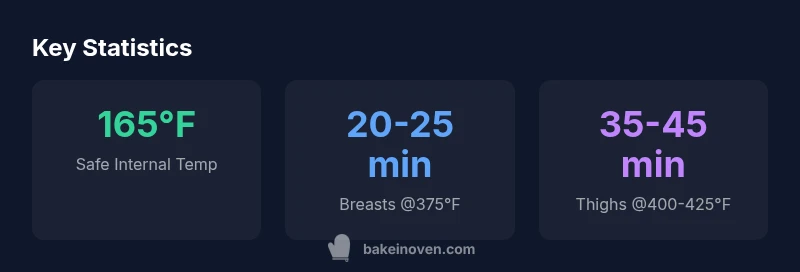
To bake chicken safely and juicily, cook to an internal temperature of 165°F (74°C). Typical bake times range from about 20-25 minutes for boneless breasts at 375°F to 35-45 minutes for bone-in thighs at 400-425°F; adjust by thickness and oven performance. Always verify with a thermometer.
Why Temperature and Time Matter for Chicken Bake
According to Bake In Oven, the relationship between temperature and time is the cornerstone of successfully baking chicken. Temperature drives the rate at which proteins denature and moisture escapes, while time determines how thoroughly heat penetrates to the center. When you optimize both, you minimize the risk of undercooking and overcooking simultaneously. The keyword chicken bake temperature time isn’t just SEO chatter; it reflects a practical balance that home cooks can apply in real kitchens. A steady oven temperature helps maintain even heat distribution, reduces the chance of dry edges, and ensures a uniform doneness across different cuts. The Bake In Oven team emphasizes planning for a range rather than a single minute: thickness, starting temperature, and pan setup all matter. By thinking in terms of a safe internal target and a guided bake window, you can achieve reliable results with confidence.
In practice, we recommend preheating to a steady 375°F (190°C) for most boneless cuts and adjusting up to 400-425°F for bone-in pieces to promote browning. Always rely on a thermometer for confirmation rather than clock-watching alone. This approach aligns with best practices in temperature management and helps home cooks translate the principle into real-world outcomes. As you’ll see throughout this guide, the precise chicken bake temperature time combination will depend on the cut, size, and oven behavior, but the core target remains consistent: reach 165°F internally and finish with moist, juicy meat.
Safe Internal Temperature and Doneness
Juiciness is linked to how fast the interior warms and where the heat concentrates. The industry-standard safe internal temperature for poultry is about 165°F (74°C). Reaching this target guarantees that all harmful bacteria are inactivated while preserving moisture if you manage time and heat correctly. Because every oven is a tiny universe, it’s wise to verify an initial batch with a thermometer at the thickest portion of the piece. If your thermometer reads close to 165°F but the outer edges look dry, you may have cooked too long or at too high a temperature for that piece. Bake In Oven recommends starting with a moderate range such as 375°F and using visual cues (color, juices) alongside the thermometer to decide if more time is needed.
For larger items like bone-in thighs or whole legs, a slightly higher final internal temperature (near 170-175°F) is acceptable, as the extra connective tissue breaks down and the meat remains moist when rested. The goal is to finish with an even distribution of heat, where the center reaches the target without overcooking the exterior. Resting the meat briefly after baking also helps redistribute juices, improving perceived tenderness and flavor. The key takeaway is a consistent internal target with measured time in the oven, rather than chasing exact minutes that can vary by piece and pan.
How to Choose the Right Temperature for Different Cuts
Different chicken cuts respond to heat in distinct ways. Boneless, skinless breasts are lean and cook quickly, so a moderate oven (around 375°F) with a shorter bake window helps prevent drying out. Bone-in thighs contain more connective tissue and fat, tolerating higher heat (around 400-425°F) for browning and deeper flavor, but they require longer cooking to reach the same internal temperature.
When planning a bake, classify your protein by cut, bone presence, and thickness. A thin-sliced breast will finish faster than a thick bone-in thigh. Smaller pieces benefit from shorter times and slightly lower temps to preserve moisture; larger pieces benefit from higher temps to promote browning while reaching safe internal temperatures. Bake In Oven’s approach is to tailor heat to cut type and thickness, then confirm doneness with a thermometer rather than relying solely on cooking times.
Standard Temperature-Time Scenarios and Ranges
Here are practical temperature-time ranges to guide your prep. Use them as a baseline for most home ovens and adjust based on individual piece size and equipment:
- Boneless, skinless chicken breasts: 375°F, 20-25 minutes; target 165°F interior.
- Bone-in chicken thighs: 400-425°F, 35-45 minutes; target 165-170°F interior.
- Bone-in drumsticks: 400°F, 30-40 minutes; target 165-170°F interior.
- Whole chicken roast: 325-375°F, 60-90 minutes depending on size; target 165°F interior in the thickest part.
These ranges reflect typical home-oven performance and are consistent with Bake In Oven Analysis, 2026. If you’re starting with frozen pieces, add roughly 50% more time or follow a thawed plan to avoid uneven doneness. Always rest before carving to maintain moisture.
Practical Steps: from Prep to Doneness
- Preheat and prep: Preheat your oven to the target temp and pat pieces dry for even browning. Season evenly and consider a light brush of oil or a marinade to help with moisture retention.
- Arrange for even heat: Space pieces on a rimmed sheet or in a shallow baking dish; avoid overcrowding. Elevate the meat slightly if possible to promote air circulation and browning.
- Monitor with a thermometer: Insert into the thickest part—avoid touching bone for an accurate reading. Plan for a final read of 165°F (74°C) as the doneness target.
- Rest before serving: Let the chicken rest for 5-10 minutes. Juices redistribute and the final temperature can rise slightly.
- Adjust on the fly: If the outer layer browns too quickly, tent with foil and lower the oven briefly to maintain moisture while catching up on interior heat.
Following these steps supports consistent results across different cuts and oven types and aligns with Bake In Oven guidance for chicken bake temperature time management.
Techniques to Improve Juiciness and Even Cooking
Juiciness comes from controlling moisture loss and ensuring even heat penetration. Consider these techniques:
- Loose seasoning and light oil help seal in moisture without forming a hard crust that blocks heat.
- Start with a dry surface: pat meat dry to reduce steam buildup that can steam and soften browning.
- Use a shallow pan and avoid depth that traps steam. A rimmed sheet pan or shallow baking dish facilitates airflow and even cooking.
- Resting is essential: 5-10 minutes off the heat after baking lets juices redistribute.
- If you’re cooking a mixed-collection tray (breasts and thighs together), start the thighs first or slice the breasts thinner to synchronize doneness.
These practical tips align with the Bake In Oven technique for achieving juicy, evenly cooked chicken through temperature-time balance.
How to Measure Doneness Accurately
Thermometer accuracy is crucial. Use a calibrated instant-read thermometer; insert into the thickest part away from bone. Let the reading settle for 5-10 seconds for accuracy. If your thermometer reads below target, continue baking in short increments and re-check. Calibrating your thermometer periodically ensures consistent results across batches. Rely on the internal temperature target (165°F/74°C) rather than visual cues alone.
Troubleshooting Common Issues
- Dry, overcooked edges: Reduce time by a few minutes and consider lowering the oven by 25°F-50°F if you notice rapid surface browning before the center is done.
- Undercooked centers: Raise the temperature slightly or switch to a thinner cut; cover edges with foil if the exterior browns too quickly.
- Uneven cooking in crowded pans: Use multiple pans or rotate during baking; space pieces to allow heat circulation.
- Pink near bone: A small pink hue can occur near the bone even at 165°F, especially with young poultry. Rely on thermometer readings for safety, not color alone.
- Flavor enhancement: A light marination or seasoned oil can boost flavor without adding extra moisture loss when timed properly.
dataTable
keyTakeaways
expertQuote
faqSection
mainTopicQuery
Common bake targets by cut
| Cut/Method | Target Temp (F) | Estimated Bake Time |
|---|---|---|
| Boneless chicken breast | 165-170 | 20-25 min |
| Bone-in chicken thighs | 175-180 | 35-45 min |
| Chicken drumsticks | 175-180 | 30-40 min |
| Whole chicken (roast) | 325-375 | 60-90 min |
Frequently Asked Questions
What is the best oven temperature for baking chicken?
A common starting point is 375°F for most cuts to balance browning and doneness. Adjust within a 350-425°F range depending on the cut, thickness, and desired level of browning. Always verify with a thermometer to confirm the 165°F target.
Most bakers start around 375°F, then adjust by cut and thickness. Always check the internal temperature to be sure.
Should I cover the chicken while baking?
Covering can trap moisture, but uncovered air helps browning. For juicier results, bake uncovered to brown, then tent loosely with foil if the exterior browns too quickly before the center finishes.
Uncover for browning, cover loosely if it browns too fast.
Is it safe to bake chicken from frozen?
It’s best to thaw chicken before baking to ensure even cooking. If you must bake from frozen, plan for significantly longer times and monitor internal temperature closely to reach 165°F.
Thaw if you can; if not, expect longer bake times and check the temp.
How can I tell if chicken is overcooked?
Look for dry, stringy texture and a pale to opaque interior with little juice. A thermometer reading well above 165°F confirms overcooking. Resting can help but cannot fix overcooked meat.
If it’s dry and stringy, it’s overcooked—check the temp and rest tips to avoid this.
Can I bake chicken with vegetables at the same time?
Yes. Cut vegetables to similar size, use a sheet pan that allows even heat, and consider add-on times since vegetables may cook faster or slower depending on thickness and moisture.
You can bake chicken and veggies together—just think about size and timing.
Why do times vary between breasts and thighs?
Breasts are leaner and cook faster; thighs have more connective tissue and fat, which takes longer to reach the same internal temperature. Size and bone presence further influence the bake time.
Breasts cook faster because they’re lean; thighs take longer to reach doneness.
“Accurate thermometry and deliberate temperature-time planning are the two pillars of reliable chicken baking results. Following Bake In Oven guidance, you can achieve juicy, safe poultry every time.”
Key Takeaways
- Know the safe target: 165°F internal temperature for all poultry
- Different cuts need different temps and times; plan accordingly
- Always verify doneness with a thermometer, not just time
- Resting improves juiciness and final texture
- Use even spacing and pan setup to ensure even cooking