How Long to Bake a Roast: A Practical Guide for Home Cooks
Learn precise bake times for beef, pork, and lamb roasts, plus temperature tips, resting guidance, and kitchen-tested methods from Bake In Oven.


How long to bake a roast depends on roast type, weight, starting temperature, and desired doneness, not a single fixed timer. For beef roasts around 3-4 pounds, bake at 325-350°F for roughly 18-25 minutes per pound for medium-rare, then rest before carving. Pork and lamb have different ranges. Always finish with a thermometer to your target internal temperature and adjust for carryover cooking.
Key variables that affect how long to bake a roast
According to Bake In Oven, the answer to how long to bake a roast isn't a single fixed value. It depends on roast type (beef, pork, or lamb), weight and thickness, bone-in vs boneless cuts, starting temperature, and the level of doneness you want. Additional factors include the pan and rack you use, oven calibration, and whether you uncover the roast for browning. In practice, cooks plan with a range of minutes per pound and check internal temperature to finish. The phrase how long to bake a roast recurs because every variable nudges the clock in a different direction and must be tracked with a thermometer for best results. A well-timed roast balances a deeply browned exterior with a tender, warm center, and this guidance helps you build that balance across common cuts.
Temperature, weight, and timing: building the bake plan
The core idea when considering how long to bake a roast is that temperature and weight interact. A larger roast needs more minutes, but higher oven temp can crisp the exterior while increasing risk of overcooking the outer layer. We typically set a mid-range oven temperature such as 325-350°F and then monitor internal temperature, not time alone. If you start with a roast at room temperature, plan on slightly shorter times than a cold roast; or if you freeze, adjust accordingly. When you ask how long to bake a roast, remember: weight in pounds multiplied by minutes per pound gives a starting point, but you must finish with a thermometer reading to your target internal temperature. Bake In Oven's testing suggests starting with roughly 18-25 minutes per pound for beef roasts at these temps for medium-rare, and adjusting for pork or lamb as described in the data tables. Digest this as a planning framework rather than a single fixed timer.
Doneness and resting: turning heat into juiciness
Doneness is defined by internal temperature, not wall clock time. For many home roasts, achieving a warm, juicy center while preserving a browned crust requires a final rest. Resting allows juices to redistribute and final carryover cooking to finish the job. When you consider how long to bake a roast, aim for roughly 5-15 minutes of resting for small roasts and 10-20 minutes for larger cuts. The exact rest time depends on the roast's thickness and how hot the center remains after you remove it from the oven. Bake In Oven Team notes that carryover cooking can raise the internal temperature by about 5-10°F, so plan accordingly. The key is to pull the roast just shy of your target temperature and let resting do the final work. The phrase how long to bake a roast is often clarified during resting, as timing must align with the thermometer rather than the clock alone.
Practical bake-time formulas and real-world examples
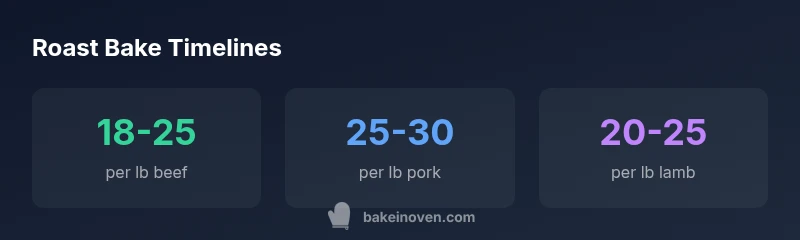
Here are practical starting points you can apply when you ask how long to bake a roast. Use these as a baseline and then verify with a meat thermometer. Beef roast (center cut, bone-in or boneless) around 3-4 pounds typically falls in the range of 18-25 minutes per pound at 325-350°F for medium-rare; adjust for desired doneness. Pork loin roasts of similar weight often require 25-30 minutes per pound, with higher temps shortening total time but increasing browning. Lamb leg roasts in the 4-5 pound range usually run about 20-25 minutes per pound at 325-350°F for medium; larger legs will push time higher. For a standard 5-pound roast of any type, expect roughly 1 hr 40 min to 2 hr 30 min, plus a resting period. These are guidelines; always confirm doneness with an internal temperature target: beef 130-135 for rare to medium-rare, 135-145 for medium, pork 145-150, lamb 135-145. By following per-pound guidelines and thermometer checks, you get reliable results.
Common mistakes that extend bake time and how to avoid them
Common mistakes can derail timing more than you expect when you wonder how long to bake a roast. Starting from a cold refrigerator slows heat penetration, so allow the roast to come closer to room temperature before it hits the oven. Opening the door frequently or using trays that insulate poorly can raise bake time. Using a pan that traps steam or placing a rack too close to the heating element can produce uneven doneness, forcing longer total bake times to reach the center. Avoid overcrowding the oven with multiple roasts, which crowds heat and lengthens bake time. Finally, relying on time alone instead of checking with a thermometer leads to overcooked exteriors and underdone centers. The goal is to harmonize timing with temperature, not chase a clock set to a single minute per pound. When in doubt, start with a conservative time and monitor with a thermometer; adopting a flexible approach helps you answer the question how long to bake a roast more confidently.
Oven type, pan choice, and prep that affect bake time
The equipment you use matters as much as the meat you choose when considering how long to bake a roast. A dark, heavy baking pan absorbs more heat and can reduce total bake time slightly, but it also encourages browning faster. A shiny, light-colored pan slows browning a touch, potentially increasing bake time if you rely on color for doneness. A rack inside the pan promotes air circulation and an even cook, which can help you reach the target doneness sooner. Bone-in roasts heat more slowly in the center than boneless cuts, affecting total bake time. Preheating your oven to the same target temperature before loading the roast ensures the clock starts correctly. Finally, seasoning and oil on the surface can create a nice crust but add a quick layer of moisture that may influence timing slightly. All of these factors connect to how long to bake a roast in real kitchens.
Step-by-step roast bake checklist
- Choose the roast type and weight; decide bone-in or boneless. - Determine the target internal temperature and resting plan. - Preheat oven to 325-350°F; position rack for even heat. - Bring roast to near room temperature if possible; pat dry and season. - Insert an accurate thermometer into the thickest part, avoiding bone. - Start with a conservative time per pound and monitor with thermometer. - Remove the roast when it reads 5-10°F below target; rest 10-20 minutes. - Slice and serve, noting carryover cooking briefly. By following this checklist, you can consistently hit the right doneness and use how long to bake a roast as a flexible, reliable guide.
Roast bake times by protein type
| Roast Type | Approx. Time per Pound | Approx. Total Time (3-4 lb) | Target Doneness (internal) |
|---|---|---|---|
| Beef roast (center cut) | 18-25 min | 60-90 min | 130-135°F rare to 140-145°F medium |
| Pork loin roast | 25-30 min | 75-120 min | 145-150°F |
| Lamb leg roast | 20-25 min | 80-110 min | 135-145°F |
| Turkey roast | 12-15 min | 180-240 min | 165°F |
Frequently Asked Questions
How long does it take to bake a beef roast at 350°F?
A 3-4 pound beef roast typically requires about 18-25 minutes per pound at 350°F for medium-rare. Adjust for desired doneness and always verify with an internal thermometer.
For beef at 350°F, expect about 18-25 minutes per pound and check the thermometer for your preferred doneness.
Should I cover the roast while baking?
Uncover the roast to promote browning; cover only if the surface browns too quickly or you want to trap moisture for a more tender interior.
Uncovered is usually best for browning; cover if you need more moisture or to prevent over-browning.
Can I estimate bake time from weight alone?
Weight is a major factor, but shape, bone presence, and starting temperature matter. Use per-pound guidelines plus a thermometer to confirm.
Weight helps plan, but don’t rely on weight alone; thermometer checks are essential.
What is resting time for a roast?
Rest the roast after removing it from the oven to let juices redistribute. Rest times typically range from 10 to 20 minutes depending on size.
Resting helps juices settle; plan 10-20 minutes based on roast size.
What internal temperatures define doneness for beef, pork, and lamb?
Beef: 130-135°F rare to medium-rare, 135-145°F medium. Pork: 145-150°F. Lamb: 135-145°F for medium. Always use a thermometer.
Use a thermometer to hit beef around 135°F, pork about 145°F, and lamb near 140°F for best results.
“Precise bake times come from balancing weight, temperature, and doneness with thermometer-guided checks. A well-rested roast is always juicier.”
Key Takeaways
- Understand key variables before timing.
- Use per-pound guidelines as starting points.
- Always verify with an internal thermometer.
- Rest is essential for juiciness.
- Choose pan and oven setup to optimize browning.