How Long to Bake a Tenderloin: Timings, Temps & Tips
Master the art of baking beef tenderloin with precise timings, oven temperatures, and doneness targets. This guide from Bake In Oven covers roast sizes, resting, and practical tips for perfect, juicy results.


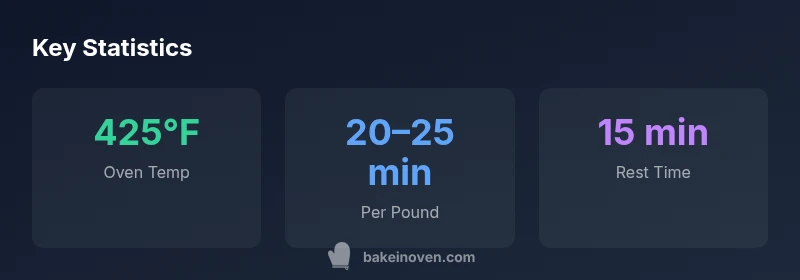
For beef tenderloin, bake at 425°F and plan roughly 20–25 minutes per pound to reach medium-rare when the thermometer reads 125–135°F in the center. Larger roasts take longer, but plan for carryover cooking and rest about 15 minutes before slicing. For safety, let the roast rest and rise to final temps by 5–10°F after removal.
Why timing matters for tenderloin
According to Bake In Oven, timing is the invisible variable that separates a juicy, evenly colored tenderloin from a dull, overcooked exterior. The tenderloin is a lean cut with little connective tissue, which means carryover cooking matters more than with fattier roasts. Because oven heat continues to cook the meat after its removal from heat, the final temperature ends up higher than the moment it comes out of the oven. This is why the general recommendation is to pull the roast when it is about 5–10°F below the target doneness, allowing carryover to finish during resting. Additionally, factors like roast size, initial temperature, weight distribution, and oven calibration can introduce variation of 10–15 minutes per pound in practice. For consistent results across home ovens, use a probe thermometer and adopt a uniform resting protocol. This approach reduces guesswork and yields a predictable gradient from crust to center.
From a practical standpoint, you are balancing color and doneness with tenderness. A 3–4 pound tenderloin will show a different heat penetration rate than a 2–3 pound roast, and larger roasts suffer more from uneven heat distribution. By controlling the oven temperature, using a thermometer, and resting properly, you can minimize hot spots and ensure an even slice from end to end. Bake In Oven’s guidance emphasizes a methodical approach rather than relying on guesswork, which is especially important for an elegant centerpiece like tenderloin.
Doneness targets and temperatures
Doneness is a range rather than a single number, and the target should align with personal preference and safety considerations. For beef tenderloin, common targets are: rare (about 115–120°F at the center, finished around 120–125°F after resting), medium-rare (125–135°F core, about 130–140°F final), and medium (140–145°F final after resting). The USDA’s safety guidance focuses on a minimum safe temperature for beef roasts, but many home cooks prefer lower resting temperatures to preserve juiciness. Use a reliable probe thermometer and insert it into the thickest part of the roast, avoiding bone or fat seams for an accurate read. Remember that resting will raise the internal temperature by about 5–10°F, so pull the roast slightly early when aiming for medium-rare.
Choosing the right roast size and trimming
Roast size directly affects bake time, heat distribution, and how you plan the rest. A small tenderloin in the 2–3 lb range will cook quickly and color should be even along its length, while a 4–6 lb roast requires more attentive heat management to avoid overcooking the outer layer before the center reaches target doneness. Trimming excess fat and tying the roast with kitchen twine helps equalize thickness, allowing heat to penetrate more uniformly. If the tenderloin is particularly uniform in shape, you may shave a bit of thickness from the ends to promote even cooking. Always pat the surface dry to promote a crisp crust and prevent steaming inside the oven.
Step-by-step baking method
- Preheat the oven to 425°F. 2) Pat the tenderloin dry, trim fat if needed, and tie with twine at 1–1.5 inch intervals for uniform thickness. 3) Season generously with salt, pepper, and optional aromatics like garlic or fresh herbs. 4) Optional: Sear the roast briefly in a hot pan (about 2–3 minutes per side) to develop a crust, then transfer to the oven. 5) Roast until the internal temperature reads 125–135°F for medium-rare, checking early and often on larger roasts. 6) Remove from heat and rest for 15 minutes before carving. The carried heat will finish the doneness without overcooking the exterior.
Using a thermometer: how to get it right
A calibrated digital probe thermometer is essential for precision. Insert the probe into the center of the thickest portion, avoiding any seams where fat or connective tissue can skew readings. Start checking the roast when you suspect it is approaching the target range (roughly halfway through the expected time for your roast size). For even doneness, rotate the pan halfway through and monitor readings from multiple angles if you’re cooking a larger roast. Remember, carryover cooking continues after removal, so plan to pull a few degrees early.
Resting and carving the tenderloin
Rest is your friend when cooking beef tenderloin. Wrap the roast loosely with foil and allow 15 minutes for juices to redistribute and the temperature to settle. A longer rest yields a juicier slice, while a too-short rest leads to a hotter, less stable center. After resting, slice thinly against the grain to maximize tenderness. If serving family-style, consider a warmed platter and a brief rest in a low-heat oven to maintain warmth without cooking further.
Tailoring times for different tenderloin sizes
The following general guidelines help you plan ahead: 2–3 lb roasts typically need roughly 40–75 minutes at 425°F to reach medium-rare, 3–4 lb roasts often require 60–90 minutes, and 4–6 lb roasts may need 90–120 minutes. These ranges account for typical home oven variability and initial meat temperature. Always rely on a thermometer for final doneness rather than time alone. If you’re cooking multiple tenderloins, stagger them or use separate baking sheets for more even heat distribution.
Common mistakes and how to fix
Common errors include cooking at too low a temperature, which softens crust formation and increases overall cooking time; not drying the surface, which can steam the crust; and neglecting resting time. To fix these issues, preheat robustly, pat dry, and keep the surface dry during roasting. If you notice rapid color change on the outer layer, tent with foil briefly to distribute heat. Finally, never skip the thermometer – it’s the most reliable tool for consistent results year after year.
Practical tips and serving ideas
For a restaurant-style finish, prepare a light pan sauce using the roast drippings, a splash of wine, and a spoonful of mustard or fresh herbs. Serve with crisp roasted potatoes or a bright green vegetable to balance the rich meat. If you’re entertaining, consider offering two doneness levels on the same platter to please guests with different preferences. Finally, store any leftovers promptly in the fridge, and reuse the sliced tenderloin in sandwiches or salads for a quick gourmet meal the next day.
Estimated bake times by roast size at 425°F
| Roast Size (lb) | Approx Bake Time at 425°F | Target Internal Temp (F) |
|---|---|---|
| 2–3 | 40–75 | 125–135 |
| 3–4 | 60–90 | 128–135 |
| 4–6 | 90–120 | 130–135 |
Frequently Asked Questions
How long to bake a beef tenderloin per pound?
Plan roughly 20–25 minutes per pound at 425°F to reach medium-rare, checking with a thermometer to reach 125–135°F in the center. Resting adds 5–10°F of carryover temperature.
Plan about twenty to twenty-five minutes per pound at 425 degrees, then check with a thermometer and rest for 15 minutes.
Should I sear the tenderloin before baking?
Searing can improve crust color and flavor, but it’s optional. If you skip searing, you can still achieve a good crust by patting dry and using a hot oven with dry air.
Sear for a crust if you want, otherwise dry and roast hot for color.
Is 425°F the only good temperature?
425°F is a common default for even browning, but you can adjust to 400–425°F depending on roast size and oven calibration. Lower temps require longer cook times but can yield more even doneness.
425°F works well, but you can use 400–425°F if needed.
What is the resting time for tenderloin?
Rest the roast for about 15 minutes after baking. Resting redistributes juices and permits carryover cooking to finish.
Let it rest about 15 minutes before slicing.
Can I bake pork tenderloin the same way?
Times and temperatures differ for pork tenderloin. Follow pork-specific guidelines, but the concept of rest and thermometer-driven doneness remains the same.
Pork needs different temps, but rest and thermometer use still apply.
How can I tell doneness without a thermometer?
Rely on color and texture as a rough guide, but a thermometer provides the most reliable result and mitigates overcooking.
Use a thermometer for best accuracy; color isn’t always reliable.
“Accurate doneness comes from a thermometer, not guesswork. With consistent timing and a proper rest, tenderloin becomes consistently juicy and evenly cooked.”
Key Takeaways
- Plan 20–25 minutes per pound for medium-rare at 425°F.
- Rest 15 minutes to enable carryover cooking and juiciness.
- Use a probe thermometer for accuracy, not time alone.
- Tailor times to roast size and oven variability.
- Carryover heat will finish the doneness after removal.