How to Bake Roast Beef in the Oven: A Complete Guide
Master oven-roasted beef with clear steps, temperatures, resting times, and carving tips. This Bake In Oven guide covers cut selection, browning, doneness targets, and safe slicing for juicy results every time.


Learn how to bake roast beef in the oven with confidence. This steps-focused guide covers cut selection, searing, roasting temps, doneness targets, resting, and slicing for juicy, flavorful slices every time. Start with a calm prep, a reliable thermometer, and a plan you can repeat. Whether you’re preparing a Sunday roast or weeknight family dinner, the method scales for different sizes.
Why Oven-Roasted Beef Is Worth Mastering
If you want consistently juicy, flavorful beef, knowing how to bake roast beef in the oven is a foundational skill for home cooks. Oven roasting concentrates flavor, creates a caramelized crust, and lets you control doneness with precision. According to Bake In Oven, mastering a simple, repeatable method reduces waste and makes weeknight dinners feel special. In this guide you’ll learn how to select the right cut, prepare it for roasting, set the correct temps, and rest the meat for maximum juiciness. You’ll also discover practical tips for sizing, timing, and carving that ensure even slices and minimal shrinkage. The goal is not to overwhelm you with gadgets, but to give you a clear, kitchen-tested process you can rely on. Throughout, you’ll see why a thermometer is your best friend and how small tweaks in heat and rest time can yield noticeably better results. Whether you’re cooking for a casual family meal or a holiday roast, the steps below scale with roast size and appetite. Bake In Oven team has designed this approach to be straightforward, repeatable, and forgiving enough for cooks of all levels.
Selecting the Right Cut and Roast Size
Choosing the right cut sets the foundation for a forgiving roast. Rib roasts deliver tenderness and rich flavor, sirloin tip roasts offer good value and reliable cook-through, and bottom round roasts are leaner with a distinct beefy character. For most dinners, a 3- to 5-pound (1.4–2.3 kg) roast provides a practical balance between cooking time and slices. Bone-in roasts tend to stay juicier and develop deeper flavor, while boneless roasts carve more evenly and easier to portion. If you’re unsure, start with a bone-in rib roast for a classic result. Size your roast to the pan and oven, then allow for a comfortable resting period after cooking. Remember: thickness influences cook time, so it’s wiser to rely on temperature rather than exact minutes when aiming for medium-rare or medium.
Preparing for Roasting: Seasoning, Drying, and Browning
Pat the roast dry with paper towels to remove surface moisture; this helps form a delicious crust. Generously season with salt, pepper, and any aromatics you like (garlic, rosemary, thyme). For best results, let the seasoned beef sit at room temperature for 30–60 minutes before roasting. A quick sear in a hot skillet for 1–2 minutes per side creates an appealing crust and locks in juices, though it’s optional if you’re using a higher initial oven temperature. If you skip searing, you’ll still achieve a tasty crust with a hotter oven and a longer roast. Use a sturdy rack inside a roasting pan so heat circulates evenly.
Temperature, Doneness, and Timing
The easiest way to guarantee desired doneness is to use a meat thermometer. Plan for rare at 120–125°F (49–52°C), medium-rare at 130–135°F (54–57°C), and medium at 140–145°F (60–63°C). Remember that carryover cooking will raise the internal temperature by about 5–10°F after you remove the roast from heat. Aim to pull the beef a few degrees below your target, then rest before slicing. Starting at 325–350°F (163–177°C) lets the roast cook evenly; if your schedule allows, you can use higher heat for a shorter time but monitor closely to avoid overdoing the edges.
The Roast Process: Methods and Timelines
There are two reliable approaches to oven roasting. Conventional roasting involves cooking at a steady moderate temperature (about 325–350°F / 163–177°C) until the target internal temperature is reached. The reverse-sear method begins with a higher temperature to jump-start browning and then finishes at a lower temperature to finish cooking gently. Either method benefits from starting with the roast at room temperature and using a rack to promote even heat. Times are approximate: plan for roughly 15–20 minutes per pound for medium-rare at 325–350°F, but rely on a thermometer rather than clocking minutes alone. Adjust for roast size, oven performance, and plate temperature.
Resting, Slicing, and Serving
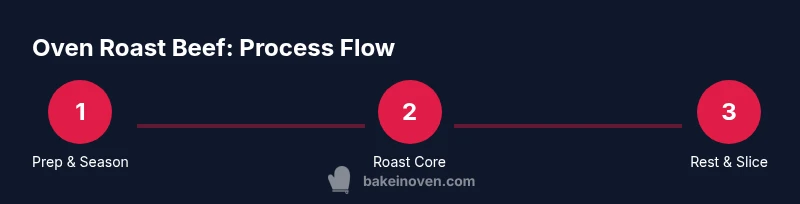
Resting is essential to redistribute juices and keep slices moist. Tent loosely with foil for 10–20 minutes after removing from the oven. Slice thinly against the grain for tenderness, then fan slices for even plates. Serve with a simple pan sauce or horseradish cream to lift flavors. If you plan leftovers, slice after resting and store in shallow containers to cool quickly, then refrigerate promptly. This sequence helps you maintain moisture while preserving slice quality for sandwiches or hot entrees.
Common Mistakes and How to Avoid Them
Mistakes often come from skipping a thermometer, opening the oven door too frequently, or cooking straight from cold. Use a reliable thermometer and avoid guessing doneness. Let the meat rest so juices redistribute rather than running to the cutting board. Don’t over-season in the early stages; you can adjust salt at the end if needed. A grainy crust happens when the surface moisture isn’t removed properly; pat dry and use high oven heat for a crisp exterior. Finally, choose a roast size that fits your pan and oven to ensure even cooking.
Make-Ahead and Storage Ideas
Leftover roast beef stays moist when wrapped tightly and stored in the refrigerator for 3–4 days. For longer storage, freeze in individual portions up to 2–3 months. Thaw in the fridge, then reheat gently to avoid drying out. Use slices for deli-style sandwiches, reheated with gravy, or as a protein option in salads and wraps. You can also repurpose leftovers into beef stroganoff or soup stock, maximizing your roast’s value.
Tools & Materials
- Oven(Preheated to target temperature (325–350°F / 163–177°C))
- Roasting pan with rack(Elevates meat for even heat circulation)
- Meat thermometer (instant-read)(Probe or dial thermometer for accurate doneness)
- Carving knife(Sharp blade for clean slicing)
- Cutting board(Stable surface for slicing)
- Tongs(Optional for turning meat during sear)
- Paper towels(Dry surface before seasoning)
- Parchment paper(Optional lining for easy cleanup)
- Foil(Tent roast during resting)
- Kitchen timer(Remind for rest or check temps)
Steps
Estimated time: 60-90 minutes
- 1
Preheat and prep
Preheat the oven to 325–350°F (163–177°C). Remove the roast from the fridge, pat dry, and gather seasonings. This ensures even browning and accurate thermometer readings.
Tip: Starting with a dry surface helps form the crust and improves flavor. - 2
Season and rest
Pat roast dry again if needed, rub with salt, pepper, and aromatics. Let the seasoned beef sit at room temperature for 30–60 minutes before roasting.
Tip: Salt timing matters: 40–60 minutes brings surface seasoning into the crust without drawing out too much moisture. - 3
Sear for crust (optional)
In a hot skillet, sear roast 1–2 minutes per side to develop crust. This step is optional if you’re using a higher initial oven temperature.
Tip: Heat should be very high; avoid overcrowding the pan. - 4
Roast with thermometer
Transfer to a rack in the roasting pan. Roast until internal temp reaches target (see temps above) using thermometer to monitor progress.
Tip: If using reverse-sear, begin with lower temp and finish with sear. - 5
Rest the roast
Remove from heat a few degrees early and let rest 10–20 minutes under foil to redistribute juices.
Tip: Avoid slicing too soon; resting improves juiciness. - 6
Slice and serve
Slice against the grain into thin slices; fan slices for even plates and serve with sauce or horseradish.
Tip: Thin slices are more tender and easier to chew.
Frequently Asked Questions
What is the best cut for a roast beef?
Rib roast or sirloin tip are popular for flavor and reliable doneness. Choose based on budget, marbling, and preferred texture.
Rib roast or sirloin tip are great choices; pick based on flavor and budget.
Should I sear the roast before roasting?
Searing adds a crust and depth of flavor but isn’t mandatory if you start with a higher oven temperature or use reverse-sear.
Searing helps flavor, but you can skip it if you’re careful with heat and timing.
What internal temperature indicates medium-rare?
Medium-rare is about 130–135°F (54–57°C). Pull the roast at 125–130°F (52–54°C) to allow carryover cooking.
Aim for 130–135°F, then rest to finish rising in temperature.
How long does it take to roast a 4-pound beef?
Times vary; rely on a thermometer. A rough guideline is 15–20 minutes per pound at 325–350°F, but check doneness with a probe.
Around 15–20 minutes per pound, but always verify with a thermometer.
Can I prepare this roast in advance?
Season and dry the roast up to a day ahead; refrigerate, then bring to room temp before roasting for best results.
Yes, you can season ahead and refrigerate, then roast when ready.
How should I store and reheat leftovers?
Store sliced leftovers in airtight containers. Reheat gently with a little broth or gravy to prevent drying.
Slice and reheat slowly with moisture to keep juiciness.
Watch Video
Key Takeaways
- Roast beef quality starts with cut choice and prep.
- A thermometer is essential for consistent doneness.
- Resting is crucial for juiciness and slice texture.
- Slicing against the grain yields tender portions.