How to Oven Bake Pork Steaks: Step-by-Step Guide
Learn to oven bake pork steaks with a reliable method for juicy, flavorful results. This guide covers prep, seasoning, timing, temperature, and tips to avoid drying out, plus storage and reheating advice.


You can reliably oven bake pork steaks to juicy, evenly cooked perfection. The key is selecting 1–1.5 inch thick cuts, pat drying, seasoning, and cooking at a moderate 375–400°F until they reach 145°F internal temp, then resting. This guide shows practical steps, timing, and flavor ideas for home bakers.
Why oven-bake pork steaks deliver reliable results
According to Bake In Oven, oven-baking pork steaks offers consistent juiciness and hands-off timing for home bakers. This method minimizes flare-ups and ensures a uniform cook from edge to center, which can be hard to achieve on the stovetop. When you choose a pork steak around 1 to 1.5 inches thick, pat it dry, and season well, you create a foundation that renders fat gradually and browns the surface evenly. The goal is to reach an internal temperature of 145°F (63°C) and then let the meat rest briefly to redistribute juices. A steady oven temperature prevents hot spots and helps maintain moisture, even with lean cuts. Keep in mind that the resting period is crucial: it finishes the cooking gently and improves tenderness. This article from Bake In Oven is designed to give you practical steps you can apply tonight.
Selecting pork steaks and prepping for oven baking
The quality of your result starts with the cut. Look for center-cut pork steaks around 1–1.5 inches thick with some marbling but minimal sinewy connective tissue. Trim any excess fat, pat the surface dry with paper towels, and bring the meat to room temperature for 15–20 minutes before cooking. Salt lightly at this stage to draw moisture to the surface, then pat dry again to ensure a crisp exterior. If you have time, a quick brine (30 minutes to 2 hours) can further improve juiciness, but this step is optional. Prepare your pan with parchment paper or a light coating of oil, so the steak lifts easily and browns nicely. This prep layer reduces sticking and helps you handle the steak without tearing the seasoned surface.
Temperature, timing, and doneness targets
Juicy pork steaks come from controlled heat and careful timing. Bake at 375–400°F (190–205°C) for most 1–1.5 inch steaks, checking internal temperature after the first 18 minutes. Use an instant-read thermometer and aim for 145°F (63°C) as the target; allow a 3-minute rest. If using a thicker cut, you may need up to 22–28 minutes. If you want more browning, finish with a brief 2–3 minute broil on high, watching closely. Avoid going beyond 155–160°F to preserve moisture. Remove from the oven as soon as the thermometer hits the target, because carryover cooking will push the final temperature higher during resting.
Seasoning ideas: dry rubs, marinades, and flavor boosters
Simple dry rub: 1 teaspoon salt, 1/2 teaspoon black pepper, 1/2 teaspoon garlic powder, 1/2 teaspoon smoked paprika, and a pinch of sugar for browning. For a quick marinade, mix citrus juice, olive oil, minced garlic, and herbs; marinate 15–30 minutes for mild flavor. If you prefer a richer crust, brush with a light glaze during the last 5 minutes of bake. Use parchment to prevent sticking and allow seasoning to rest on meat so flavors penetrate the surface. Remember to pat dry after marination to maintain a crisp exterior.
Step-by-step oven-baking method (overview)
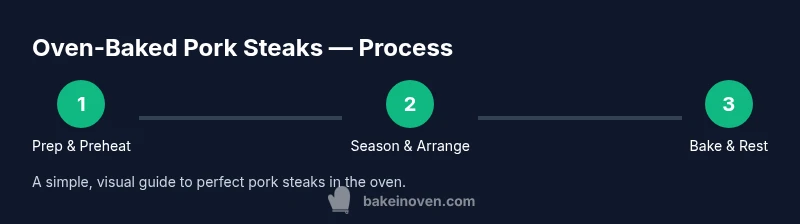
This method breaks the bake into approachable phases so you can cook pork steaks with confidence. Start with proper prep, then apply flavor, arrange on a prepared sheet, bake to safe doneness, and finish with a short rest. The steps below in the dedicated STEP-BY-STEP block provide precise actions, times, and tips to ensure consistency across ovens and cut variations.
Finishing touches, resting, and plating
Rest is as important as heat. After removing the pork steaks from the oven, tent them loosely with foil and let them rest for 3–5 minutes. Resting allows juices to redistribute, keeping slices moist rather than watery. Slice against the grain to maximize tenderness, and consider a light squeeze of lemon or a pat of herb butter to brighten flavors. Serve with a simple side like roasted vegetables, mashed potatoes, or a crisp salad to balance the meal. For extra flavor, drizzle a fast pan sauce made from pan drippings, a splash of stock, and a teaspoon of Dijon.
Common mistakes and how to fix them
A common error is cooking at too high a temperature, which browns the outside while leaving the interior underdone. Another mistake is skipping pat-drying, which robs you of a crisp exterior. If the pork looks pale, it may need more seasoning or a short rest before slicing. Overcooking is the most frequent culprit of dry meat; always monitor with a thermometer. Finally, avoid overcrowding the pan; space between steaks allows hot air to circulate and promotes even browning.
Storing leftovers and reheating without dryness
Leftovers should be cooled briefly and stored in a shallow container in the refrigerator for up to 3–4 days. Reheat gently to preserve moisture: warm in a 275–300°F oven until heated through, or slice thin and reheat quickly in a skillet with a splash of broth or water. If you plan to freeze, flash-freeze slices on a sheet pan first, then transfer to an airtight bag for up to 2–3 months. Reheat from frozen by warming in a covered dish with a little added liquid to avoid drying.
Tools & Materials
- rimmed baking sheet (sheet pan)(Line with parchment for easy cleanup)
- parchment paper(Prevents sticking and favors browning)
- meat thermometer (instant-read)(Target 145°F; verify at thickest part)
- tongs(For turning and loading steaks without tearing)
- paper towels(Pat dry surface before seasoning)
- small bowl(Mix rubs or marinades)
- oil spray or neutral oil(Light coating to prevent sticking)
- aluminum foil(Tent steaks during resting if needed)
- sharp knife(For trimming fat and slicing)
Steps
Estimated time: 40-60 minutes
- 1
Preheat and prep
Preheat your oven to 375–400°F (190–205°C). Line a rimmed baking sheet with parchment and keep it ready. Pat the pork steaks dry with paper towels, then season lightly with salt to draw surface moisture. Letting the steaks sit briefly helps create a better crust.
Tip: Starting with a hot oven and dry surface improves browning and juiciness. - 2
Season and marinate
Apply a balanced seasoning or a quick marinade. If using a rub, press it gently into the meat so it adheres. For marinades, skip overly acidic mixtures that can begin to toughen meat if left too long; 15–30 minutes is plenty.
Tip: Even seasoning on both sides ensures flavor from edge to center. - 3
Arrange on pan
Place the steaks on the prepared sheet pan, leaving at least 1/2 inch of space between each piece. If you have a wire rack, place it on the sheet to promote air circulation for crisper exteriors.
Tip: Space prevents steaming and promotes browning. - 4
Bake and monitor
Bake for 18–28 minutes depending on thickness, then check the internal temperature with an instant-read thermometer. Target 145°F (63°C). If needed, finish with a 2–3 minute broil for extra color, watching closely.
Tip: Start checking early; carryover heat will finish the job. - 5
Rest and verify
Remove from oven and tent loosely with foil for 3–5 minutes. Resting redistributes juices and helps maintain moisture. After resting, verify the temperature again before serving.
Tip: Rest is essential for a juicy bite. - 6
Finish and serve
Slice against the grain and plate with your favorite sides. If desired, whisk pan drippings with a splash of stock to create a fast sauce.
Tip: A quick pan sauce elevates the dish with minimal effort.
Frequently Asked Questions
What thickness works best for oven-baked pork steaks?
Aim for 1 to 1.5 inches thick. This range heats evenly and stays juicy; thinner cuts dry faster, thicker cuts may need more time or a higher finish heat.
Aim for pork steaks 1 to 1.5 inches thick for even cooking and moisture retention. Thinner cuts dry out more quickly, thicker ones may require extra time or a quick browning finish.
Should I marinate or dry rub before baking?
Both work. A dry rub is simplest and builds a crust, while a light marinade adds flavor and moisture. Limit acidic marinades to 15–30 minutes to avoid texture changes.
Both marinating and rubbing are fine. A dry rub gives a crust, a brief marinade adds moisture. Don’t overdo the acid—keep it to 15–30 minutes.
Can I bake pork steaks directly on a sheet without a rack?
Yes, you can bake directly on a lined sheet. A rack is optional but preferred if you want the bottom to brown evenly and air to circulate.
Yes, you can bake on a lined sheet. A rack helps with air circulation and browning, but it’s not strictly required.
What is the safe internal temperature for pork steaks?
Cook to 145°F (63°C) and rest for 3 minutes. Carryover heat will raise the temp slightly, finishing the cooking process safely.
Cook pork steaks to 145 degrees, then rest for at least three minutes. Heat will carry over a bit and finish cooking.
How can I reheat leftovers without drying them out?
Reheat slowly in a 275–300°F oven until warmed through, or slice thin and reheat in a skillet with a splash of stock. Add moisture if needed.
Reheat slowly in a low oven or in a skillet with a little liquid to keep moisture. Slice if it helps even reheating.
Is a finish under the broiler useful for pork steaks?
A brief, 1–3 minute broil can enhance browning. Keep a close eye to prevent scorching.
A quick broil can improve browning, but watch closely to avoid burning.
Watch Video
Key Takeaways
- Season generously for flavor depth.
- Monitor internal temp to 145°F for juiciness.
- Rest before slicing to retain juices.
- Line with parchment for easy cleanup.
- Small steps yield consistent results in any oven.