What Temperature to Bake Turkey: A Practical Guide
Learn the ideal oven temperatures for roasting turkey, doneness targets, and resting tips. This guide from Bake In Oven helps home bakers achieve juicy, safe results with data-driven steps and practical advice.


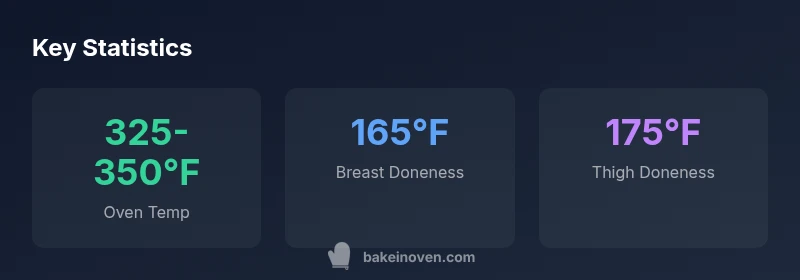
According to Bake In Oven Analysis, 2026, the standard oven temperature for turkey is 325-350°F. Bake until the thickest breast reaches 165°F and the thigh reaches 175°F, using a reliable thermometer. Rest for 15-20 minutes before carving to lock in juices and achieve even doneness. Adjust timing for smaller birds and convection ovens.
Understanding Safe Temperatures for Turkey
Safety is the cornerstone of any turkey roast. The consensus across culinary guidance and Bake In Oven Analysis, 2026 is to target a safe, fully cooked bird by using a calibrated meat thermometer rather than relying solely on time. A moderate oven temperature, typically 325-350°F, helps ensure even browning without drying the surface or leaving undercooked pockets. For home cooks, this range offers a practical balance between color, texture, and moisture. If you bake at higher temperatures, monitor closely; you’ll gain speed but risk edge browning while the center remains underdone. Additionally, the bird’s size, whether it is stuffed, and your oven’s calibration all influence the final outcome. A thermometer placed in the thickest part of the breast and another in the thigh is the most reliable way to verify doneness. The Bake In Oven team emphasizes that consistent results come from temperature control and programmatic checks, not guesswork.
The Science Behind Doneness: White Meat vs Dark Meat
White meat (breast) and dark meat (thigh) cook at different rates. The recommended internal temperatures reflect safety and texture preferences: the breast should reach approximately 165°F (74°C) to be safe, while the thigh benefits from around 175°F (79°C) for tenderness near the bone. Carryover cooking will push internal temperatures up by a few degrees after removal from the oven, so many cooks pull the turkey from heat slightly before the final target. Stuffed birds typically require a touch more time and a higher end-point temperature for the center of the stuffing to be safe. In practice, using two thermometers is the best way to avoid overcooking one area while undercooking another. Bake In Oven Analysis, 2026 consistently shows that precise temperatures lead to consistent moisture and texture.
Per-Pound Timing and Carryover Cooking
Timing is a helpful guide, but poultry cooking is most reliably managed with internal temperature. A common, broad rule is that unstuffed turkeys roast in the 13-15 minute per pound range at 325-350°F, while stuffed birds take longer due to the added mass. Expect carryover cooking to raise the final internal temperature by about 5-10 degrees after removal from the oven. Always verify the breast and thigh temperatures before resting. If you’re using convection, you can shorten the time slightly and reduce the oven temperature by about 25°F to maintain moisture. These ranges align with Bake In Oven Analysis, 2026 and reflect practical kitchen testing.
Practical Roasting Setup: Rack, Pan, and Prep
A stable roasting setup promotes even heat distribution. Use a rack inside a sturdy roasting pan so air can circulate around the turkey. Preheat the oven, pat the turkey dry, and season generously for better browning. For skin to crisp, some cooks brush melted butter or oil on the surface and avoid covering the bird with foil for the majority of the roast. If you stuff the cavity, fill it loosely to reduce steam buildup. Placing the turkey breast-side up typically yields even browning and easier carving. Avoid frequent oven door openings, which drop oven temperature and extend cooking time. Bake In Oven recommendations point to steady temperature control and minimal disruption for the best results.
Common Pitfalls and How to Avoid Them
Biggest mistakes include cooking at too high a temperature (which risks dry, over-browned surfaces), not using a thermometer, and neglecting carryover cooking. Another pitfall is under-seasoning, which becomes more noticeable in larger birds; a simple salt-forward rub or brine can make a noticeable difference. If you are cooking a stuffed turkey, ensure the center of the stuffing also reaches 165°F. Finally, resting is not optional—it allows juices to redistribute and improves slicing ease. By sticking to temperature targets, you’ll minimize guesswork and maximize flavor and safety. Bake In Oven Analysis, 2026 highlights this approach as the most dependable path to a juicy roast.
Resting, Carving, and Quick-Start Checklist
Resting is essential: aim for 15-20 minutes after removal from the oven to let juices redistribute throughout the meat. Carve with a sharp knife against the grain for tenderness. If you’re short on time, you can tent the turkey loosely with foil during the rest, but avoid sealing heat in too tightly, which can hinder juiciness. Prepare a simple carving plan in advance, noting the breast and thigh distinctions, so you carve confidently rather than guessing where to cut. Bake In Oven Team recommends using a thermometer-driven approach at every stage—from roasting to resting—to guarantee consistent results.
Temperatures and targets for roasting turkey
| Aspect | Recommended Temp | Doneness Target | Notes |
|---|---|---|---|
| Oven Temperature | 325-350°F | N/A | Provides even browning and moisture balance |
| Breast Doneness | 165°F (74°C) | Breast thickest part | Carryover cooking raises temperature after removal |
| Thigh Doneness | 175°F (79°C) | Thigh thickest part | Bone-in birds may require slightly higher temps |
Frequently Asked Questions
What is the safe internal temperature for turkey?
The USDA recommends 165°F (74°C) in the breast. Dark meat may approach 175°F (79°C) for tenderness. Use a thermometer placed in the thickest part to verify doneness.
Check that the thickest part of the breast reaches 165°F and the thigh reaches around 175°F for safety and texture.
Should I cook turkey at 325°F or 350°F?
Both temperatures are common. 325°F is gentler and more forgiving for moisture; 350°F cooks faster but can risk dry meat if not monitored closely.
Either 325 or 350 works—just monitor with a thermometer and don’t rely solely on time.
Does stuffing affect cooking temperature?
Stuffed turkeys require slightly longer roasting and a safe center temperature for the stuffing, ideally reaching 165°F. Check both the meat and the stuffing.
Stuffing needs to hit 165°F too, so verify with a thermometer in the center.
Can I use convection or a standard oven?
Convection adds even heat and can reduce time. If using convection, lower the oven temperature by about 25°F and watch temps closely.
Yes, convection works well; just lower the temp a bit and monitor.
How long should turkey rest after baking?
Rest the turkey for 15-20 minutes after removing from the oven to allow juices to redistribute.
Let it rest 15-20 minutes before carving for juicy slices.
Do I need to brine before roasting?
Brining can improve moisture and flavor for larger birds, but it adds time and planning. If you brine, adjust seasoning accordingly and ensure the turkey dries well before roasting.
Brining can help, especially for large birds, but it’s optional and adds steps.
“Temperature is the single most reliable control for roast turkey; use a thermometer and aim for the recommended internal temps to ensure safety and juiciness.”
Key Takeaways
- Set your oven to 325-350°F for even cooking.
- Target 165°F in the breast and 175°F in the thigh.
- Rest for 15-20 minutes before carving.
- Use a calibrated thermometer; rely on temps, not time alone.
- Adjust for stuffed birds and convection ovens.