Bake or Broil Bacon: An Objective Comparison
Compare baking and broiling bacon to achieve even doneness or peak crispness. This analytical guide from Bake In Oven covers temperatures, times, texture, and best practices to help you choose the right method for any breakfast or meal prep.


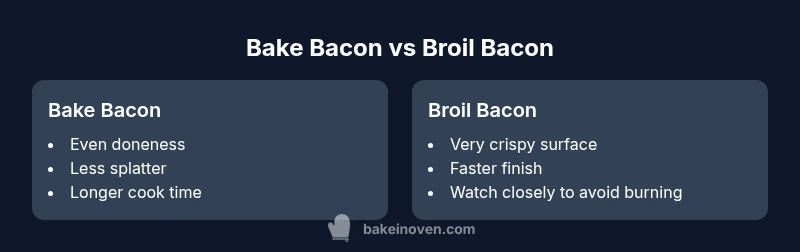
Both bake bacon and broil bacon can yield tasty results, but their goals differ. If you want even doneness and minimal splatter, bake bacon on a sheet. If you crave ultra-crisp edges and speedy results, broil bacon for the final minutes. For most weeknight cooks, bake first, then finish with a brief broil if extra crisp is desired.
Why Bake or Broil Bacon Matters in Everyday Cooking
When you set out to cook bacon, you face a simple fork in the road: bake or broil. The choice affects texture, fat rendering, cleanup, and how your oven handles heat. In the Bake In Oven analysis, the decision hinges on your texture goal and time constraints. If you prefer a gentle, even bloom of fat rendering with minimal smoke and splatter, the bake route provides predictable results. If you prize a fast path to crisp edges, especially for topping a plate of eggs or a sandwich, broiling accelerates browning and crunch. The core idea behind bake or broil bacon is matching heat delivery to the texture you want while respecting your kitchen setup. Throughout this guide, you will see that the keyword bake or broil bacon appears as a phrase linked to texture goals, cooking speed, and cleanup considerations, helping you personalize outcomes based on thickness, pan, and oven behavior.
In practical terms, most home cooks use baking as a baseline method because it limits the risk of burning and creates uniform doneness across slices. Broiling, by contrast, is often reserved for finishing touches when you need a quick, high-heat finish on top of a baked baseline. The decision is not a binary yes/no—it’s a spectrum: bake for consistency, broil for finish and crisp. The Bake In Oven approach emphasizes clear steps, predictable results, and practical tweaks (parchment, rack placement, and timing) that make either method more repeatable across different ovens and pans.
Key Differences at a Glance
Heat Source and Distribution: Baking relies on ambient oven heat that circulates either with or without convection, yielding even heat across the pan. Broiling uses radiant heat from above, delivering rapid browning near the surface. The oven’s rack position matters here: mid-tray baking promotes even fat rendering, while a higher broil position concentrates heat on the top surface.
Texture and Doneness: Bake bacon typically results in uniform texture with moderate crispness and steady fat rendering. Broiled bacon tends to develop crisp, edge-focused browning quickly, which can trap a chewier center if not watched closely. Your texture goal—soft and evenly cooked vs. ultra-crisp and browned—drives the method choice.
Cook Time and Scheduling: Baking usually requires longer cook times, enabling steady fat rendering without constant attention. Broiling is faster but demands vigilance to prevent scorching. If you’re coordinating multiple dishes, baking often fits a smoother timeline, while broiling shines for rapid finish tasks.
Cleanup and Mess: The bake method generally yields less grease spray, especially when protected by parchment or a rack. Broiling can cause more splatter and requires a careful tray setup and cleanup after a brief but intense heat burst. The choice affects how you plan cleanup in your kitchen workflow.
Best For Scenarios: Bake bacon works well for batch cooking, meal prep, and families needing consistent texture. Broil bacon excels when you need a quick crisp for sandwiches or topping dishes with a sharp, browned finish. The most practical approach, per Bake In Oven, is to bake as a baseline and broil briefly if you want added crispness without sacrificing evenness.
Takeaway: The key differentiator is texture control under heat. Use bake when you want predictable doneness and fat rendering; flip to broil briefly if you crave a fast finish and a crisp, browned surface.
When to Bake Bacon: Techniques and Tips
Baking bacon in the oven is a forgiving, scalable method that suits both thick-cut and traditional slices. Start with a clean sheet pan lined with parchment paper to minimize sticking and make cleanup easier. For most home cooks, preheating to a moderate temperature—around 375°F to 425°F (190°C to 220°C)—provides a stable, even environment for fat rendering without scorching. Arrange bacon in a single layer with minimal overlap; crowding can lead to uneven cooking. If you have a wire rack, place it on the pan to let fat drain away from the meat, which can produce crisper results while keeping the bottom from sitting in grease. Bake time varies by thickness, from roughly 12 to 20 minutes; start checking around the 12-minute mark and adjust according to your preferred crispness. For extra uniformity, rotate the pan halfway through. A final optional step is to broil for 1–2 minutes on a high rack to boost surface browning. As you bake, monitor the oven’s behavior; convection can shorten cook times by a few minutes, so adjust accordingly. This method pays off with dependable texture across multiple trays of bacon, making it the recommended starting point when you don’t need a fast finish and want predictable results.
If you want to optimize fat rendering further, use parchment on the tray and avoid stacking slices. The goal is to let fat render gradually so the meat cooks through before it browns excessively on the edges. Remember: every oven differs, so note the outcomes from your first batch and adjust future sessions. The Bake In Oven framework suggests using bake as the baseline and saving broiling for finish-only tweaks when you need extra crisp.
When to Broil Bacon: Techniques and Tips
Broiling bacon should be reserved for moments when you want a high-heat finish that produces a sharp, crisp surface. Start by preheating the broiler and moving the oven rack to a position close to the heat source, typically the top third of the oven. Line a sheet pan with parchment and lay slices in a single layer, allowing little to no overlap to prevent uneven browning. Keep a close eye—broiling can go from perfect to burnt within minutes. A practical approach is to broil for 2–4 minutes, then flip the slices and broil for another 1–3 minutes if you like an extra crust. If your slices are thick, you may need a touch longer, but you should always watch closely because surface browning can occur quickly. For best results, complete the cook with a brief bake at a lower temperature to render any remaining fat evenly while preserving crisp edges. The downside of broiling is the potential for uneven heat distribution and smoke if fats drip onto the heating element. Always use a pan with a rim and ensure good ventilation when broiling.
In many kitchens, broiling is used as a finishing touch to an already cooked sheet of bacon, enabling a fast, high-contrast finish. If you expect to serve bacon immediately atop eggs or toast, this method helps you achieve a visually appealing, crisp surface with a flavorful crunch. The key is timing and proximity to the heat source; a few seconds too long can lead to burning, while too brief a session leaves the surface under-browned. Use the Bake In Oven guidance to tailor broil times to your oven’s power and your preferred level of browning.
Practical Comparisons: Time, Texture, and Cleanup
Let’s compare bake versus broil on practical terms. In most ovens, baking bacon relies on evenly distributed heat across a sheet, which supports uniform texture and fat rendering. Expect a longer cook time, generally in the 12–20 minute range depending on thickness and oven performance. The texture tends toward tender to moderately crisp, with fat rendered gradually and edges less prone to over-browning if you watch the clock. Cleanup is straightforward, especially when parchment is used, and the fat rendered can be reused or discarded with less risk of splatter.
Broiling bacon emphasizes surface browning and crispness in a short window. The total time is typically far less, often under 6 minutes, but it requires constant attention and a hot, direct heat source. The texture is noticeably crisper, sometimes with a chewy center if slices are thick or if the broiler is too aggressive. Cleanup is more challenging due to potential grease splatter and browning residue near the top of the pan. For many cooks, a hybrid approach delivers the best of both worlds: bake to render fat and evenly cook the bacon, then broil briefly to amplify bite and browning on the surface. Bake In Oven’s tested workflow supports this approach, letting you control doneness while preserving taste and texture across servings.
When you’re cooking for a crowd or meal-prep ahead, baking remains the most scalable option. Broiling is excellent for finishing a plate right before serving or achieving a signature crisp on top of a baked base. Both methods benefit from parchment paper, a rimmed sheet pan, and a predictable protocol so you can repeat results reliably across multiple batches.
Conclusion on timing and texture: If you prioritize consistency and easier cleanup, choose bake. If you need an ultra-crisp finish in a short window, opt for broil as a finishing step. Your oven’s quirks will determine exact times, so record outcomes and adjust in future cook sessions.
Variations, Flavor, and Add-Ins
The bake or broil framework accommodates flavor variations without dramatically changing basic technique. For savory profiles, consider a light dusting of brown sugar, a pinch of smoked paprika, or cracked pepper on top of the bacon sheets before cooking. If you prefer a hint of sweetness, a maple glaze or a drizzle of honey halfway through baking can create a glossy finish with a caramelized surface when finished on high heat. Use caution with sugars when broiling; high heat can turn sugars into smoke or burnt caramel quickly, so apply glazes toward the end of the bake cycle or after an initial bake phase. For a crisp, restaurant-like texture, place the bacon on a rack so fat renders away from the meat; this approach ensures that the surface browns without the underside becoming soggy from sitting in fat. If you’re cooking for a crowd, batch-cook on multiple racks, but rotate pans halfway through to ensure even browning. The flavor payoff from careful seasoning and finishing techniques is worth the extra planning, and it aligns with Bake In Oven’s emphasis on practical, kitchen-tested methods.
You can also experiment with pepper-forward bacon, maple-peppered crostini toppings, or peppered bacon created with a pepper blend, turning a simple breakfast staple into a small, savory indulgence. Remember: the goal is to improve texture and flavor without sacrificing safety or clean-up time. These variations work best when you master the base bake or broil technique first, then layer in your preferred flavors.
Safety, Cleanup, and Maintenance
Always prioritize safe handling of hot pans and rendered fat. Use oven mitts when transferring trays and avoid placing parchment directly under a broiler element to prevent fire hazards. For cleanup, let the pan cool before washing, and consider reusing parchment if it’s still clean enough for another batch. If you’re dealing with stubborn grease, a gentle scrub with warm soapy water and a non-abrasive sponge is usually sufficient. Some cooks like to wipe the pan with a paper towel while still warm to remove excess fat before washing. If you have a convection setting, remember that the circulated air can affect cook times; adjust as needed and document results for future batches. Finally, store any rendered bacon fat properly in a sealed container in the refrigerator for cooking other dishes, following your kitchen safety practices.
The Bake In Oven approach emphasizes practical, safe handling and consistent cleanup practices to ensure bacon results are reliable, whether you’re preparing a weekday breakfast or a weekend brunch.
Getting Consistent Results: A Quick, Repeatable Method
Consistency comes from a repeatable routine. Start by selecting one method as your baseline—bake bacon for even cooking and predictable fat rendering. Use parchment or a wire rack to facilitate clean-up and even heat distribution. Preheat your oven and set a timer; if you’re using convection, account for faster cooking by reducing time by a couple of minutes. Check at the lower end of the expected window and then monitor toward the end to prevent under- or over-doneness. When you finish, consider a brief broil to adjust surface browning if you want a crisper bite. Document your temperatures, rack positions, pan type, and slice thickness for future batches. Over several cooks, you’ll develop a reliable rhythm that minimizes guesswork and maximizes consistency, especially if you’re cooking for a family, roommates, or meal-prep. The Bake In Oven framework emphasizes systematic testing and precise notes so you can reproduce successful results reliably.
Final Thoughts: Making the Right Choice for Your Meal Plan
In the end, the choice to bake or broil bacon should align with your texture goals, time constraints, and kitchen setup. Bake for safety, consistency, and efficient fat rendering; broil for a crisp, surface-driven finish when time is short or you want a stronger browning effect. The most versatile approach combines both methods: bake to an even doneness, followed by a quick broil for crispness. Across home kitchens, this hybrid method tends to offer the best balance between texture, flavor, and practicality. Bake In Oven’s guidance aims to give you a clear framework to decide, then execute with confidence, no matter your bacon thickness or pan choice.
Comparison
| Feature | Bake Bacon | Broil Bacon |
|---|---|---|
| Heat Source | Even oven heat (convection optional) | Direct radiant heat from the broiler |
| Cook Time | Typically 12-20 minutes depending on thickness and oven | Usually 3-6 minutes total with close supervision |
| Texture Outcome | Balanced crisp and tender throughout | Very crisp surface; possible chewy center if thick slices |
| Fat Rendering | Gradual fat rendering throughout the bake | Rapid surface fat rendering near the top |
| Cleanup Difficulty | Low splatter with parchment; easy cleanup | Potential splatter; requires vigilant cleaning |
| Best For | Batch cooking, meal prep, uniform texture | Quick finish for extra crisp on top of baked base |
Benefits
- Even cooking with minimal splatter
- Scales well for batches and meal prep
- Hands-off approach reduces active monitoring
- Predictable fat rendering across slices
- Compatible with parchment or rack setups
Negatives
- Longer total cook time than broiling in some scenarios
- Requires oven space; not ideal for small kitchens or morning use
- Broiling finish required for extra crispness can burn if unattended
Bake bacon offers consistent, dependable results; broil briefly if extra crispness is desired
For most cooks, baking provides uniform texture and easier cleanup. Use broiling as a finishing step to achieve a crisper surface when time allows, but monitor closely to prevent scorching.
Frequently Asked Questions
Is baking bacon healthier than broiling bacon?
Both methods yield similar fat content depending on thickness and cooking time. Baking tends to render fat more gradually and evenly, which can be advantageous for portion control and texture. Broiling concentrates heat at the surface, which can increase browning quickly but may burn if not timed carefully. Overall, healthfulness is more a matter of portion size and doneness than the method itself.
Both methods can be healthy when cooked to a consistent doneness and served in reasonable portions; baking offers gradual rendering, while broiling emphasizes surface browning.
Can I bake bacon on a wire rack?
Yes. A wire rack elevates the bacon so fat drains away, promoting crisper edges and preventing sogginess. Place the rack over a parchment-lined sheet to catch drips and expedite cleanup. If you don’t have a rack, the parchment-lined pan alone still works well for even cooking.
Using a rack helps fat drain and keeps bacon crisper while baking.
Should I flip bacon when baking?
Flipping once halfway through can promote even crispness, especially for thicker slices. It isn’t strictly required, but many cooks find a mid-bake flip yields a more uniform texture across the pan. If you’re using a rack, flipping may be less necessary since fat drips away evenly on both sides.
Flipping halfway can help even crispness; it’s optional but useful for thick slices.
What oven settings affect the results the most?
Temperature and convection are the two biggest levers. A moderate bake temperature (around 375–425°F) with or without convection yields reliable results. Broiling timing and distance from the heat source are critical; keep the rack near the top and monitor constantly to prevent scorching.
Temperature and heat source position are the most influential settings; monitor closely when broiling.
How do I know when bacon is cooked to my preferred doneness?
Doneness depends on texture and personal preference. For bake, look for a light to medium brown color with fat rendered and edges crisp but not burnt. For broil, target browned, crisp surfaces while avoiding blackened spots. When in doubt, remove a slice and test its texture; it will continue to firm slightly while resting.
Check color and texture; bacon continues to firm a bit after removing from heat.
Key Takeaways
- Preheat and prepare a lined sheet for easy cleanup
- Bake for even doneness; finish with a quick broil for crispiness
- Use parchment or a rack to control fat rendering
- Watch closely during broiling to avoid burning
- Record your results to build a reliable, repeatable method