Bake vs Convection Roast: An Analytical Comparison
An analytical comparison of bake vs convection roast, detailing heat transfer, timing, best-use scenarios, and practical tips for reliable oven results.


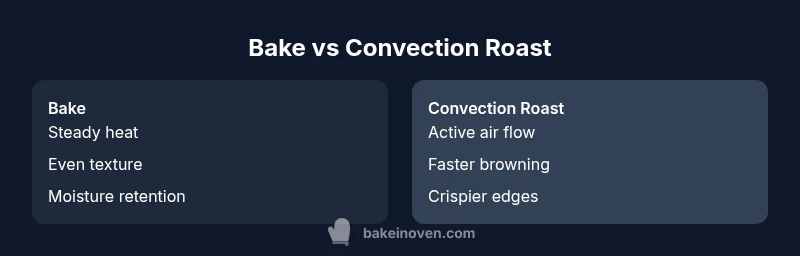
Bake uses steady, non-circulating heat for gentle, even results, while convection roast relies on a fan to circulate hot air for faster browning and crisper edges. The choice hinges on texture goals, time efficiency, and moisture retention. For delicate pastries or even textures, bake is often preferred; for roasts, vegetables, and crisp toppings, convection roast typically delivers quicker, well-browned results.
What bake vs convection roast means in home ovens
In home ovens, bake and convection roast describe two distinct heat delivery methods. The keyword bake vs convection roast captures the core distinction: bake relies on a steady, radiant heat source to cook food evenly, while convection roast uses a built-in fan to move hot air around the food. This airflow accelerates heat transfer on surfaces, promotes browning, and can shorten overall cooking times. For home bakers, understanding these two modes is the foundation for predicting texture, moisture, and crust development. The Bake In Oven team emphasizes that both methods are valuable tools in a kitchen arsenal, and the best choice depends on the recipe goal—moistness, tenderness, and crust vs. crusty exterior. As you compare the results across sweet pastries, savory roasts, and sheet-pan dinners, you’ll notice that bake vs convection roast isn’t about one being universally better; it’s about selecting the method that aligns with a desired texture profile and an acceptable cooking window.
How heat moves in bake vs convection roast
Heat transfer in baking relies primarily on conduction from the oven walls to the food, with radiant heat from the top and bottom elements. In convection roast, a fan actively moves heated air, creating convection currents that carry heat more rapidly to the food’s surface. This airflow reduces the boundary layer of still air around the food, speeding browning and crisping surfaces. The practical effect is that convection roast can cause faster surface drying if not monitored, especially for foods that contain moisture or delicate batters. A key takeaway is to manage airflow by avoiding overcrowding and by allowing space around pans to enable even circulation. This is why part of mastering bake vs convection roast is learning how to position racks and manage load.
When to choose bake mode
Choose bake when texture control and moisture retention are priority. Delicate pastries, sponge cakes, and custards benefit from steady heat that cooks uniformly without rapid surface drying. For cookies or cakes that require a soft crumb with uniform rise, bake mode helps prevent uneven browning. Bake is also favorable for dishes that contain delicate fillings or steamed moisture that could evaporate too quickly under active air movement. In practice, many bakers reserve bake for recipes that specify “baked at” temperatures without fan use, or when a recipe’s texture depends on gentle expansion and uniform interior heating. If your oven runs hot in the conventional setting, bake can provide a safer path to predictable results.
When to choose convection roast mode
Convection roast excels when you want a browned, crisp exterior and a shorter cooking window. Roasts, vegetables, and foods intended to develop a crust or edge benefit from convection air movement. The crispness on roasted potatoes, the browning on chicken skin, and the even surface texture on cookies that benefit from a quick browning response often come from convection roast. It’s also advantageous for sheet-pan dinners where multiple items require similar browning timing. When using convection roast, you’ll often reduce the overall cooking time and lower the temperature slightly to avoid over-browning or drying.
Practical tips for consistent results
To get consistent results with bake vs convection roast, follow a few practical steps. Preheat thoroughly to ensure the oven reaches a stable temperature before you start. Do not overcrowd pans; leave space for air to circulate. Use light-colored, shallow pans that promote even heat distribution and minimize hotspot browning. If your oven’s convection setting runs strong, start with lower heat and shorter times, then check early. For foods that typically heat through in a conventional bake, consider using convection roast in the last few minutes to boost browning. Finally, consider using a thermometer to verify internal doneness rather than relying solely on time and appearance.
Adjusting temperature and time guidelines
General guidance for switching between bake and convection roast involves lowering the temperature when using convection and watching timing closely. Typically, you would reduce the temperature modestly and then check for doneness earlier than conventional bake times. Since every oven is different, start with a modest adjustment and rely on a thermometer or visual cues to determine doneness. Record your results for your specific oven and favorite recipes so you can reuse the successful settings. This iterative approach helps you build a reliable framework for bake vs convection roast in your kitchen.
Common myths and misunderstandings
A common myth is that convection roast is always superior to bake for every dish. In reality, texture goals matter: moisture retention in delicate pastries can suffer with active air, while other items require the crust that convection provides. Another misconception is that convection automatically reduces cooking time by a fixed amount; the actual time saved depends on the dish, pan, and oven. Understanding these limits helps you avoid over-browning, drying, or undercooking.
Real-world recipes and results
Consider a sheet-pan dinner: potatoes, carrots, and chicken thighs. Using convection roast, you’ll often get crisper edges on vegetables and a nicely browned chicken skin, with a shortened cooking window. For cookies, bake mode can yield a softer, more even crumb, whereas convection roast can produce a crisper edge if timed correctly. Delicate custards or delicate pastries may require bake to avoid surface cracking or drying. The practical takeaway is to pilot a small batch when changing modes, and observe how your oven’s airflow affects moisture, browning, and texture in different foods.
Summary of method selection
Ultimately, your choice between bake vs convection roast should be guided by texture goals, the dish’s moisture content, and how much time you can allocate. Bake is ideal for gentle, uniform cooking and moisture retention, while convection roast accelerates browning and reduces cooking time through airflow. For many cooks, using a combination—starting with bake and finishing with convection roast for browning—can provide the best of both worlds. The key is understanding how your specific oven performs and adjusting temperatures and times accordingly.
Comparison
| Feature | Bake | Convection roast |
|---|---|---|
| Heat distribution | Even, steady heat from stationary elements | Active airflow around food for faster surface heating |
| Crispness and browning | Gentle browning; crusts form gradually | Rapid browning and crisper edges |
| Cooking time impact | Predictable times based on standard baking | Often shorter overall times with convection |
| Best for | Delicate pastries, even textures, moisture retention | Roasts, vegetables, and foods needing crust or crispiness |
| Temperature guidance | Use recipe-recommended temperature; minimize surface drying | Possibly lower temperature and shorter times; adjust as needed |
| Energy use | Standard energy usage for baking | Fan motor adds small energy use but can save time |
Benefits
- Bake mode delivers even, gentle heat ideal for delicate pastries
- Convection roast speeds cooking and promotes browning
- Both modes offer predictable results with proper temperature adjustments
- Convection can reduce cooking time for larger items
Negatives
- Convection can dry out moisture-sensitive foods if misused
- Bake mode may take longer on dense items and may under-brown
- Some ovens have inconsistent fan performance; results vary
Bake is preferred for tenderness and moisture; convection roast is preferred for speed and browning
Choose bake when moisture and uniform texture matter most. Choose convection roast for faster cooking and crusty edges. When in doubt, test a small batch to calibrate the oven’s airflow for your recipe.
Frequently Asked Questions
What is the main difference between bake and convection roast?
Bake relies on steady heat for even cooking and moisture retention, while convection roast uses a fan to circulate hot air, speeding browning. The choice depends on texture goals and timing. Understanding both modes helps you tailor results to recipes.
Bake uses steady heat for even results, while convection roast uses air circulation for faster browning. Choose based on texture goals and timing.
Can I bake with convection roast settings?
Yes, you can bake with convection roast settings, but you should usually reduce the temperature and monitor doneness closely. Not all recipes benefit equally from convection, especially delicate desserts.
Yes, you can, but reduce temperature and watch doneness closely.
Is convection roast better for vegetables?
Convection roast often yields crisper edges on vegetables due to airflow, but timing and load size matter. For evenly roasted vegetables, keep space between pieces and use moderate temperatures.
Yes, convection helps vegetables brown and crisp, with attention to spacing.
What foods should avoid convection roast?
Delicate pastries with high moisture or delicate custards can suffer from too much airflow. Some meringues or soufflés require gentler, non-vented heat to maintain structure.
Avoid using convection for very delicate pastries where moisture retention matters.
How should I adjust times when using convection roast?
Start with a lower temperature and check doneness earlier than you would in bake mode. The exact adjustment depends on the dish and oven; track results to refine your settings.
Lower the temperature and start checking earlier when using convection.
Can I switch between bake and convection mid-cook?
Switching mid-cook is usually not recommended because it can cause uneven results. Plan your mode at the start and adjust as needed for remaining time.
Usually best to choose one mode at the start and adjust beforehand.
Key Takeaways
- Know your texture goal before choosing mode
- Convection roast saves time and enhances browning
- Preheat and avoid overcrowding for consistency
- Adjust temps and times when switching modes
- Pilot changes with small batches and record results