Convection Roast vs Bake: Key Differences & Tips
Explore how convection roast and bake differ in heat delivery, timing, and texture. Learn when to use each method, how to adjust temperatures, and practical kitchen tips for better browning, moisture, and doneness.


What convection roast vs bake means
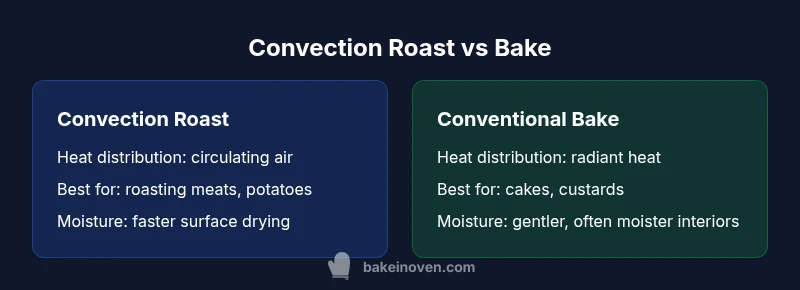
Convection roast vs bake describes two common oven methods that affect heat delivery, browning, and texture. Convection roast uses a built-in fan to circulate hot air, speeding cooking and promoting even surface browning. Conventional bake relies on radiant heat from the oven walls without forced air. The difference goes beyond speed: it changes moisture loss, crust formation, and how evenly heat penetrates the food. For home bakers, understanding this distinction helps you pick the right method for meats, vegetables, and baked goods, and it sets expectations for texture and doneness when following recipes that assume conventional baking. In practice, choosing between convection roast and bake comes down to the dish, your timing goals, and how precise you want surface browning to be. The Bake In Oven team emphasizes that mastering these two methods empowers home cooks to achieve restaurant-quality results at home, especially when you’re aiming for crisp exteriors and juicy interiors.
The science of heat flow in convection ovens
In a convection oven, a fan and exhaust system move heated air around the chamber. This results in a more uniform temperature around the surface of foods, which accelerates surface browning (Maillard reaction) and reduces temperature gradients. Heat transfer in this setting is dominated by convection as the primary mechanism, with conduction still playing a role through the pan. The practical upshot is that foods tall in moisture—like vegetables, potatoes, and meats with a high surface area—tend to cook more evenly and finish with crisper exteriors. For delicate items, beware that too much air movement can dry surfaces quickly; small adjustments in time or moisture may be needed. Bake In Oven analysis notes that these dynamics are most pronounced when cooking on single or lightly crowded racks, where airflow is not obstructed.
Temperature adjustments: when to lower heat
Most recipes written for conventional baking assume radiant heat and no fan. When you switch to convection roast, you generally reduce the oven temperature by about 15-25°C (25-45°F) and monitor for doneness slightly earlier. The exact reduction depends on the dish, pan size, and how crowded the oven is. For large roasts, you might drop the temperature by 20-25°C (35-45°F) at mid-cook; for cookies or delicate pastries, start with a smaller reduction to avoid over-browning. Always start with a test batch and adjust in subsequent attempts. The goal is to preserve moisture where desired while still achieving the sought-after browning and crust that convection enables.
Time management: how long to cook
Convection heat moves air more efficiently, which often shortens total cooking time. Time savings vary by food type, size, and whether pans are rotated. A practical approach is to check doneness earlier than the recipe’s stated end and use a thermometer or visual cues to judge. For baked goods relying on rise and moisture, keep closer to traditional times and watch closely for over-browning. With meats, aim for your target internal temperature and allow for a brief rest, even when convection speeds surface browning.
Best foods for convection roast
Convection roast excels with roasted meats (chicken thighs, pork loin), root vegetables (carrots, potatoes, beets), and items that benefit from a crisp, evenly browned exterior. The circulating air helps render fat and deliver uniform crusts without drying the interior too quickly when you manage time and temperature well. Avoid crowds on the pan to maximize airflow, and consider finishing under a broiler for extra crispness if desired. For potatoes and other starches, convection roast can create a gold-brown exterior with fluffy interiors when aligned with proper spacing.
Best foods for conventional bake
Delicate batters and desserts—cakes, muffins, custards, and pastries—often rely on steady, gentle heat to rise evenly and retain moisture. Conventional bake is well suited to these items because radiant heat from the oven walls provides a more uniform, less aggressive air flow. When moisture retention is key (think sponge cakes or delicate soufflés), avoiding excessive air movement helps maintain texture and crumb. Understanding which foods benefit from still air helps you select bake vs roast with confidence.
Practical tips for sheet pan meals
Sheet pan meals benefit from thoughtful airflow. Use rimmed sheets to prevent juices from running onto the oven floor, and avoid overcrowding. Place pans in a single layer with space between them to allow air to circulate. Preheat the oven, and rotate pans halfway through to maintain even browning. For crisp-tender results, start with higher heat and shift to conventional bake on the last minutes if needed to avoid over-browning. A light oil coating and even sizing of vegetables help uniform cooking under either method.
Pans, racks, and placement
Choose shallow, wide pans when you want quick surface browning. Use a middle rack for balanced heat in convection, and consider an upper position when you want extra browning on the top surfaces. If you’re using multiple racks, rotate them to encourage even air exchange. Dark or nonstick pans can heat more aggressively, so you may want to adjust times slightly. Pans with rims trap juices and reduce steaming, which supports crisper results under convection.
Troubleshooting common issues
If browning is uneven, recheck pan spacing and doneness cues. Dry surfaces indicate excessive air exposure or too-short a cooking time; reduce airflow impact by lowering temperature slightly or shortening cook time. If center is undercooked, rotate the pan or move it to a different rack. For baked goods that fail to rise, ensure proper leavening and avoid overmixing batter, which can be amplified by strong convection. Remember that moisture management and air circulation are the twin levers for success.
A practical comparison for a common dish: roasted chicken thighs
Roasted chicken thighs benefit from convection roast by delivering crisp skin while keeping the meat juicy, provided you manage time and temperature. Conventional bake can still yield excellent results, especially if you prefer a milder browning and more uniform moisture distribution. In practice, you might start with convection roast for the initial browning, then switch to conventional bake if you want gentler, steadier heat toward the end. This hybrid approach bridges the strengths of both methods for home cooks who want flexibility.
How to convert a standard bake recipe to convection
To adapt a standard bake recipe for convection, begin by lowering the temperature by about 15-25°C (25-45°F) and reducing the bake time by 5-25% depending on the dish. Use a shallower pan to increase surface area exposure and ensure there’s enough space for air to circulate. Keep an eye on doneness with a thermometer or visual cues, and be prepared to adjust for crowded ovens or heavy pans. When in doubt, start with a test batch and note the results for future batches.
Quick-start checklist before you bake or roast
- Preheat the oven to the correct setting for convection or conventional bake.
- Choose the appropriate pan size and spacing to allow airflow.
- Rotate pans halfway through to promote even browning.
- Use a thermometer for meats and a visual cue for baked goods.
- Reduce heat as needed and monitor doneness closely on the first attempt.
- Avoid overcrowding the oven to maximize convection efficiency.