Convection Roast vs Convection Bake: An Analytical Guide
Explore what convection roast compared to convection bake means, how each mode affects browning, moisture, and cooking times, and practical guidance for home bakers seeking reliable oven results.


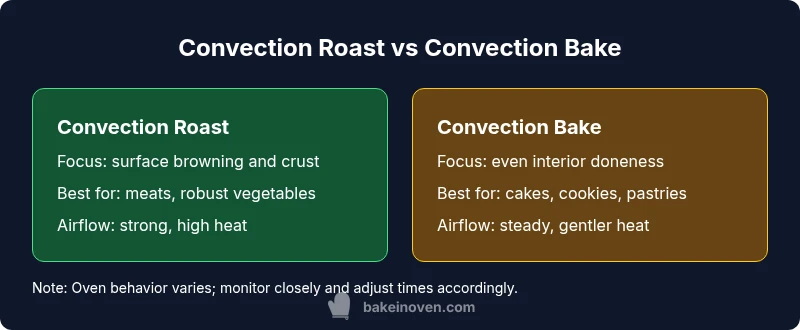
Convection roast and convection bake are two convection modes that customize heat and airflow. Roast emphasizes a strong surface sear and crust, while bake favors even interior doneness and moisture retention. For home bakers, roast excels with meats and crispy vegetables; bake suits cakes, cookies, and pastries. Understanding the difference helps you choose the right mode without guesswork.
What is convection roast compared to convection bake
In this guide we explain what is convection roast compared to convection bake and why these settings exist in many modern ovens. According to Bake In Oven, convection roast and convection bake are both convection-based cooking modes that rely on a fan to circulate hot air, but they optimize heat application differently. Roast typically uses higher heat and a stronger air current to accelerate browning on the surface while maintaining moisture inside the meat or vegetables. Bake emphasizes more uniform heat distribution to promote even crumb, interior tenderness, and consistent rise in pastries, with airflow tuned to avoid scalding or drying delicate batter. For home bakers, recognizing the intent behind each mode helps you predict outcomes and adjust the method rather than rely on guesswork. When you switch modes, you are effectively shifting how heat is delivered: roast compresses time by creating a crust fast; bake preserves moisture and yields even texture. The key is to map the cooking goal to the mode that best aligns with that goal, then adjust preheating, rack position, and pan choice accordingly. In practice, this means thinking about surface texture first and internal doneness second, and using the oven's convection setting as a tool to shape those results. The Bake In Oven team emphasizes that these modes are not interchangeable recipes; they are levers you pull to sculpt flavor and texture.
How airflow and heat distribution influence browning and texture
Airflow and heat distribution are the core levers that separate convection roast from convection bake. In roast mode, the fan movement is intensified and the temperature profile is skewed toward rapid surface heating. This combination accelerates the Maillard reaction, producing a deeper crust and more pronounced browning on proteins and starches. The moisture on the surface can evaporate more quickly, which helps build that desirable crust but requires careful timing to avoid drying the interior. In bake mode, airflow is steadier and the heat is applied more evenly across the cavity. This encourages uniform moisture retention and a tender interior, which is ideal for cakes, cookies, and pastries where an even crumb and delicate texture are prized. Practically, you’ll notice roast turning out crisper crusts and roasty edges sooner, while bake yields more uniform color and a tender bite throughout copied dishes. Bake mode shines when you want predictable rise and crumb structure; roast mode shines when you want bold texture on the exterior.
Practical kitchen scenarios: when to use convection roast
Roast mode is a powerful ally for meals that benefit from a crust and a defined exterior. Think large cuts of meat like beef roasts or pork loin, where the initial browning seals juices and develops flavor. Root vegetables also benefit from roast’s intense surface action, producing caramelization and a smoky edge. When you’re aiming for a crisp skin on poultry or roasted vegetables with a focus on texture, convection roast helps you reach that finish faster. It’s also useful for certain proteins where a seared exterior is desirable before finishing through residual heat or a gentler bake. If you’re short on time and want a strong crust, roast mode can shave minutes off overall cooking while delivering character to the exterior. Always monitor internal temperatures and consider tenting with foil if the interior is lagging behind the browned exterior.
Practical kitchen scenarios: when to use convection bake
Convection bake is the go-to choice for delicate baked goods and items where interior tenderness matters most. Cakes, muffins, and light pastries benefit from even heat without aggressive surface browning, which can lead to crusty exteriors or doming. Cookies and pie crusts also respond well to the even heat distribution, helping them bake evenly without over-browning on the edges. When you’re aiming for a uniform crumb, consistent color across the surface, and a gentle rise, bake mode is the safer, steadier option. It’s also helpful for casseroles and casseroles where you want a uniform texture throughout rather than a bold crust. In practice, bake mode reduces the risk of over-crusting delicate batters and encourages a controlled bake for even doneness.
Temperature and time considerations: adjusting recipes between modes
Switching between convection roast and convection bake requires thoughtful adjustments, not guesswork. A practical approach is to start with the same recipe temperature, then observe closely for browning and doneness. In roast mode, plan for quicker surface development and potentially shorter overall times, but keep an eye on interior doneness to avoid overcooking. In bake mode, you may need slightly longer times to reach the same interior temperature while benefiting from a gentler, more even browning. When switching modes, consider reducing the cooking time by approximately a small margin if the goal is crust formation, and increase as needed if interior doneness lags. Temperature adjustments are recipe-specific and oven-dependent, so use a thermometer and visual cues to guide you rather than fixed numbers. Bake In Oven recommends testing with a simple test recipe before applying the technique to a full meal or bake.
Equipment and oven behavior: common pitfalls
Not all ovens behave identically, and this can influence how convection roast and convection bake perform. A faulty or weak fan can reduce airflow and alter browning patterns, making outcomes inconsistent. Preheating remains important, but some ovens reach target temperatures unevenly—plan to rotate trays or use multiple racks strategically to encourage even exposure. Pan placement matters: metals with high thermal conductivity heat more quickly and can push browning too fast if placed too close to the heat source. Dark, heavy pans can radiate more heat and brown faster, while lighter, reflective pans race less intensity. If your oven has multiple convection modes, test both settings on a neutral recipe to gauge how your particular model handles air flow, rack height, and pan type.
Tips for consistent results: rack placement, pan choice, preheating
- Use metal or heavy-duty aluminum pans for roast when you want robust browning; reserve glass or ceramic for bake when interior tenderness matters.
- Place racks to maximize airflow around the food; avoid crowding to prevent uneven browning.
- Preheat thoroughly; many ovens take longer to stabilize in convection modes, so plan accordingly.
- Rotate pans halfway through cooking to promote uniform exposure.
- Use a thermometer to verify internal doneness rather than relying solely on color cues.
- Keep moisture-aware guidance in mind for roast (to preserve juiciness) and bake (to maintain crumb structure).
Common myths and misconceptions
- Myth: Convection always speeds up cooking in every recipe. Truth: In some cases, convection can shorten times, but it can also lead to overbrowning if not monitored.
- Myth: You never need to adjust temperatures. Truth: Modest adjustments are often necessary to achieve the same results in convection roast vs bake.
- Myth: Convection is only for ovens with a fan. Truth: Some ovens offer both conventional and convection modes, and learning how the fan affects air flow helps you use either mode effectively.
- Myth: You should always remove moisture to browning. Truth: Some moisture retention strategies help preserve interior tenderness while still achieving crust.
How to convert a recipe: step-by-step approach
Step 1: Identify the target outcome (crust vs crumb) and select the appropriate mode. Step 2: Start with the original temperature, but be prepared to adjust based on browning cues. Step 3: Plan for shorter or longer times depending on mode and dish; use a thermometer for precision. Step 4: Monitor early and rotate racks or reposition pans as needed. Step 5: Record how your oven behaves for future reference to improve consistency. Step 6: When in doubt, bake first and switch to roast for finishing texture if a crust is desired. Step 7: Practice with simple recipes to build intuition and reduce guesswork.
Authority sources
- https://www.seriouseats.com/
- https://www.kingarthurbaking.com/
- https://www.energy.gov/energysaver/convection-ovens
These sources offer guidance on convection oven principles, baking considerations, and practical tips for home cooks.
Comparison
| Feature | Convection Roast | Convection Bake |
|---|---|---|
| Primary focus | Surface browning and crust development | Even interior doneness and moisture retention |
| Ideal for | Meats, root vegetables, crisp textures | Cakes, cookies, pastries, delicate bakes |
| Heat/airflow behavior | Higher heat with stronger airflow | Steady, gentler airflow with even heat |
| Best for finishing touches | Crust formation and searing | Even crumb and uniform rise |
| Time impact | Often shorter exterior browning with careful timing | Balanced times with emphasis on interior doneness |
| Temperature guidance (qualitative) | High-heat, crust-focused | Moderate-heat, interior-focused |
Benefits
- Sharper surface browning and crust formation
- Better moisture management for certain meats and vegetables
- Predictable crust development for high-contrast textures
- Versatile for a range of dishes
Negatives
- Requires careful monitoring to avoid drying or overcooking
- May require different rack positions and pan choices when switching modes
- Potential for uneven results with older ovens or poor airflow
The Bake In Oven team recommends using convection bake for delicate bakes and convection roast for meats to maximize flavor and texture.
Choose bake for cakes, cookies, and pastries to ensure even crumb and tenderness. Choose roast for meat and vegetables to achieve bold crusts. In practice, selecting the right mode based on the desired texture improves reliability and results for home bakers.
Frequently Asked Questions
What is convection roast?
Convection roast is a convection setting that uses higher heat and stronger airflow to promote browning and crust formation on the surface of foods, especially meats and robust vegetables. It’s about speed and surface texture more than interior tenderness.
Convection roast focuses on browning and crust—great for meats and roasting veggies.
Can convection bake be used for roasted vegetables?
Yes, convection bake can roast vegetables, but you may see less crust development and browning compared to roast mode. You can achieve good color with proper preheating and spacing, but monitor closely.
Bake can work for roasting, just watch color and adjust timing.
Do I need to adjust temperatures when switching modes?
Yes, generally you should adjust temperatures or times modestly when switching between modes. Start with the recipe’s temperature and monitor browning and doneness, then tweak as needed.
Usually yes—start with the same temp, watch closely, and adjust.
Is convection roast better for meat?
Often yes, because the higher heat and airflow help develop a flavorful crust while sealing juices. However, for very tender cuts or slow cooking, bake mode or traditional roasting can be preferred.
Roast is usually best for meat when you want a crusty exterior.
How do I convert a bake recipe to roast?
Start with a similar temperature, then shorten the cooking time slightly and watch for crust formation. Rotate pans as needed to ensure even browning and check internal doneness with a thermometer.
Start with the same temp, then watch for crust and doneness.
What are signs of over-browning or drying in convection modes?
Look for dark, almost burnt edges and a dry surface. If the exterior browns too quickly, reduce heat or shorten the time, and consider tenting the food.
If it browns too fast, lower heat or reduce time.
Key Takeaways
- Identify your goal: crust vs crumb.
- Use roast to quickly develop surface texture; bake for interior evenness.
- Monitor doneness and rotate trays for consistency.
- Adjust times rather than temperatures when switching modes.
- Practice with simple recipes to learn your oven’s quirks.