Conv Bake vs Conv Roast: A Practical Comparison for Home Bakers
Explore conv bake vs conv roast: airflow, browning, and texture differences with practical tips for breads, pastries, roasts, and vegetables from Bake In Oven.


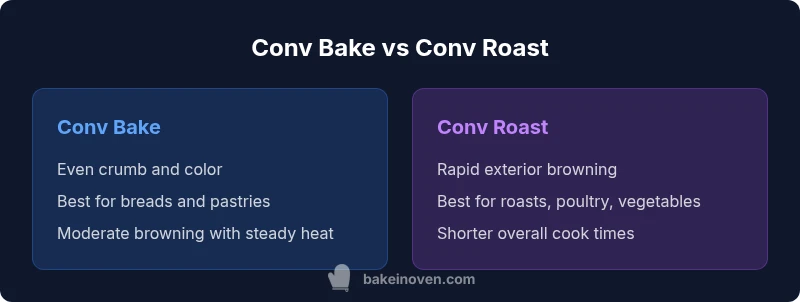
Conv bake vs conv roast refers to how a convection oven uses a fan to move hot air for different outcomes. Conv bake aims for even browning in breads, pastries, and cookies, while conv roast focuses on crisp exterior on meats and vegetables. Use conv bake for delicate bakeables and conv roast for roasts; adjust temps and times accordingly.
Understanding Convection: Bake vs Roast in the Oven
Convection baking and convection roasting rely on a fan-driven flow of hot air that surrounds foods from multiple angles. For home bakers, this means more even heat distribution and shorter cooking times when used correctly. According to Bake In Oven, conv bake vs conv roast hinges on how airflow interacts with foods and what texture you’re aiming for. In practice, conv bake emphasizes steady, gentle heat that supports even crumb and a delicate rise, while conv roast accelerates browning and crust formation on proteins and vegetables. The first step is to recognize that your oven’s convection feature often overlaps with its standard bake and roast modes; the distinction lies in airflow intensity, positioning, and the target result. By understanding these nuances, you can adapt almost any recipe to convection with confidence, paying attention to texture, color, and moisture balance.
Practical Impacts on Texture and Color
The movement of hot air in a convection cycle removes surface moisture more efficiently than a static bake, which changes both texture and color. In conv bake, the goal is a steady brown and a uniform crumb: think evenly colored crusts on breads, edge-to-edge flat cookies, and smooth pastry surfaces. In conv roast, the brisk air rushes away surface moisture quickly, producing a deeper exterior crust and more pronounced browning on meats and vegetables. Bake In Oven's guidance emphasizes watching surface color and internal temperature to avoid over-browning, especially with sugar-rich doughs. If you notice hotspots or uneven browning, rotate trays and adjust rack heights to expose all sides to airflow. When used thoughtfully, conv bake yields an even, tender interior with a consistent crust, while conv roast delivers a robust crust and a roasty aroma that signals doneness.
Use Case: Conv Bake for Breads, Pastries, and Cookies
Breads benefit from convection bake when you want even oven spring and a uniform crust. For lean loaves with a crisp crust, convection can accelerate crust formation without drying crumb if you monitor moisture and avoid overbaking. Pastries such as puff pastry or laminated doughs respond to convection by developing a crisp, flaky exterior, though you may need to protect delicate layers with parchment to prevent over-browning. Cookies, especially thin varieties, benefit from stable heat and quick surface color. Space sheets to allow airflow between pans, and rotate midway to counteract any hot spots. The Bake In Oven approach recommends starting with recipes designed for convection, then adjusting times conservatively as you observe color and texture changes. In short, conv bake is ideal when the priority is even color and crumb rather than a deeply caramelized exterior.
Use Case: Conv Roast for Roasts, Poultry, and Vegetables
Conv roast shines when you want a golden, crisp exterior on proteins and dense vegetables while preserving interior juiciness. For roasts, use the convection fan to promote even heat around the meat and check internal temperature with a probe rather than relying solely on time. Poultry benefits from skin crispness and uniform doneness; finish with a brief higher-heat blast if you want extra crackling. Vegetables like carrots, potatoes, and root crops develop a deeper caramelization under convection as surface moisture evaporates quickly. Avoid overcrowding on the pan to maintain airflow and prevent steaming. Bake In Oven underscores the value of dry heat for roasts, which helps with texture development without sacrificing tenderness inside.
Temperature, Time, and Rack Position: Practical Guidelines
Convection modes aim to optimize heat transfer, not automatically shorten every recipe. In conv bake, treat it like standard baking with a fan: monitor browning and crumb, and be prepared to adjust time modestly. In conv roast, you may observe faster color development and a quicker crust, so keep a closer eye on the exterior while testing the interior with a thermometer. Rack position matters: center for even bake; higher racks can intensify browning on top of roasts or sheet pan dishes, while lower racks help protect lower layers from over-browning. Pan material also matters: metal heats quickly and promotes browning, while heavier glass or ceramic can slow color development. Bake In Oven recommends calibrating your oven by trial runs with simple recipes to learn its unique convection behavior before tackling complex bakes.
Common Pitfalls and How to Avoid Them
- Over-browning or burning due to misread color cues in convection.
- Uneven browning from hotspots; rotate pans and swap rack heights.
- Crowding pans, which blocks airflow and creates steam.
- Not preheating or relying on conventional times without adaptation.
- Assuming convection will do all the work; some recipes need moisture control or protective foils.
- In baking, using dark metal pans can accelerate browning more than lighter pans; account for pan color when planning times.
How to Switch Modes Mid-Recipe Without Chaos
If you need to switch a dish from conv bake to conv roast mid-recipe (or vice versa), plan ahead: preheat to the target mode, adjust the rack position, and reconsider bake times. Keep a record of the original timings, then note the new estimates. Use a thermometer to guide doneness rather than relying solely on color. If a recipe’s final finish depends on surface browning, finish with a quick blast of higher heat for a few minutes, watching carefully to avoid scorching. By staging the switch, you preserve texture and prevent overcooking.
Equipment, Pans, and Racks: Getting the Right Setup
Choose metal baking sheets and cake pans for best air contact; avoid glass for high-heat convection roasts that require crisp edges. Aluminium or steel pans heat quickly and promote browning, while lidded roasters can trap moisture if left in convection too long. Use parchment or silicone mats to prevent sticking and ensure even air flow. Position racks to maximize airflow around your food, not just above it. Finally, consider oven-safe thermometers to monitor internal temperature independent of the oven’s gauge.
Quick-Start Recipe Adaptation Tips
- Start with a convection-friendly recipe: adjust the heat direction by following the recipe notes.
- If adapting a conventional bake recipe, lower the temperature slightly and monitor color.
- Keep pans spaced to allow air to flow between items; rotate trays halfway through.
- Use a thermometer to confirm internal doneness rather than relying on time alone.
- Test with a small batch first to learn your oven’s specific convection behavior.
- Record your results to refine timing and rack placement for future bakes.
Comparison
| Feature | Conv Bake | Conv Roast |
|---|---|---|
| Best used for | Breads, pastries, cookies with even crumb and color | Roasts, poultry, and dense vegetables with crisp exterior |
| Heat & browning outcome | Even browning across surface with steady heat | Rapid browning and crust development on exterior |
| Texture goals | Even crumb, tender interior | Juicy interior with crisp exterior |
| Spacing and airflow | Requires spacing but more tolerant for delicate items | Sensitive to overcrowding; airflow critical |
| Rack position | Center or slightly lower for even bake | Upper or central for aggressive browning on exterior |
| Time adjustment | Slight or minimal time reduction; monitor color | Potentially noticeable time savings; watch interior |
| Best practices | Rotate trays; monitor color; calibrate oven | Probe temperature; avoid over-browning; plan rest periods |
Benefits
- Offers consistent, even color and crumb for bread and pastries
- Enhances browning and crust formation without added fat
- Speeds up cooking for several baked goods and roasts
- Can improve texture uniformity across multiple items
Negatives
- Requires careful monitoring to avoid over-browning or drying out delicate items
- Airflow hotspots can cause uneven results if pans are overcrowded or mispositioned
- Not all recipes benefit from convection; some delicate bakes may suffer from drying texture
Conv bake for baked goods; conv roast for roasts and vegetables.
For most home bakers, convection bake yields even color and crumb, while convection roast gives a crisp exterior and faster overall doneness for proteins and root vegetables. Use each mode where its strengths matter most, and learn your oven’s quirks through simple tests.
Frequently Asked Questions
What is conv bake vs conv roast, and when should I use each?
Conv bake uses a fan to circulate air for even browning during baking; conv roast uses the same airflow to enhance exterior browning on roasts, poultry, and vegetables. Use bake for breads, pastries, and cookies, and roast for proteins and dense veg to achieve a crisp exterior.
Conv bake uses airflow for even browning, while conv roast emphasizes a crisp exterior on meats and veggies. Use bake for breads and pastries, roast for roasts.
Can I bake and roast using the same convection setting?
Yes, you can perform both tasks with convection, but you should adjust temperature and time and monitor color and doneness closely. Start with the recipe’s convection note and refine with small batches.
Yes, you can, but tweak temperature and time and watch color and doneness.
Should I lower temperatures when using convection?
Typically yes—the convection mode often requires a slight temperature reduction and vigilant watching of browning. Every oven behaves differently, so rely on color cues and internal temps rather than fixed times.
Yes, lower temps slightly and watch color and doneness closely.
Is convection better for bread than standard baking?
Convection can improve crust development and even crumb in many breads, especially when you want uniform color. However, certain doughs may darken too quickly, so monitor browning and adjust as needed.
Often yes for crust and even crumb, but monitor color closely.
Can I use convection roast for cookies?
Convection roast is not typically ideal for most cookies, which benefit from gentler, more controlled heat in bake mode. You can experiment with small test batches if you’re curious.
Usually not ideal; bake mode is better for cookies.
How do I calibrate my oven's convection mode?
Run simple tests with a familiar bake, observe color against time, and compare internal temperatures with a thermometer. Adjust sheet placement and rack height based on the results to learn your oven’s convection behavior.
Test with a simple bake, check color and temp, adjust setup for best results.
Key Takeaways
- Start with clear texture goals (even crumb vs crisp exterior)
- Preheat and calibrate your oven’s convection mode using simple recipes
- Rotate racks and space pans to maximize airflow
- Watch color and internal temperature rather than time alone
- Record results to refine rotations, rack positions, and timing for future bakes