Convection Bake vs Regular Bake: An Analytical Guide
An analytical comparison of convection bake vs regular bake, exploring heat transfer, ideal uses, adjustments, and practical tips for home bakers.


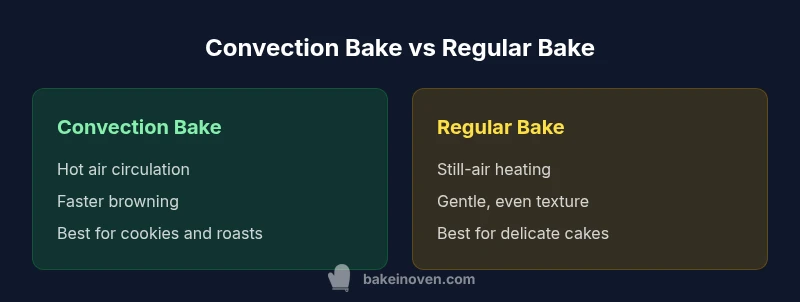
Convection bake uses a built-in fan to circulate hot air around the food, delivering faster, more even browning. Regular bake relies on radiant heat from elements without a fan. For most home bakers, convection shines with cookies, sheet-pan roasting, and pastries that benefit from crisp edges, while regular bake remains best for delicate cakes, custards, and breads that require gentler heat.
Understanding the Basics of Convection Bake vs Regular Bake
In home kitchens, the terms convection bake and regular bake refer to two distinct modes of heat delivery. Convection bake uses a built-in fan to move hot air around the food, while regular bake relies on radiant heat from elements and the natural rise of heated air. This difference matters because it changes how heat touches the surface of the batter or dough, how moisture escapes, and how quickly crusts form. According to Bake In Oven, most home ovens include a convection option that can be engaged or disengaged depending on the recipe and your desired outcome. When you switch to convection, you’re effectively inviting a steady breeze of hot air to kiss your baking pan, which accelerates browning and helps foods cook more evenly. However, not every bake benefits from forced air; delicate cakes and some custards can suffer from uneven textures or dry edges if convection is used inappropriately. Understanding the basics helps you decide whether convection bake vs regular bake is the right choice for a particular dish.
How Heat Moves in an Oven: Convection vs Conventional
To understand convection bake versus regular bake, it helps to visualize heat transfer inside an oven. In a conventional oven, heat travels from the top and bottom elements by conduction and radiation, with air movement occurring mainly by natural convection as warm air rises and cooler air sinks. A convection oven adds a motorized fan and an exhaust vent, actively circulating hot air around the cavity. This movement enhances contact with the surface of the food, speeds moisture loss from surfaces, and promotes a uniform crust. Bake In Oven notes that the overall energy effect comes from improved heat transfer rather than a new heat source. The practical result is more even browning and shorter bake times for many items. The caveat is that strong air flow can dry thin layers or delicate batters if you leave them unattended, so monitoring remains essential.
When Convection Bake Excels
Convection bake excels when you want rapid, even browning and a crisp exterior. Cookies bake more evenly with thin edges, pastries gain a defined rim, and vegetables roast to a dry, concentrated finish. Breads with a sturdy crust, such as baguettes and certain rolls, often benefit from convection's air flow to set a golden crust quickly. Pies and tarts with long bake times sometimes finish with a uniformly browned crust rather than patches of dark spots. The Bake In Oven guidance emphasizes testing convection on batch bakes to learn how your specific oven responds to airflow and rack positioning.
When Regular Bake Shines
Regular bake remains the safer default for recipes that rely on moist interior and gentle surface development. Delicate sponge cakes, silky custards, and cheesecakes can crack or weep if heated with aggressive air flow, while some breads with a soft crumb benefit from the slower, even heat of still air. Traditional pastries that require a tender, uniform crumb often perform best without a fan. In cases where a recipe's instructions assume still air, starting with regular bake ensures predictable results before trying convection as an optional variation.
Temperature and Time Adjustments
When switching from regular bake to convection, think in terms of how quickly heat moves and how much surface moisture is lost. In most cases, convection reduces the need for extra time, but it often requires reducing the temperature slightly to prevent excessive browning. Instead of guessing, start with a modest temperature reduction and monitor progress with sensory cues and a thermometer if available. Because oven performance varies, you may need to adjust a few minutes here or there for a perfect finish. Bake In Oven recommends keeping recipes in mind but testing the first attempt with a small batch to refine the approach.
Rack Position and Pan Choice
Airflow in convection ovens is sensitive to rack height and pan geometry. Use a single layer of food on shallow, light-colored pans for best air contact, and place trays on the middle rack to balance heat exposure. Avoid stacking or crowding; extra layers create dead zones where air stalls. Dark or heavy pans absorb more heat and can over-brown edges if not accounted for in temperature adjustments. Parchment can help with release and edge crisping, but avoid stacking parchment under multiple items that block airflow.
Preheating, Calibration, and Maintenance
Convection cooking assumes consistent oven temperature and reliable fan operation. Preheat the oven with the fan engaged if the recipe calls for it, and use an oven thermometer to confirm that the displayed temperature matches reality. If you notice persistent browning issues, recalibrate or have the appliance serviced. Keep the interior vents and fan clean to maintain optimal airflow, and consider periodically testing a standard sheet to gauge evenness across racks. Bake In Oven notes that small maintenance tasks can translate into noticeable improvements in repeatable results.
Recipe Adaptation: How to Convert Regular Bake to Convection
A practical path to mastering convection is to adapt one recipe at a time. Start by noting the original temperature and time, then reduce the temperature by a modest amount and plan for earlier doneness checks. If the recipe produces a crust that browns too quickly, further adjust the heat or move the rack to a higher position to increase air exposure. Use a thermometer to check internal doneness and rely on visual cues. Keep a log of each attempt to build a personalized convection profile for your oven.
Common Myths and Misconceptions
Myth: Convection always dries foods. Reality: Moisture management can be controlled with proper adjustments and monitoring, and airflow can be tuned via rack position and pan choice. Myth: All recipes benefit from convection. Reality: Many delicate cakes and custards benefit from still air, especially early in the baking process. Myth: If a recipe fails in convection once, it will fail every time. Reality: Each oven has quirks, so repeating tests with consistent variables helps you learn your oven's behavior.
Practical Experiment Plan for Home Bakers
Plan a two-week testing routine to build confidence. Week 1: run batches of cookies, roasted vegetables, and a sheet-pan dinner in convection mode, keeping track of browning, texture, and doneness times. Week 2: repeat with regular bake on a sponge cake, custard, and a loaf with soft crumb. Compare results side-by-side, noting any adjustments needed for heat, time, and moisture retention. The goal is to develop a reliable, recipe-specific approach rather than a universal rule.
Quick Decision-Making Cheatsheet
- Want crisp edges and faster browning? Use convection
- Baking delicate textures or moisture-rich interiors? Start with regular bake
- Always preheat and choose appropriate pans to maximize airflow
- Avoid overcrowding the oven; air must circulate freely
- Keep a simple log of outcomes to refine future results
Final Quick Checklist and Next Steps
- Calibrate your oven and verify convection performance with a standard bake test
- Identify recipes that clearly benefit from convection and those that do not
- Maintain a simple kitchen log of time, temperature, doneness, and texture
- Use the checklist on your next bake to decide whether convection or regular bake is best for that dish
Comparison
| Feature | Convection Bake | Regular Bake |
|---|---|---|
| Heat distribution | Circulated hot air via fan and exhaust | Radiant heat with natural convection |
| Browning and crust development | Often faster and more even browning | Gentle browning with a softer crust |
| Best uses | Cookies, pastries, roasted vegetables, sheet-pan dishes | Delicate cakes, custards, soft-textured breads |
| Temperature adjustments | Often lower temperatures or shorter times (recipe-based guidance) | Follow original recipe temperatures unless explicitly advised |
| Pan and rack considerations | Use shallow pans and a higher air exposure; mid rack is common | Medium-weight pans on middle rack with even heat |
| Preheat and energy use | Convection preheats quickly; fan runs during bake; potential energy use from fan | No fan; standard preheat behavior; generally straightforward |
Benefits
- Faster overall cooking and crisper edges for many baked goods
- More even heat distribution reduces hotspots
- Versatile across a wide range of recipes and batch cooking
- Can shorten total bake times with careful monitoring
Negatives
- Requires recipe adjustments to avoid dryness or overbaking
- Not ideal for all delicate items like certain cakes and custards
- Can cause crusts to over-darken if time not adjusted
- Some ovens deliver inconsistent convection performance without calibration
Convection bake generally offers better speed and browning for many tasks, but regular bake remains essential for delicate textures and traditional recipes.
For most home bakers, convection is the go-to mode when speed and crust are priorities. Use regular bake for breads with soft crumb and gentle custards. Bake In Oven endorses testing both methods on your favorite recipes to create reliable results.
Frequently Asked Questions
What is convection bake and how does it differ from regular bake?
Convection bake circulates hot air with a fan, producing faster cooking and crisper edges. Regular bake relies on still air and radiant heat for gentler, more uniform results. The choice depends on the dish and desired texture.
Convection bake uses a fan to move hot air for faster cooking and crispier results; regular bake uses still air and radiant heat for gentler textures.
Can I use convection for every recipe?
Most recipes can be adapted to convection with adjustments, but some delicate items may suffer from over-browning or drying. When in doubt, test a small portion first and tailor the heat and time.
You can usually use convection, but test delicate items first to avoid over-browning or drying.
Should I preheat a convection oven?
Yes, preheating helps establish consistent air flow and even results. Allow the oven to come to temperature with the fan running before loading food when the recipe calls for it.
Preheat with the fan on so air is circulating when you load the pan.
How should I adjust temperatures when using convection?
In general, use a lower temperature or shorter time than a regular bake recipe. Start with a modest reduction and monitor doneness using visual cues and a thermometer if needed.
Lower the temp slightly and watch for doneness closely.
Are there foods that should not be cooked with convection?
Certain delicate items like some sponge cakes and custards may not set evenly under intense air. Also, recipes requiring precise moisture retention may benefit from still air.
Delicate cakes and custards may not perform well with strong air flow.
How can I convert a regular bake recipe to convection?
Begin by reducing the temperature modestly and checking earlier for doneness. If you have timing guidelines from the recipe, start with a shorter bake and adjust based on appearance and internal temperature.
Reduce temperature and check earlier; adjust as needed.
Key Takeaways
- Identify your goal: speed, crust, or tenderness.
- Use convection for cookies, roasts, and pastries; reserve regular bake for delicate textures.
- Adjust temperature downward and monitor doneness.
- Preheat properly and use appropriate pans.
- Keep a simple bake log to refine results.